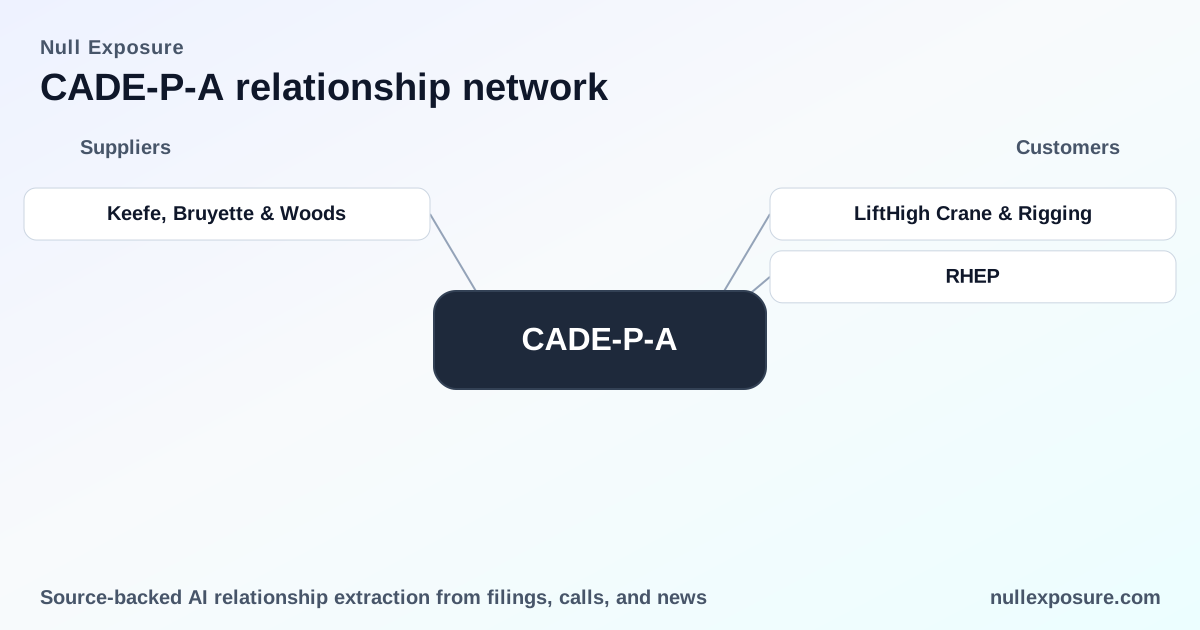
CADE-P-A Supplier Review: Keefe, Bruyette & Woods in the M&A Moment
Cadence Bank (CADE-P-A) operates as a regional banking franchise that generates revenue through net interest income, fees, and treasury services; its preferred securities are evaluated by investors for income stability and deal exposure. The company monetizes by lending, deposit-taking, and fee-based commercial services, and corporate actions such as mergers materially change the counterparty and advisory ecosystem around those securities. Understanding who advises and contracts with Cadence during strategic transactions is essential for preferred-holders and counterparties assessing execution risk and fee leakage. For mapping supplier relationships and deal intelligence, visit https://nullexposure.com/.
Why the Huntington deal matters for suppliers and preferred investors
Huntington Bancshares announced a definitive agreement to acquire Cadence Bank on October 27, 2025. Transaction activity elevates the importance of transactional suppliers—financial advisors, legal counsel, and investment banks—because they shape deal structure, pricing, and regulatory positioning. For holders of CADE-P-A, the most immediate supplier risk is execution: advisory teams manage process timelines and negotiation outcomes that determine treatment of preferred instruments and communications to markets.
The transaction also concentrates short-term supplier activity into a small set of advisors, increasing criticality of those relationships during the integration window. Investors should therefore treat advisory appointments as operational risk signals rather than mere disclosure formalities.
The supplier in focus: Keefe, Bruyette & Woods
Keefe, Bruyette & Woods (KBW) served as financial advisor to Cadence in the Huntington transaction. KBW’s role was advisory on the sell-side—reshaping Cadence’s strategic options and negotiating commercial terms with the buyer and its advisors. According to CNBC’s coverage of the deal dated October 27, 2025, Evercore and Bank of America Securities advised Huntington while KBW advised Cadence on the transaction (CNBC, Oct. 27, 2025). https://www.cnbc.com/2025/10/27/huntington-bancshares-to-buy-cadence-bank.html
- KBW is a sector-focused investment bank with an established track record advising regional banks; its engagement signals a conventional sell-side advisory posture in a negotiated bank M&A process.
- The appointment concentrates deal execution risk around a single lead advisor for Cadence, which changes the vendor governance posture for the company during the transaction.
Every supplier relationship reported for CADE-P-A
Keefe, Bruyette & Woods — Financial advisor to Cadence in the Huntington acquisition process. KBW advised Cadence on deal strategy and negotiation while Evercore and BofA Securities advised Huntington. CNBC reported the appointments in its October 27, 2025 article covering the acquisition announcement (CNBC, Oct. 27, 2025). https://www.cnbc.com/2025/10/27/huntington-bancshares-to-buy-cadence-bank.html
Company-level signals and constraints investors should track
There are no formal constraint disclosures in the supplier data for CADE-P-A. As a company-level signal, that absence itself is informative: no supplier-level covenants or restriction excerpts were delivered to the supplier registry. From a practical investor perspective, this implies the following operational characteristics that matter for due diligence:
- Contracting posture: Transactional and event-driven. The advisory engagement for the Huntington deal reflects a short-term, high-impact contracting posture rather than long-term supply dependency.
- Concentration: Supplier concentration spikes during M&A; a small number of advisors control negotiation levers. This increases single-vendor impact during the transaction timeframe.
- Criticality: High during the deal lifecycle. Financial advisors are mission-critical to negotiating terms and structuring preferred treatment in purchase agreements or exchange offers.
- Maturity: Advisory relationships are mature in market practice—KBW is an experienced bank M&A advisor, indicating professional execution capability rather than boutique idiosyncrasy.
These signals should be treated as company-level operating model characteristics rather than constraints tied to any single supplier, because no constraint text explicitly ties limitations or covenants to named relationships.
What this means for investors and operators
Preferred-holders should prioritize three operational checks during the closing and integration phases:
- Monitor transaction documents and press releases for explicit language on preferred securities treatment—exchange options, cash-out mechanics, or assumption clauses determine economic outcomes for CADE-P-A holders.
- Track advisor activity and public filings; changes in advisor scope or new advisor appointments can presage renegotiation of deal terms or extension of timelines.
- Evaluate counterparty concentration and continuity risk: if the buyer shifts financial or legal advisors late in the process, execution risk and fees can increase.
Key risk takeaway: advisory appointments are not neutral line items—advisors shape valuation frameworks and closing mechanics, and during an acquisition they are core operational suppliers whose performance directly influences investor outcomes.
For deeper supplier maps and ongoing monitoring of CADE-P-A relationships, consult https://nullexposure.com/.
Practical implications for portfolio managers and risk teams
- Reprice exposure assumptions for CADE-P-A around the transaction timeline; the probability of deal-related adjustments to coupon, redemption, or conversion features escalates as filings progress.
- Align legal and corporate teams to parse acquisition agreements for preferred-class specifics—advisors drive negotiation but the legal drafting determines enforceable rights.
- Consider short-term liquidity provisioning in the event preferred-holders are given limited windows to choose an exchange or tender option.
Final assessment and next steps
The KBW advisory relationship is a standard and predictable component of bank M&A execution; it signals competent sell-side representation for Cadence during the Huntington acquisition. Investors should treat the advisory appointment as a high-signal event: it increases execution focus, concentrates supplier criticality, and shortens the window for strategic responses by preferred security holders.
To track ongoing supplier changes and to receive timely alerts on CADE-P-A supplier developments, visit https://nullexposure.com/ for workflow-ready supplier intelligence and relationship mapping.