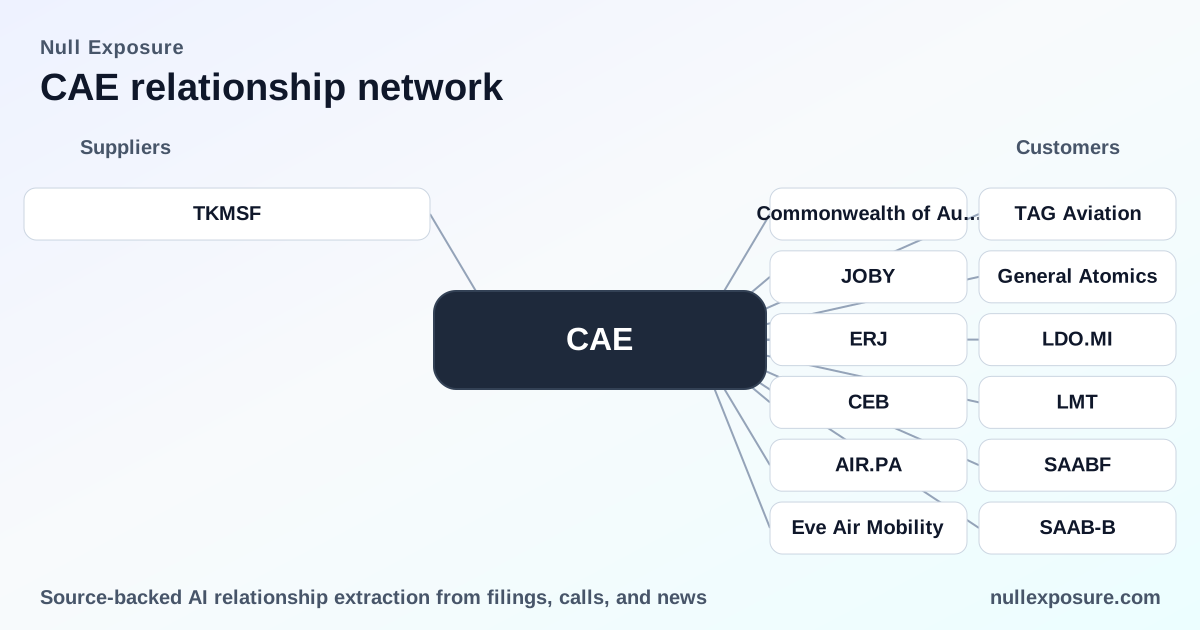
CAE Inc. (CAE) — Supplier relationship profile and investor thesis
CAE is a specialty training and simulation supplier that monetizes its intellectual capital by selling high-value hardware (simulators), software and, critically, long-term training and sustainment contracts to defense customers, commercial airlines and healthcare institutions. The company converts capital equipment programs into recurring service revenue by operating training centers, providing instructor-led services, and delivering multi-year maintenance and upgrade packages — a model that blends project revenue with durable annuities. For investors, CAE is a defensive aerospace supplier with strong margins on services and a valuation premised on recurring contract flows and defense-program durability.
Explore deeper supplier intelligence at https://nullexposure.com/.
How CAE actually makes money — the practical model
CAE designs and manufactures simulation equipment and then captures the higher-margin economics by operating and sustaining training programs around that equipment. The business lines are:
- Defense and security training and sustainment (multi-year contracts and upgrades).
- Commercial airline pilot training (training centers, course seats, licensing).
- Aftermarket and service revenue for aircraft and helicopter OEMs and operators.
- Healthcare simulation and training for professional education.
CAE reports trailing twelve‑month revenue of $4.8627 billion and EBITDA of $980.8 million, which reflects a mix of capital sales and recurring service streams that lift operating margin to ~13.6% on a TTM basis. Market participants value that cash flow profile at a premium: CAE trades with a trailing P/E near 32.9 and EV/EBITDA of ~12.9, pricing growth and contract durability into the equity. These company figures come from CAE’s fiscal reporting and current market data for the period through the most recent quarter (latest quarter: 2025-12-31).
Operating model constraints and what they imply for assessment
CAE’s operating model delivers high contract stickiness but also enforces specific constraints for investors and counterparties:
- Contracting posture — long-duration, mission-critical engagements. CAE’s go-to-market is to win long-term training and sustainment contracts that create predictable revenue streams but also tie performance to delivery milestones and customer acceptance criteria. This structure supports revenue visibility but increases execution risk if programs slip.
- Customer concentration and institutional alignment. Institutional ownership is high (about 84%), which signals investor belief in the business’ defensibility and predictable cash flow. While CAE serves a broad set of customers, large defense contracts and anchor airline relationships concentrate commercial exposure into multi-year programs that move as single decision points.
- Criticality of product and service. Simulators and training pipelines are mission-critical to military readiness and commercial operations; that gives CAE pricing power and bargaining leverage on sustainment work, but it also raises the stakes for regulatory compliance and program delivery.
- Maturity and margin profile. CAE operates as a relatively mature industrial services company with mid-single-digit organic growth and solid margins; valuation reflects the market’s expectation that services and sustainment will continue to replace one-off equipment sales.
Those characteristics are company-level investment signals drawn from CAE’s reported financial profile and its business model.
Relationship snapshot investors need — TKMS and the Royal Canadian Navy
CAE’s supplier relationships include defense programs that embed training and sustainment commitments into platform deliveries. One documented relationship in public reporting:
TKMS — long-term submarine training and sustainment for the Royal Canadian Navy
CAE will provide comprehensive long-term training and sustainment capabilities to support Royal Canadian Navy crews operating submarines delivered under the TKMS program, under an agreement that embeds CAE into operational readiness for the platform. According to an Intellectia news report published March 2026, the contract positions CAE as the training and sustainment supplier tied to TKMS submarine deliveries, reinforcing CAE’s role in defense lifecycle services (Intellectia news, March 2026: https://intellectia.ai/news/stock/cae-to-release-q3-financial-results-on-february-12).
This relationship underscores CAE’s strategy: convert platform deliveries into recurring service streams that extend revenue duration and increase lifetime customer value.
What the TKMS relationship means for investors
- Revenue durability: The TKMS engagement converts a capital procurement cycle into a multi-year training and sustainment revenue stream, improving cash-flow predictability for the life of the submarine program.
- Operational leverage: Being appointed as the training partner for a national navy increases CAE’s strategic footprint in defense programs and enhances barriers to entry for competitors on future sustainment work.
- Program risk: Long-term defense programs are large and administratively complex; delivery delays or shifting government priorities can concentrate downside in contract timing and recognition.
If you want continuous updates on supplier ties like this and how they affect valuation, visit https://nullexposure.com/ for live signals.
Investment implications and risk map
CAE’s position in the market creates a clear risk/reward profile:
- Upside drivers: contract awards, expansion of training centers, aftermarket services growth, and defense program sustenance that converts to predictable annuity-like revenue. Analysts show a mixed sentiment distribution that tilts toward buy-side conviction (strong buy + buy recommendations outnumber hold ratings on recent consensus data).
- Key risks: program execution, defense budget timing, and commercial aviation cyclical demand. CAE’s valuation already reflects steady service growth; surprise contract cancellations or prolonged program delays would compress multiples quickly.
To be explicit: CAE’s valuation is premised on its ability to win and execute long-duration sustainment contracts and to monetize simulator hardware into recurring services — if either element weakens, the multiple compresses.
What to monitor next — catalysts and check-points
Investors should watch:
- Quarterly order book and backlog disclosures, and any detailed disclosures tied to defense programs that convert into training contracts.
- Contract award announcements from national navies and major OEMs; add-ons or sustainment renewals are the primary value-accretive events.
- Quarterly operating margin trajectory and any material changes in capital spending tied to new training centers.
A recent media note referenced CAE’s Q3 results timing and linked program commentary into the fiscal cycle; tracking those quarterly reports is essential for near-term re-rating signals (Intellectia news, March 2026).
Explore supplier relationships and market intelligence for CAE on the platform: https://nullexposure.com/.
Bottom line — where CAE fits in a portfolio
CAE is a specialist industrial services company that translates engineered hardware into durable service revenue via training and sustainment contracts. The TKMS relationship exemplifies CAE’s strategic playbook: anchor on major platforms and monetize the lifecycle through recurring services. For investors focused on defense-adjacent durability and predictable cash flows, CAE offers exposure to mission-critical services with a premium multiple; for value-oriented investors, the company’s valuation requires confidence in continued contract wins and execution discipline.
For full supplier relationship coverage and ongoing intelligence on CAE and comparable suppliers, go to https://nullexposure.com/.