Cheesecake Factory (CAKE) — supplier relationships and commercial risk for investors
Cheesecake Factory operates a large casual-dining restaurant chain and monetizes through dine‑in food and beverage sales, off‑premise orders, and a steady dessert SKU portfolio, with off‑premise now accounting for roughly 21% of total revenue. The company's revenue mix shifts economics away from pure table turns toward digital distribution, while long restaurant leases and mixed-term commodity contracts create a predictable cost base and supplier negotiation cadence. For investors evaluating supplier counterparty risk, the interplay of third‑party delivery platforms and multi‑year real estate leases defines both upside (reach and revenue diversification) and structural cost pressure (commissions and fixed occupancy). Explore supplier relationship intelligence and commercial constraints below, and visit NullExposure for deeper supplier maps: https://nullexposure.com/
What the headline relationships tell investors
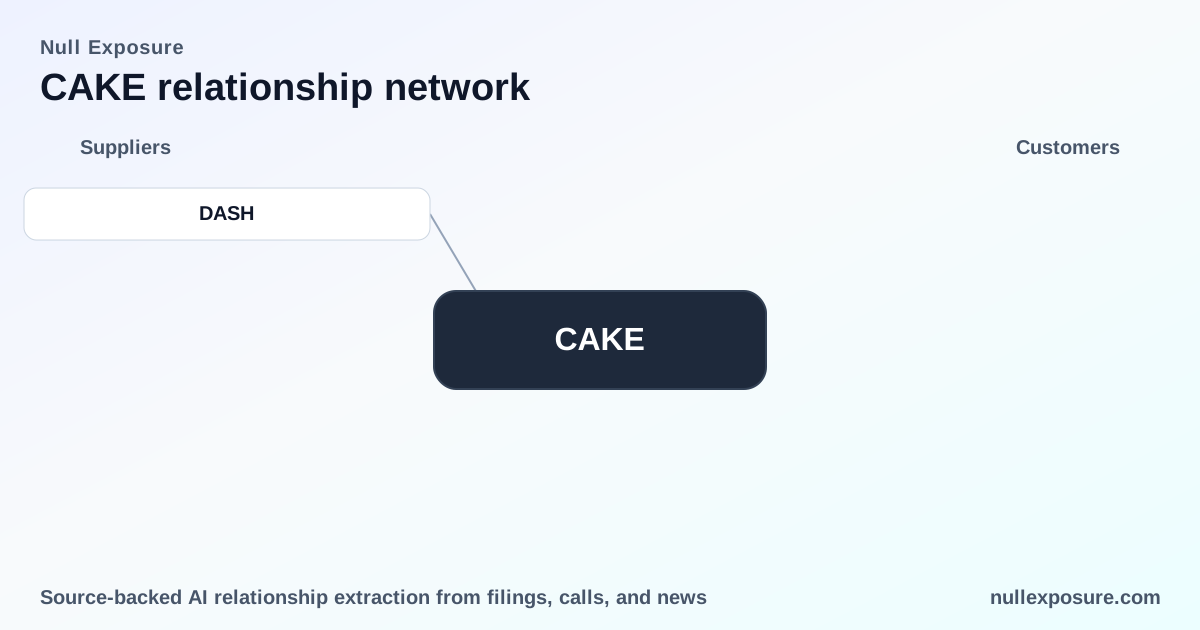
The most visible supplier/partner signal in public commentary is Cheesecake Factory’s reliance on third‑party delivery channels to capture off‑premise demand. DoorDash drives a material share of off‑premise revenue, which supports growth but compresses per‑order economics through fees and returns control of customer data to third‑party marketplaces. This is not a marginal effect — off‑premise is a strategic revenue stream that changes operating leverage across the chain.
- Key operating implication: higher off‑premise penetration increases revenue volatility from promo cycles and platform dynamics while creating marketing and margin tradeoffs.
- Property and cost structure: Cheesecake Factory leases all its locations with initial lease terms of 10–20 years plus renewal options, which locks in occupancy exposure and underpins site stability but raises fixed costs in economic downturns.
Learn more about commercial exposures and supplier mapping at NullExposure: https://nullexposure.com/
Supplier relationships in the public record (each result covered)
DoorDash — Finviz news commentary (noted 2026-03-09)
DoorDash is cited as the dominant channel for off‑premise orders, with off‑premise sales representing about 21% of Cheesecake Factory’s revenue, supporting the company’s menu initiatives such as “Bites and Bowls.” According to Finviz coverage on March 9, 2026, delivery volume through DoorDash materially drives the off‑premise mix and supports dessert sales trends.
DoorDash — Simply Wall St coverage (noted 2026-03-09)
Simply Wall St reiterates that off‑premise orders — largely fulfilled through DoorDash — account for roughly 21% of revenue and highlights adoption of menu formats tailored to delivery demand. A March 9, 2026 Simply Wall St note frames DoorDash as central to Cheesecake Factory’s off‑premise strategy and product experimentation.
How these relationships affect the economics and risk profile
The DoorDash relationship is a double‑edged commercial lever. On the revenue side, delivery partnerships materially expand addressable orders and allow Cheesecake Factory to monetize a different customer set without building its own logistics. On the cost side, third‑party commissions, promotional participation, and menu re-engineering for delivery reduce average ticket profitability relative to dine‑in sales.
- Concentration and criticality: public reporting attributes most off‑premise activity to DoorDash, creating concentration risk. If platform terms shift or operational issues arise, off‑premise revenue and unit economics can move quickly.
- Contracting posture: Cheesecake Factory negotiates a mix of short‑term and long‑term supplier contracts for major commodity categories (for example, dairy and poultry), allowing operational flexibility in volatile input markets while locking in supply where beneficial.
- Real estate rigidity: the company’s long lease terms (10–20 years with renewal options) create stability in location footprint but raise fixed cost sensitivity to traffic declines or prolonged margin compression.
Investor takeaway: delivery platforms increase revenue reach but transfer margin and customer control; long leases reduce rollout risk but amplify downside under traffic weakness.
Commercial constraints as company‑level signals
Cheesecake Factory’s public statements on contracting and leases reveal a deliberate hybrid procurement model. The company negotiates both short‑ and long‑term commodity contracts to balance price certainty and flexibility, and the universal use of long‑term leases provides site permanence and predictability for capital planning. These constraints create a set of predictable vendor relationships and procurement cycles:
- Contract maturity and bargaining power: commodity agreements fluctuate between short and long durations depending on market conditions, indicating active procurement management rather than pure spot exposure.
- Operational criticality: food commodity suppliers (dairy, poultry) are critical input channels; procurement stability is vital to menu continuity and cost control.
- Concentration signal: third‑party delivery platform reliance concentrates off‑premise distribution, elevating counterparty importance beyond typical supplier relationships.
These are company‑level characteristics extracted from public disclosures and operating commentary; they define the supplier risk surface that investors must price.
Valuation context and what to watch next
Cheesecake Factory trades with a market capitalization of roughly $2.95 billion and posted trailing revenue near $3.75 billion. Key financials: trailing P/E ~19.4, forward P/E ~14.3, EV/EBITDA ~16.95, and operating margin ~7%. Analyst consensus leans toward cautious optimism with a target price near $64.67 and a mix of buy and hold opinions (6 buys, 10 holds, 4 sells combined). These multiples embed assumptions about margin recovery and the sustainability of off‑premise revenue growth.
For investors assessing supplier exposure, monitor:
- Platform economics: commission rate changes or mandatory promotions from DoorDash and other delivery partners.
- Commodity contract rollovers: timing and pricing of dairy/poultry agreements ahead of margin reporting.
- Lease adjustments: new store openings vs. closures and any renegotiation activity that could alter fixed charge coverage.
If you want a structured supplier map and counterparty risk model for CAKE, get a focused supplier analysis at NullExposure: https://nullexposure.com/
Bottom line for investors
Cheesecake Factory’s commercial model is robust but not immune to structural pressure: off‑premise growth through DoorDash expands revenue channels and supports menu innovation, while long‑term leases and mixed‑term commodity contracts stabilize supply and footprint. The primary investment risk flows from commission‑driven margin compression and distribution concentration, which require active monitoring alongside traditional operating metrics and commodity cycles.
For a deeper dive into CAKE’s supplier network and how it could affect valuation scenarios, visit NullExposure for tailored counterparty intelligence: https://nullexposure.com/