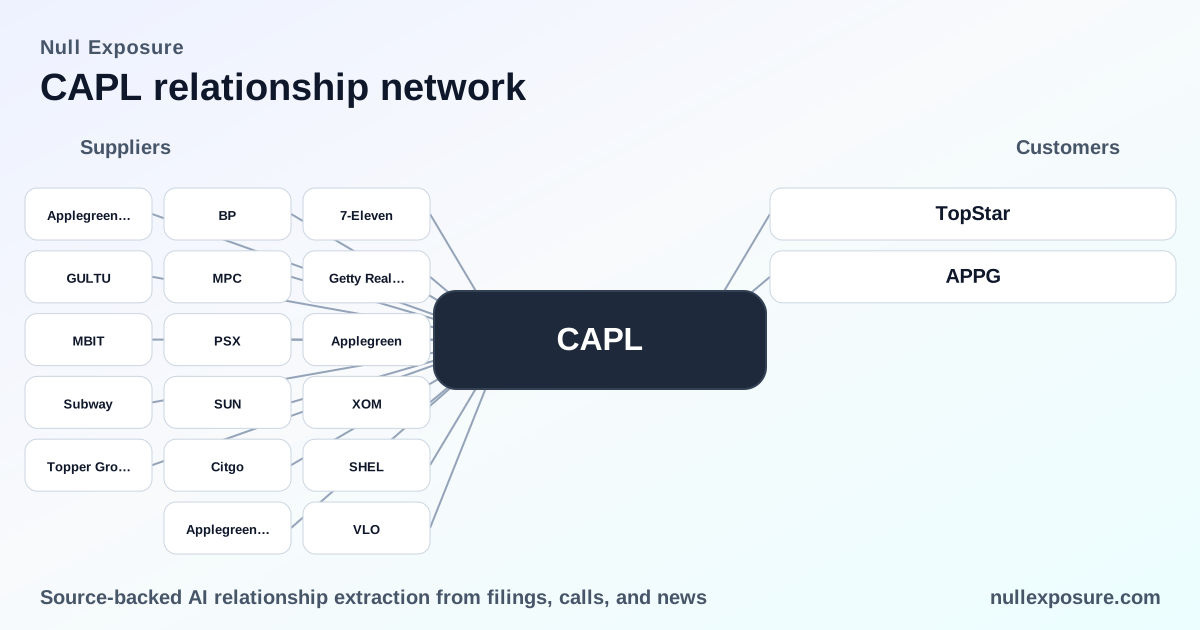
CrossAmerica Partners (CAPL): Supplier relationships, contract posture and investment implications
CrossAmerica Partners LP operates as a wholesale fuel distributor, convenience-store operator and owner/lessor of retail fuel real estate across the U.S.; it monetizes through fuel distribution margins, convenience-store sales and rental/management income from leased or owned sites. For investors and operators evaluating supplier exposure, CAPL’s model is a combination of high-volume fuel procurement from major refiners, long-dated service and management arrangements with affiliated parties, and periodic accretive retail acquisitions that expand its branded footprint. Learn more on the platform: https://nullexposure.com/
Why counterparties matter for CAPL’s cash flow profile
CAPL’s working capital and margin volatility are driven by its supplier mix (major refiners), real-estate leases and related-party management fees. Concentration among a few large fuel suppliers and a set of related-party contracts creates both predictable throughput and idiosyncratic governance risk; the company’s ability to preserve cash distributions depends on maintaining supply terms while controlling management fees and rent. For a quick view of the firm-level coverage we publish, visit https://nullexposure.com/.
Who CAPL does business with — what each relationship means
Below are every counterparty referenced in the sourced results, with a concise plain-English takeaway and the cited source.
-
7‑Eleven — CAPL closed on the final three properties of a 106-site acquisition originally from 7‑Eleven (transaction completed in stages); that purchase of assets is recorded in the FY2024 10‑K. According to CAPL’s FY2024 10‑K, the company completed final property transfers related to the 7‑Eleven portfolio acquisition in February 2022 (capl‑2024‑12‑31).
-
Getty Realty Corporation — CAPL’s predecessor entered a 15‑year master lease with renewal options up to 20 years with Getty Realty, demonstrating long-term real‑estate commitments. This lease is disclosed in the FY2024 10‑K (capl‑2024‑12‑31).
-
Applegreen — CAPL acquired Applegreen sites and amended its credit facility in connection with that acquisition; the FY2024 10‑K documents an Applegreen transaction and related CAPL Credit Facility amendment dated February 20, 2024 (capl‑2024‑12‑31).
-
Applegreen Midwest — Applegreen Midwest is cited in press coverage as a seller of sites; mobility and M&A notes show Applegreen subsidiaries sold a block of convenience stores for ~$16.9 million as part of the Applegreen disposition (mobilityplaza / SEC filing referenced in 2024 news).
-
Applegreen Florida — Applegreen Florida likewise appears in filings and press reporting as a counterparty in the 59‑site sale, with the SEC filing and mobility reporting noting the $16.9 million consideration (mobilityplaza / SEC notice, 2024).
-
ExxonMobil / Mobil (XOM) — CAPL ranks among ExxonMobil’s largest U.S. distributors by fuel volume and supplies Exxon/Mobil branded sites across its footprint; multiple press releases and CAPL filings (2024–2026) emphasize this high‑volume distributor relationship (GlobeNewswire and CAPL releases, 2024–2026).
-
BP — CAPL maintains a well‑established branded distribution relationship with BP across many sites and regularly cites BP among its core brand partners in investor releases (GlobeNewswire and other CAPL press releases, 2024–2026).
-
Shell — Shell is listed among the major brands CAPL distributes, and CAPL’s corporate releases and investor materials identify Shell as a significant brand partner across its U.S. footprint (GlobeNewswire / press releases, 2024–2026).
-
Valero — CAPL distributes Valero‑branded motor fuels at scale and includes Valero in its list of principal fuel suppliers in investor communications (multiple press releases and trading summaries, 2024–2026).
-
Marathon — Marathon appears alongside the other major refiners as a core branded supplier for CAPL’s retail network in CAPL filings and press coverage (GlobeNewswire / trading releases, 2024–2026).
-
Phillips 66 — Phillips 66 is consistently listed by CAPL as a branded supplier across the Partnership’s footprint in regulatory filings and investor announcements (GlobeNewswire and related press, 2024–2026).
-
Sunoco — Sunoco is named in CAPL’s brand roster in corporate communications, indicating branded distribution relationships in the company’s retail portfolio (GlobeNewswire release, 2024).
-
CITGO — CITGO is included in CAPL’s enumerated brand partners in investor materials describing its multi‑brand distribution network (GlobeNewswire investor release, 2024).
-
Gulf — Gulf is listed among the brands CAPL distributes in press statements about the company’s 34‑state presence and branded relationships (GlobeNewswire distribution note, 2024).
-
Subway — CAPL operates company‑run food concepts as part of its c‑store portfolio, and management commentary notes approximately 46 branded food locations, about half of which are Subway, reflecting an in‑house food franchise relationship and ancillary retail revenue (CSPDailyNews / AlphaSense transcript coverage, FY2025).
-
Topper Group — The Topper Group is a material related party: CAPL leases retail sites and vehicles from Topper and receives management services under an Omnibus Agreement; lease and service expenses are disclosed in the FY2024 10‑K and related filings (capl‑2024‑12‑31).
-
Affiliates of John B. Reilly III and Joseph V. Topper Jr. — CAPL purchases certain convenience‑store merchandise and leases office space from affiliates of board members John Reilly and Joseph Topper, with merchandise cost and rent lines disclosed and approved by the conflicts committee (FY2024 10‑K).
-
DMI (management services provider) — DMI provides management, administrative and operating services to CAPL under the Omnibus Agreement at cost without markup, per the FY2024 10‑K disclosures; DMI is the operational service provider named in the filing (capl‑2024‑12‑31).
-
Lehigh Gas Wholesale Services (CAPL subsidiary referenced with Applegreen deal) — CAPL and its subsidiary Lehigh Gas Wholesale Services executed the Applegreen purchase agreement for 59 stores, documented in news coverage of the transaction (mobilityplaza / CSPDailyNews, 2024).
(Each relationship above is drawn from CAPL’s FY2024 10‑K and CAPL press coverage and third‑party releases between 2024 and 2026 cited in company filings and investor releases.)
Contract posture, concentration and other operating constraints — what the disclosures say about risk
CAPL’s disclosures surface a set of structural constraints that shape commercial risk and predictability:
-
Long‑term and framework contracts coexist with spot purchases. CAPL reports long‑term supply commitments and lease terms (including a 15‑year Getty master lease and long‑term supply commitments with minimum volumes) while also buying product at market prices when necessary — creating a blended risk profile (FY2024 10‑K).
-
Supplier concentration is material. The company purchased approximately 81% of its motor fuel from four suppliers in 2024, a clear concentration signal that increases counterparty risk if one major supplier changes terms (FY2024 10‑K).
-
Related‑party service and fees are significant and measurable. The Omnibus Agreement generated $125.2 million in management fees in 2024 and notable rent and merchandise payments to Topper/Reilly affiliates (FY2024 10‑K); those payments are material to the cost base and governance considerations.
-
Geography and procurement scale limit foreign currency or cross‑border risk. Operations are U.S.‑centric and not exposed to foreign‑exchange risk by disclosure (FY2024 10‑K).
-
Operational criticality and maturity are mixed. Large integrated refiners supply the bulk of product (high criticality, established counterparties), while affiliated services provide management continuity but introduce dependency and related‑party governance considerations (FY2024 10‑K).
These constraints are company‑level signals; where the filing names a counterparty explicitly (for example, Topper Group leases and Omnibus Agreement) those excerpts are attributed accordingly.
Investment implications: what investors and operators should watch
-
Stability driver: High volumes from major refiners like ExxonMobil and BP underpin core throughput and provide scale leverage; this supports predictable gross fuel margin if supply terms hold (company press releases, 2024–2026).
-
Governance and cash flow risk: The sizeable related‑party management fees and lease payments elevate the importance of the independent conflicts committee and transparency around the Omnibus Agreement (FY2024 10‑K).
-
Concentration risk: With ~81% of fuel from four suppliers, scenario analysis on supplier pricing, prompt‑pay discounts and minimum purchase obligations should be included in underwriting (FY2024 10‑K).
-
M&A optionality: CAPL’s acquisition of Applegreen and 7‑Eleven site purchases show an acquisitive path that can accelerate EBITDA if integration captures fuel margins and retail sales uplift (press coverage and 10‑K).
If you want a concise counterparty exposure dashboard and alerts tied to these relationships, check https://nullexposure.com/ for tailored monitoring and analysis.
Bottom line
CrossAmerica’s business model is a scale fuel distributor with concentrated supplier exposure and meaningful related‑party service arrangements; that combination yields stable throughput potential but requires active monitoring of supplier contracts and related‑party economics. For investors evaluating CAPL, prioritize stress tests on supplier price changes, governance scrutiny of Omnibus Agreement fees, and integration economics for recent retail acquisitions. Learn more about CAPL coverage and live relationship tracking at https://nullexposure.com/.