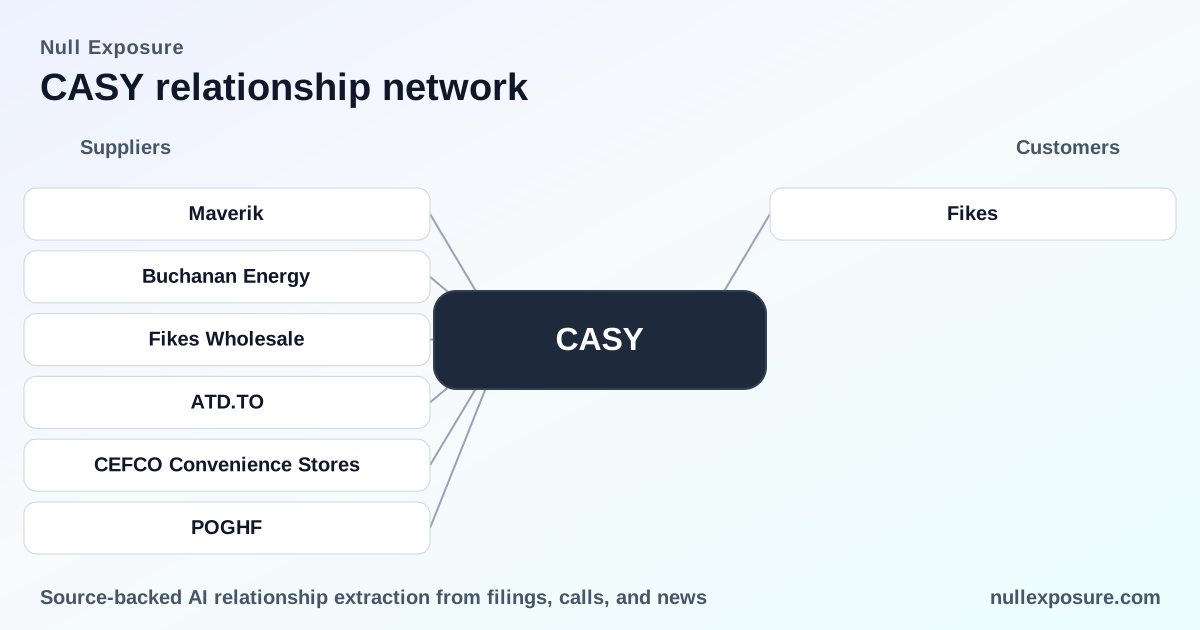
Casey’s (CASY) Supplier Footprint: Acquisition-Driven Retail Scale and Who Supplies Its Stores
Casey’s General Stores operates a national convenience-store business that monetizes through a mix of fuel sales, prepared food, and retail merchandising, amplified by an aggressive acquisition strategy that converts acquired c-stores into Casey’s formats or sub-brands (GoodStop). The company generates scale benefits across distribution and purchasing — reflected in $16.98B revenue (TTM) and a $24.96B market cap — and relies on a blend of third-party site acquisitions and direct manufacturer purchasing to stock its network. For investors evaluating supplier risk, the signal set points to operational supplier relationships rather than long-term strategic supply contracts, with fuel procurement and food-manufacturing relationships as the most commercially critical links. Learn more about supplier exposure and integration signals at https://nullexposure.com/.
How Casey’s runs procurement and why it matters to investors
Casey’s operating model is built for rapid store rollout and operational conversion rather than long-term vertical integration. The company buys a majority of food and non-food items directly from manufacturers, and its public disclosures note that long-term supply contracts are not the norm for store-sold products — a contracting posture that favors price flexibility but increases vendor-switch risk. The firm’s fuel purchases are material (reported in cost of goods figures), which makes fuel suppliers and wholesale fuel markets strategically significant to margins.
These characteristics produce several investor-relevant dynamics:
- Contracting posture: Predominantly short-term purchase arrangements, which preserve margin flexibility but raise exposure to supplier cost volatility.
- Supplier role mix: Casey acts primarily as a large buyer and retailer; it sources many items directly from manufacturers while using distributors for others.
- Critical spend areas: Fuel and prepared-food / merchandising categories are the most economically sensitive relationships.
- Integration risk: Growth by acquisition increases supplier heterogeneity and integration costs during rebranding and distribution consolidation.
If you want a focused supplier-risk profile for a portfolio or an operating playbook for roll-up integration, start here: https://nullexposure.com/.
How recent acquisitions reshaped the supplier map
Casey’s growth in the last two years was acquisition-led — acquiring networks of legacy stores that were not always an ideal fit for conversion to the Casey’s banner. That dynamic created an intermediate sub-brand (GoodStop) to capture value from non-core sites while reconfiguring supply flows. Several acquisitions — including CEFCO, Bucky’s, and Circle K locations — have changed who Casey’s negotiates with and how it channels inventory into distribution centers. CSP Daily News documented this sequencing and the rationale for GoodStop in March 2026 (see the company-news piece linked below).
Relationship roll call — who Casey’s picked up or deals with
Below I list every named supplier/partner flagged in public coverage and provide a concise, investor-oriented summary with an accessible source.
-
Maverik — Casey’s acquired certain stores (De Soto and Eldora) that were previously under Maverik ownership as part of its multi-year expansion and conversion plan, illustrating the company’s strategy of buying small regional portfolios and folding them into its footprint. Source: CSP Daily News, March 2026 (company-news). https://cspdailynews.com/company-news/caseys-expands-goodstop-sub-brand-iowa
-
Buchanan Energy (Bucky’s) — Casey’s bought 94 Bucky’s stations from Buchanan Energy, a transaction that contributed to the pool of acquired sites used to trial the GoodStop sub-brand when full Casey’s conversion was not optimal. Source: CSP Daily News, March 2026 (company-news). https://cspdailynews.com/company-news/caseys-expands-goodstop-sub-brand-iowa
-
Fikes Wholesale / CEFCO Convenience Stores — The majority of the incremental store count Casey’s added in recent rollups came through the November 2024 acquisition of 198 CEFCO stores from Fikes Wholesale; Casey’s announced plans to rebrand those CEFCO stores beginning in early 2026. This is a clear example of inventory and supplier integration work stemming from a single transaction. Source: CSP Daily News, March 2026 (foodservice & company-news). https://cspdailynews.com/foodservice/caseys-same-store-prepared-food-dispensed-beverage-quite-strong-latest-quarter and https://cspdailynews.com/company-news/caseys-expands-goodstop-sub-brand-iowa
-
Alimentation Couche-Tard (Circle K) — As part of its buy-in strategy, Casey’s absorbed 49 Circle K c-stores from Alimentation Couche-Tard, creating additional heterogeneity in supplier contracts and local fuel supply arrangements that require harmonization. Source: CSP Daily News, March 2026 (company-news). https://cspdailynews.com/company-news/caseys-expands-goodstop-sub-brand-iowa
-
Pilot — Casey’s acquired 40 stores from Pilot, another example of acquiring branded sites that require either conversion to Casey’s or operation under a secondary format; these deals underscore the operational work required to consolidate procurement and fuel sourcing. Source: CSP Daily News, March 2026 (company-news). https://cspdailynews.com/company-news/caseys-expands-goodstop-sub-brand-iowa
(Each of the above items is grounded in the March 2026 CSP Daily News coverage of Casey’s expansion and GoodStop rollout.)
What the constraints tell us about supplier risk and maturity
Company-level disclosures provide actionable constraints that frame supplier exposure without tying them to specific vendors:
-
Short-term contracting posture: Company filings state that long-term supply contracts are not typical for products sold in stores; that points to a nimble, transactional procurement model rather than entrenched vendor relationships. This increases exposure to price swings but preserves negotiating leverage. (Fiscal 2025 filing language cited in public disclosures.)
-
Direct manufacturer purchasing: Fiscal 2025 commentary confirms a majority of food and non-food items were purchased directly from manufacturers, indicating mature category relationships for core SKU flows but less dependency on long-term exclusive supplier agreements.
-
Buyer economics include large fuel purchases: Cost of goods disclosures explicitly quantify fuel spend, making fuel supply and wholesale price volatility a company-level economic lever for margins.
These signals combine into a clear investor read: Casey’s supplier base is operationally mature on volume purchasing, but strategically light on long-duration contracts — a profile that favors rapid expansion but requires active margin management.
Risks, catalysts, and what to watch next
- Integration risk: Successful conversion of acquired sites (CEFCO, Bucky’s, Circle K, Pilot, Maverik) is a direct driver of realized synergies; mis-execution pressures margins.
- Fuel volatility: Given fuel’s share of COGS, wholesale fuel pricing and supplier terms are major macro levers on Casey’s EBITDA.
- Retail merchandising: Direct manufacturer relationships for prepared-food items are valuable margin drivers; improvements here scale quickly.
- Regulatory/local permitting: Local fuel and food regulations can delay conversions and impact capex timing.
Bottom line and next steps
Casey’s supplier posture is acquisition-driven, operationally focused, and contractually flexible, which supports rapid expansion but leaves the company sensitive to short-term cost swings — especially in fuel and food categories. For investors and operators, the key monitoring points are successful conversion of acquired portfolios, harmonization of distribution contracts, and ongoing margin capture from prepared foods.
If you need a targeted supplier-risk briefing or integration checklist for roll-up assets, review our supplier risk products at https://nullexposure.com/. For portfolio-level monitoring of supplier concentration and transaction-driven exposures, find analyst-ready reports and alerts at https://nullexposure.com/.