CBAK Energy (CBAT) — supplier footprint, procurement constraints, and what investors should price in
CBAK Energy Technology Inc. develops, manufactures and sells lithium-ion batteries and battery materials, monetizing through product sales across China and international markets and a materials business that supplies graphite, iron phosphate and lithium phosphate. Revenue is generated from battery sales and related materials, while margins and working capital are driven heavily by raw‑material costs and short‑term supplier arrangements. For a structured supplier intelligence view, see NullExposure’s platform: https://nullexposure.com/.
Quick reading: how CBAK’s operating model converts into supplier risk
CBAK is a vertically oriented manufacturer whose cost base is concentrated in electrode materials, foils, electrolytes, separators and other battery inputs. The company’s public filings show a procurement posture dominated by purchase orders and short‑term contracts, sourcing principally across China. That operating profile creates two investment realities: cost-pass-through is limited (given competitive product markets), so input price volatility hits margins directly, and trade‑payable concentration can create supplier leverage over procurement and cash conversion. Explore the full supplier mapping at https://nullexposure.com/.
What the 10‑K actually discloses about named suppliers
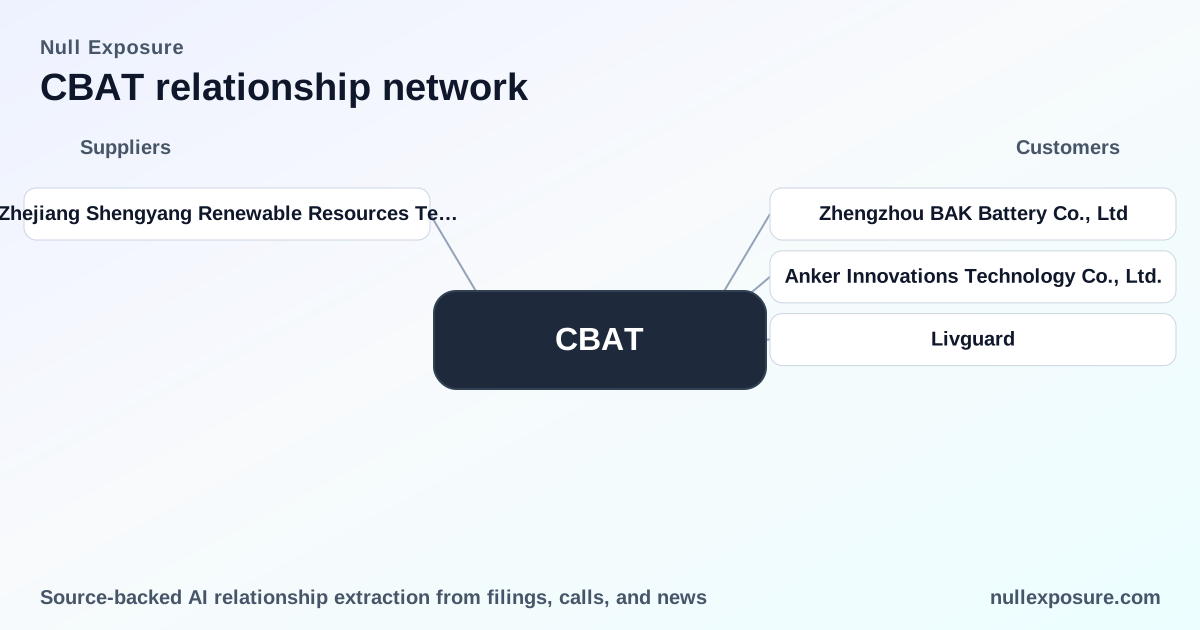
Zhejiang Shengyang Renewable Resources Technology Co., Ltd. is included among suppliers that individually comprised 10% or more of CBAK’s trade payables as of December 31, 2023 and 2024, according to CBAK’s FY2024 Form 10‑K. This listing signals meaningful counterparty importance for payable balances, rather than a trivial vendor relationship. (Source: CBAK 2024 Form 10‑K, FY2024 supplier disclosures.)
Every supplier relationship recorded in the results
- Zhejiang Shengyang Renewable Resources Technology Co., Ltd. — Listed by name in CBAK’s FY2024 Form 10‑K as a supplier that individually comprised 10% or more of trade payables for the years ending December 31, 2023 and 2024; this positions Zhejiang Shengyang as a material payable counterparty for CBAK. (Source: CBAK FY2024 10‑K supplier schedule.)
The public results provided contain a single listed supplier meeting the disclosure threshold; the 10‑K makes clear that supplier concentration for payables exists and is material to short‑term working capital dynamics.
Company-level constraints that shape procurement and execution
The company’s filings and the extracted constraint excerpts convey a set of firm-level procurement characteristics that investors and operators must price:
- Short-term contracting posture. CBAK states it purchases most raw materials under individual purchase orders or short‑term contracts rather than multi‑year agreements, increasing exposure to price swings and supply interruptions. (Source: CBAK FY2024 Form 10‑K excerpts.)
- APAC/China sourcing concentration. The company sources raw materials from a number of suppliers across China, creating geographic concentration risk and sensitivity to regional supply chain disruptions and policy shifts. (Source: CBAK FY2024 Form 10‑K.)
- Raw‑material cost is material to pricing and margins. The filings identify electrode materials, foils, electrolytes, separators and key battery chemicals as primary cost drivers; this positions input cost trends as a direct driver of gross margin and product pricing. (Source: CBAK FY2024 Form 10‑K.)
- Role profile: buyer and service relationships. CBAK’s disclosures include large purchase line items (for example, purchases from Zhengzhou BAK Battery Co., Ltd. recorded at multi‑million dollar levels in the filing excerpts), and the company also relies on third‑party service providers for data processing and security. The named purchase entries establish that some vendor relationships already operate at multi‑million dollar spend bands. (Source: CBAK FY2024 Form 10‑K excerpts.)
- Active, manufacturing‑centric supplier base. The company confirms active sourcing across its manufacturing operations; procurement decisions will therefore directly influence production throughput and the company’s ability to meet revenue targets. (Source: CBAK FY2024 Form 10‑K.)
Taken together, these constraints create a procurement profile that is high frequency, market‑exposed and regionally concentrated, which investors should treat as a structural input risk to margin stability and working capital.
Why these relationships matter for valuation and operations
CBAK reports roughly $161.8 million in trailing revenue and a negative net profit margin across the trailing twelve months; with material raw‑material costs and short‑term supplier arrangements, gross margin volatility is the principal earnings risk. Supplier concentration in trade payables—exemplified by Zhejiang Shengyang’s 10%+ payables share—has three direct implications:
- Liquidity and payables leverage: concentrated payables can create negotiating asymmetry and contingent cash‑flow pressure if payment terms change.
- Price transmission: with short contracts, sudden commodity price moves cannot be easily hedged into multi‑year supply agreements, compressing near‑term margins.
- Regional dependency: sourcing focused in China increases exposure to local input cost moves and logistical or regulatory constraints.
Operators should prioritize supplier diversification, longer tenor purchase commitments where possible, and targeted inventory hedging. Investors should stress‑test operating scenarios for raw‑material price shocks and supplier default events.
For an operationally focused supplier breakdown and scenario matrices visit https://nullexposure.com/.
Practical next steps for investors and procurement teams
- Procurement: move strategic raw materials onto multi‑quarter or indexed agreements to reduce spot price exposure and protect margin.
- Treasury: incorporate supplier concentration metrics into working capital stress tests and maintain contingency liquidity for potential payable squeezes.
- Investor analysis: model margin sensitivity to +/- 10–20% swings in electrode and electrolyte input prices and re‑price CBAT accordingly.
Key takeaways: CBAK operates a manufacturing business with material input cost exposure, a short‑term procurement posture, and at least one supplier—Zhejiang Shengyang—material to trade payables. These facts translate into margin and working capital risk that should be explicitly reflected in any valuation or operational diligence. Learn more about supplier risk scoring and disclosures at https://nullexposure.com/.
Final read: actionable signals
- High priority: monitor payable concentrations and any change in supplier lists disclosed in future 10‑Ks or quarterly reports.
- Near term: stress test gross margins to raw material price moves given the short‑term contract structure.
- Operational focus: pursue supplier term extensions and geographic diversification to reduce single‑market exposure.
NullExposure’s supplier intelligence tools can accelerate that diligence—start here: https://nullexposure.com/.