Crescent Biopharma (CBIO): A supplier-risk and partner-readiness briefing for investors
Crescent Biopharma is a clinical-stage biopharmaceutical company building a cancer therapy pipeline through licensed assets and strategic partnerships. The company monetizes by acquiring development and commercialization rights (upfront payments, milestone triggers and royalties), progressing clinical candidates toward regulatory clearance, and funding operations through capital markets transactions arranged by placement agents and advisors. Capital raises and licensing economics drive near-term value; clinical progress and partner execution drive medium-term optionality.
If you evaluate counterparty exposure or supplier concentration for a portfolio company, start here: Crescent’s model is a licensing-and-partner ecosystem rather than an integrated commercial manufacturing platform. For a deeper supplier intelligence view, visit https://nullexposure.com/.
What matters for investors: how Crescent’s operating model plays out in practice
Crescent runs a lean, outside-in operating model. The company licenses clinical-stage assets from biotech owners, pays meaningful upfronts (evidenced by an $80 million payment tied to a recent license) and funds development via equity placements led by multiple investment banks. That structure concentrates operational risk on third-party manufacturers, CROs and licensing counterparties while it retains upside via milestone and royalty economics.
- Contracting posture: exclusive geographic licenses and multi-year program deals that include upfront and milestone payments.
- Concentration and criticality: high dependence on a small set of counterparties for core assets, manufacturing and capital-raising services; those relationships are operationally critical to program timelines.
- Maturity: Crescent is pre-revenue and clinical-stage, so financial performance is driven by financing events and partner-driven monetization rather than product sales today.
For supplier-due-diligence that maps these relationships into portfolio risk, see https://nullexposure.com/.
Counterparty roll-call: every relationship in the public record
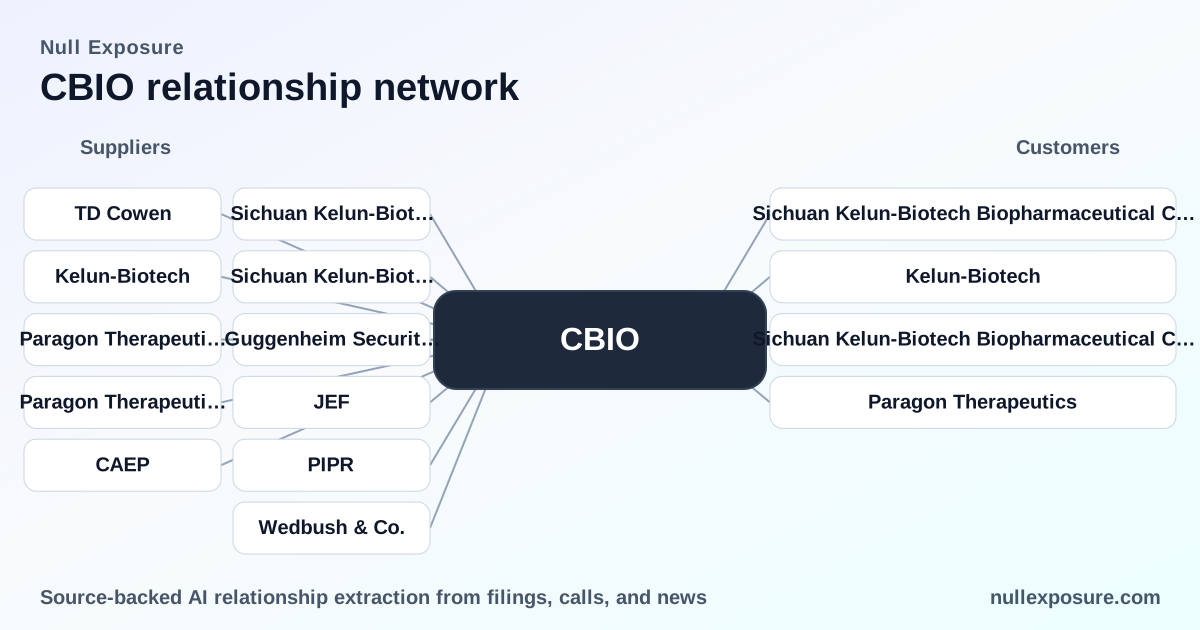
Below I list each relationship found in Crescent’s recent public disclosures and reporting, with a concise plain-English description and the originating source.
-
Sichuan Kelun‑Biotech Biopharmaceutical Co., Ltd. — According to a GlobeNewswire press release (Dec 4, 2025), Crescent entered a strategic partnership that included an $80 million upfront payment and up to $1.25 billion in milestones plus tiered royalties on SKB105; the deal grants Crescent exclusive rights outside Greater China. (GlobeNewswire, Dec 4, 2025)
-
Sichuan Kelun‑Biotech — Crescent’s Q4 and FY2025 financial disclosures note the $80.0 million upfront payment to Kelun‑Biotech was recorded as a driver of higher R&D expense, confirming cash flow impact from the licensing transaction. (Sahm Capital report summarizing Crescent’s FY2025 results, Feb 26, 2026)
-
Sichuan Kelun‑Biotech (Kelun‑Biotech) — Crescent’s FY2025 results and investor materials repeat that the upfront payment financed rights to CR‑003 (SKB105) and confirm the program’s geographic exclusivity outside Greater China. (GlobeNewswire financial release, Feb 26, 2026)
-
Guggenheim Securities — In the Dec 4, 2025 corporate announcement of the Kelun partnership, Guggenheim is listed among placement agents that executed a concurrent $185 million private placement to accelerate Crescent’s pipeline. (GlobeNewswire, Dec 4, 2025)
-
Jefferies — Jefferies served as one of the placement agents for Crescent’s private placement tied to the Kelun partnership. (GlobeNewswire, Dec 4, 2025)
-
Piper Sandler — Piper Sandler is disclosed as Crescent’s financial advisor on the transformational transaction and related financing. (GlobeNewswire, Dec 4, 2025)
-
Wedbush & Co. — Wedbush is listed among the placement agents on the financing tied to the Kelun collaboration. (GlobeNewswire, Dec 4, 2025)
-
TD Cowen — TD Cowen served as a placement agent on the $185 million private placement accompanying the Kelun strategic partnership. (GlobeNewswire, Dec 4, 2025)
-
Kelun‑Biotech (MedCityNews coverage) — MedCityNews summarized the deal terms and emphasized that Crescent has exclusive U.S., European and other non‑Greater‑China development and commercialization rights to the ADC program. (MedCityNews coverage, Dec 2025)
-
Paragon Therapeutics, Inc. — Crescent confirms the pipeline includes two ADCs licensed from Paragon, showing that Crescent’s asset base is built via out‑licensed oncology programs. (TradingView summary of Crescent SEC filings, FY2025)
-
Paragon Therapeutics (MedCityNews) — Media coverage reiterates that two ADCs in the Crescent pipeline are Paragon‑licensed, highlighting the company’s licensing strategy for ADC assets. (MedCityNews, Dec 2025)
-
Sichuan Kelun‑Biotech — A GlobeNewswire release (Jan 5, 2026) announcing IND clearances states Kelun‑Biotech granted Crescent exclusive rights to research, develop and commercialize CR‑003 (SKB105) in the U.S., Europe and other territories outside Greater China. (GlobeNewswire, Jan 5, 2026)
-
Sichuan Kelun‑Biotech — Yahoo Finance coverage of the regulatory clearances echoed the exclusivity on CR‑003 and the company’s role in advancing IND filings. (Yahoo Finance press summary, Jan 2026)
-
Sichuan Kelun‑Biotech — An additional Q4 2025 summary carried by StockTitan reiterates that the $80.0 million upfront payment to Kelun‑Biotech increased R&D spend in the quarter. (StockTitan, Feb 2026)
-
Cantor — Cantor is listed among the placement agents involved in the December 2025 capital raise tied to Crescent’s partnership announcements. (GlobeNewswire, Dec 4, 2025)
Each of these entries is drawn from the specific press release or financial report noted above; the Kelun relationship and the placement-agent syndicate represent the most material near-term counterparty exposure given the size of the upfront payment and the financing that accompanied it.
Operational constraints and supplier risk: read the fine print
Crescent’s public filings and press releases reveal four company-level operational signals that govern supplier risk:
-
Long-term contracting posture: filings reference project agreements with multi-year terms, signaling that counterparties are contracted for extended program cycles rather than short vendors. The SEC disclosure around paused project activity specifically cites an initial term through year‑end 2026.
-
Critical reliance on third parties: Crescent states it would rely on CROs, CMOs and third‑party technologies to operate critical systems and process sensitive information, indicating outsourced execution is core to drug development and regulatory timelines.
-
Manufacturer and service‑provider dependency: SEC excerpts name historic manufacturing arrangements (Patheon/Thermo Fisher) and describe the company’s reliance on contract manufacturing and testing—this is an explicit manufacturer/service-provider risk for supply continuity and quality compliance.
-
Winding‑down program risk: Crescent disclosed it has paused activities and may terminate certain project agreements following a merger decision, which shows portfolio churn and the operational impact of strategic reprioritization.
Together these signals describe an operator that outsources core capabilities under long-term agreements, is materially exposed if a counterparty underperforms, and is sensitive to strategic stops/starts that affect payments and development timelines.
Investment implications and what to watch next
-
Catalytic milestones and regulatory readouts will reprice risk: the Kelun license and IND clearances centralize value into CR‑003 and pipeline clinical events, so near-term regulatory or clinical milestones will materially change asset valuations.
-
Counterparty execution is a binary operational risk: manufacturing or CRO disruption could materially delay timelines; the upfront payment to Kelun increases financial leverage to execute those trials.
-
Financing exposure is diversified across placement agents: the use of multiple banks reduces single‑counterparty underwriting risk for liquidity events, but does not alter clinical or manufacturing dependencies.
For active diligence, monitor Kelun‑Biotech program milestones and any material amendments to project agreements or manufacturing contracts. For a consolidated vendor-risk view and tracking of these counterparties, visit https://nullexposure.com/.
Final takeaway: Crescent’s value sits at the intersection of partner-delivered clinical progress and market financing; underwriting the equity requires both confidence in counterparties to execute and a clear view of upcoming regulatory catalysts. For supplier intelligence and ongoing counterparty monitoring, explore https://nullexposure.com/.