CBRE as a Supplier Partner: what investors and operators need to know
CBRE Group, Inc. operates as the world’s largest commercial real estate services and investment platform, monetizing through transaction fees, property and facilities management contracts, advisory services, and capital markets transactions, with a significant portion of topline coming from reimbursable pass‑through costs. The business leverages client relationships and scale to capture recurring fee income while using short‑dated warehouse and lending facilities to support its capital-intensive activities. For decision-makers evaluating CBRE supplier relationships, the key vectors are counterparty cashflow timing, pass‑through cost concentration, and near‑term funding maturities. If you want a structured view of counterparties tied to CBRE for vendor and capital risk assessments, start here: https://nullexposure.com/
How CBRE makes money and what that implies for suppliers and partners
CBRE’s model blends fee-for-service revenue with large, reimbursable pass‑through costs that are recorded in revenue and then billed to clients. The company reported Revenue (TTM) of about $40.55 billion and EBITDA of roughly $2.22 billion, showing the scale at which third‑party spend flows through its P&L. Fee margins are thin relative to gross volume because over half of certain reported costs are pass‑throughs, which creates high transaction volumes, large cash flows that transit CBRE’s books, and material working capital dynamics.
This operating model produces three practical characteristics for supplier relationships:
- Short contracting and funding cycles for finance-related counterparties because warehouse and credit facilities have near-term maturities.
- High absolute spend exposure for third‑party vendors due to large pass‑through amounts, which implies counterparty size and operational scale are critical.
- Predictable, scale-driven revenue, but with sensitivity to macro transaction volumes (commercial leasing and capital markets activity).
What the publicly shown relationships tell us
CBRE’s disclosed supplier-related results in the dataset are limited but instructive. Below I cover every listed relationship and the concrete source for each.
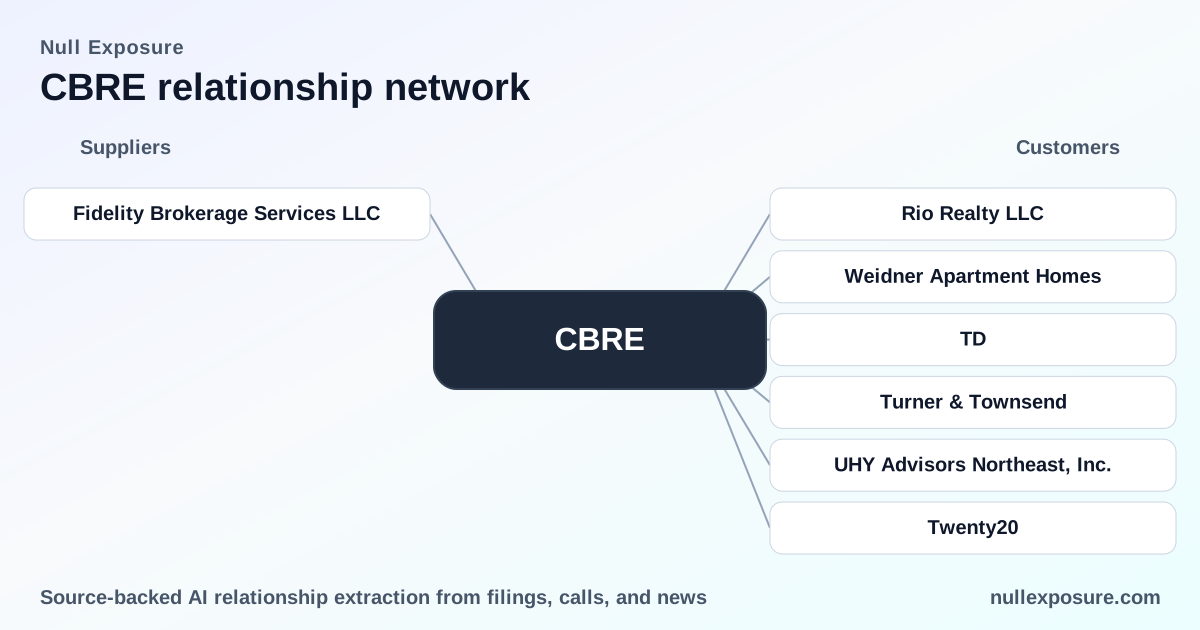
Fidelity Brokerage Services LLC — transaction execution for insider share sales
CBRE filed a Form 144 reporting proposed sales of Class A shares through Fidelity Brokerage Services LLC in FY2026, indicating use of Fidelity as the executing broker for insider or affiliate dispositions. This is an operational counterparty tied to capital markets activity rather than property services, and it reflects the company’s routine interaction with major broker‑dealers for equity transactions. Source: StockTitan copy of an SEC Form 144 filed March 9, 2026 (FY2026).
Balance‑sheet and contracting constraints that shape supplier risk
The company‑level constraints in the dataset reveal two important operating realities that affect supplier evaluation:
-
Short‑term financing posture: CBRE’s summary of warehouse lines shows multiple facilities with current maturities into 2026, including arrangements with JP Morgan and TD Bank and a Fannie Mae ASAP program that is cancellable anytime. This indicates near‑term refinancing or rollover exposure for credit facilities that support loan origination and other financing activities, and it shapes counterparty credit and payment timing for vendors servicing financed assets. Evidence: warehouse line summary as of December 31, 2025.
-
Very large pass‑through spend: The company discloses pass‑through costs of about $12.5 billion, representing roughly 54% of the relevant revenue line, and these amounts are reimbursable by clients and reflected within Revenue. That >$100m spend band signal denotes material third‑party throughput and means suppliers participating in pass‑through arrangements handle high volumes but low margin on a net basis. Evidence: pass‑through costs line item disclosed in FY2025 reporting.
These are company‑level signals — they are not tied to any single supplier relationship in the results but they define the commercial environment for every vendor and capital counterparty that works with CBRE.
What this means for investors and procurement teams
-
For investors: CBRE’s model generates large revenue throughput but thin operating margins (Profit Margin
2.85%) and sizable working capital flows; monitor short‑term funding maturities and refinancing conditions because they directly affect liquidity and the timing of payments to vendors. CBRE’s Forward P/E (18.98) vs Trailing P/E (~35.08) suggests market expectations of earnings improvement, not a reduction in the structural pass‑through exposure. Company financials cited are current through the latest quarter ending December 31, 2025. -
For procurement and operations teams: Counterparty scale and creditworthiness matter. Given the pass‑through volume, operational continuity and timely settlement with large counterparties are essential. The short maturities on warehouse lines imply vendors should incorporate payment timing buffers and confirm collateral or recourse terms on financed transactions.
If you want a concise counterparty mapping or deep vendor exposure report for CBRE, get started here: https://nullexposure.com/
Practical due‑diligence checklist for counterparties
- Confirm exposure to CBRE’s pass‑through arrangements and quantify annualized billed volume.
- Map the impact of warehouse line maturities on payment timing for financed projects.
- Review contractual payment terms and any recourse clauses tied to client reimbursements.
- Monitor insider transactions and the brokers used for equity execution to understand management liquidity signals.
- Stress test cashflow under slower transaction volumes (leasing and capital markets downturns).
Final read and next steps
CBRE operates at scale with a dual profile: large, recurring fee streams combined with very large pass‑through flows and short‑dated financing that creates timing and refinancing risks. The single relationship disclosed in the supplier results—Fidelity Brokerage Services LLC—reflects capital markets execution rather than operational supply, while company‑level constraints highlight where vendor and liquidity risk concentrate.
For tailored counterparty intelligence or to commission a supplier exposure map for CBRE, visit https://nullexposure.com/ and request a focused report.