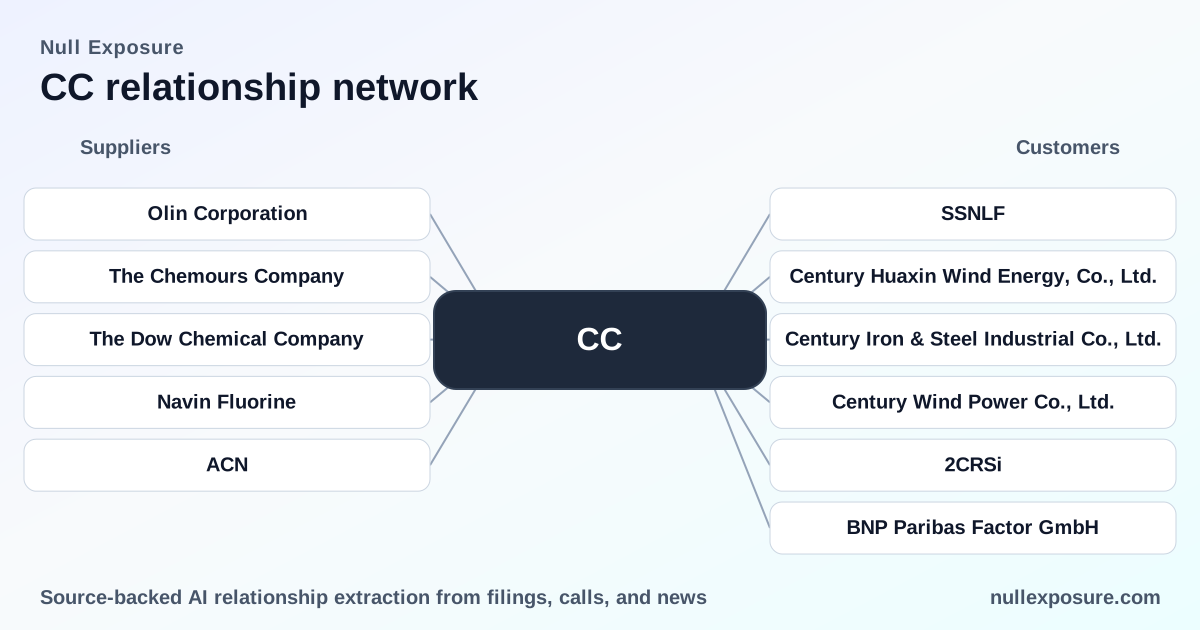
Chemours (CC) — Supplier relationships, contracts and operational constraints investors should track
Thesis: Chemours monetizes proprietary and commodity chemical platforms — notably titanium dioxide, fluoroproducts and engineered performance chemicals — by manufacturing at scale and selling to large industrial and electronics customers under medium- to long-term supply arrangements and spot channels; the company extracts margin through product mix, capacity deployment, and negotiated raw‑material purchasing. For investors and operators evaluating supplier relationships, the critical vector is how contracting posture (multi‑year agreements), counterparty quality (large enterprises), and geographic diversification combine to determine price pass‑through, supply resilience and capital allocation decisions. Learn more about supplier signals at https://nullexposure.com/.
Operational snapshot: Chemours runs global manufacturing, sources key ores and fluorspar through negotiated contracts, and operates through concentrated asset clusters where outages can meaningfully affect volumes. Its commercial model blends contracted sales with spot exposure and leverages scale in commodity channels while protecting specialty flows with qualification and manufacturing agreements.
Visit https://nullexposure.com/ for deeper supplier intelligence and relationship mapping.
How Chemours structures its supplier and customer ecosystem
Chemours structures its supply chain to reduce price volatility and secure feedstock through medium‑ to long‑term contracts, and it pursues counterparties with investment‑grade credit where feasible. The company states that raw materials — including titanium‑bearing ores and fluorspar — are procured through negotiated multi‑year arrangements (commonly two to five years and sometimes up to ten) to limit margin volatility. These contracting choices signal a defensive procurement posture designed to stabilize cost of goods sold and protect manufacturing uptime.
Chemours also operates in global markets, with products sold and inputs sourced across North America, EMEA, APAC and Latin America, which supports diversification but requires complex logistics and regional risk management.
Constraints that shape capital and sourcing decisions
- Contract tenure is material: Chemours reports contracts that “typically include terms that span from two to ten years,” and it explicitly pursues medium‑term to long‑term purchases to minimize price fluctuation. That contracting horizon increases revenue visibility for engineered products and reduces cycle exposure for key feedstocks.
- Counterparty quality is a focus: The company minimizes credit risk by transacting with large financial institutions and enterprise buyers, which reduces receivable risk but can concentrate negotiating leverage on a handful of major customers.
- Global footprint: Inputs and offtake are available in many countries and not concentrated in a single region; this reduces single‑point geopolitical exposure but raises operational complexity.
- Manufacturer relationships are strategic: Chemours has entered chlorine supply agreements and site partnerships (for example referenced with the PCC Group) that create vertical linkages and operational interdependence on third‑party manufacturers at plant sites.
These constraints are company‑level signals that inform how Chemours negotiates, where it allocates capex, and how it designs contingency plans.
Relationships investors should track (what the filings and transcripts show)
The following covers every reported relationship surfaced in public filings and news transcripts tied to supplier/operational context.
Olin Corporation
Chemours’ filings reference executives with prior roles at Olin, signaling management familiarity with chlor‑alkali and epoxy value chains and potential networking or hiring flow between the companies. According to Chemours’ 2024 Form 10‑K, a named executive worked at Olin from 2015 to 2025 and served as Vice President, Corporate Strategy. (Source: Chemours 2024 Form 10‑K)
The Chemours Company (internal operational note)
Chemours disclosed a three‑week production pause at its Altamira TiO2 plant in Mexico in June 2024 due to severe drought conditions, demonstrating the operational sensitivity of its pigment manufacturing to local environmental events and the tangible supply risk that can flow to customers and raw‑material sourcing. (Source: Chemours 2024 Form 10‑K)
The Dow Chemical Company
Executive background listings show personnel previously held commercial roles at Dow, which indicates industry talent mobility and cross‑company commercial experience in commodity and specialty chemicals that can influence strategy and supplier negotiations. The 2024 Form 10‑K notes that a key executive worked at The Dow Chemical Company from 2009 to 2015. (Source: Chemours 2024 Form 10‑K)
Navin Fluorine
Chemours’ public remarks and market transcripts document a manufacturing agreement between a thermal solutions supplier (TSS) and Navin Fluorine targeting initial commercial production in 2026, with TSS having qualified its liquid cooling solution with Samsung. This highlights Chemours’ strategic engagements in electronics‑grade fluorochemicals and the use of third‑party manufacturers for scaling nascent product lines. (Source: Globe and Mail coverage of Chemours Q4 2025 earnings call transcript, March 2026)
Accenture
Chemours’ 2024 Form 10‑K records executive career history including time at Accenture, signaling management experience with large systems integrators and process optimization programs that could affect procurement digitization and contract governance. (Source: Chemours 2024 Form 10‑K)
What these relationships imply for investors and operators
- Contracting maturity and stability: The prevalence of medium‑ to long‑term contracts for raw materials and supply relationships is a structural plus for revenue stability and planning, but it also requires Chemours to maintain supplier credit and long‑run logistics capabilities. Long contract tenors reduce short‑term margin volatility but increase exposure to sustained input‑price trends.
- Counterparty concentration and bargaining dynamics: The company’s emphasis on large enterprise counterparties reduces credit risk but implies concentrated negotiation power on both input and offtake sides; investors should monitor major customer and supplier concentration metrics in periodic filings.
- Operational criticality: Plant interruptions (Altamira example) and site‑level partnerships underscore that manufacturing uptime is a central value driver — supply agreements and on‑site manufacturer relationships can be both risk mitigants and points of fragility.
- Geographic diversification with complexity: Global sourcing and sales reduce single‑country exposure but raise logistics and regulatory execution risk, demanding disciplined CAPEX and inventory strategy.
For a focused view of supplier exposures and management responses, explore detailed relationship mapping at https://nullexposure.com/.
Investor takeaways and recommended monitoring
- Primary watchlist: contract roll dates (2–10 year windows), top‑counterparty concentration, and major plant operational health (Altamira and other pigment sites).
- Operational KPI focus: feedstock contract renewals, fluorspar/titanium ore procurement terms, and qualification timelines for third‑party manufacturers tied to new product ramps.
- Governance signal: management hires from industry peers (Olin, Dow) and consultancies (Accenture) indicate an emphasis on commercial execution and process improvements; track how that translates into supplier negotiation outcomes.
For investors and procurement leaders seeking a consolidated view of supplier relationships and operational constraints, go to https://nullexposure.com/ for tools and relationship intelligence.
Conclusion: Chemours’ operating model is defined by multi‑year contracting, large‑enterprise counterparties, global sourcing, and site‑level manufacturing interdependencies — a configuration that supports predictable cash flows for engineered products while concentrating operational risk around key plants and raw materials. Active monitoring of contract renewals, customer/supplier concentration and plant uptime is essential for anyone underwriting Chemours’ revenue resilience or planning vendor strategies.