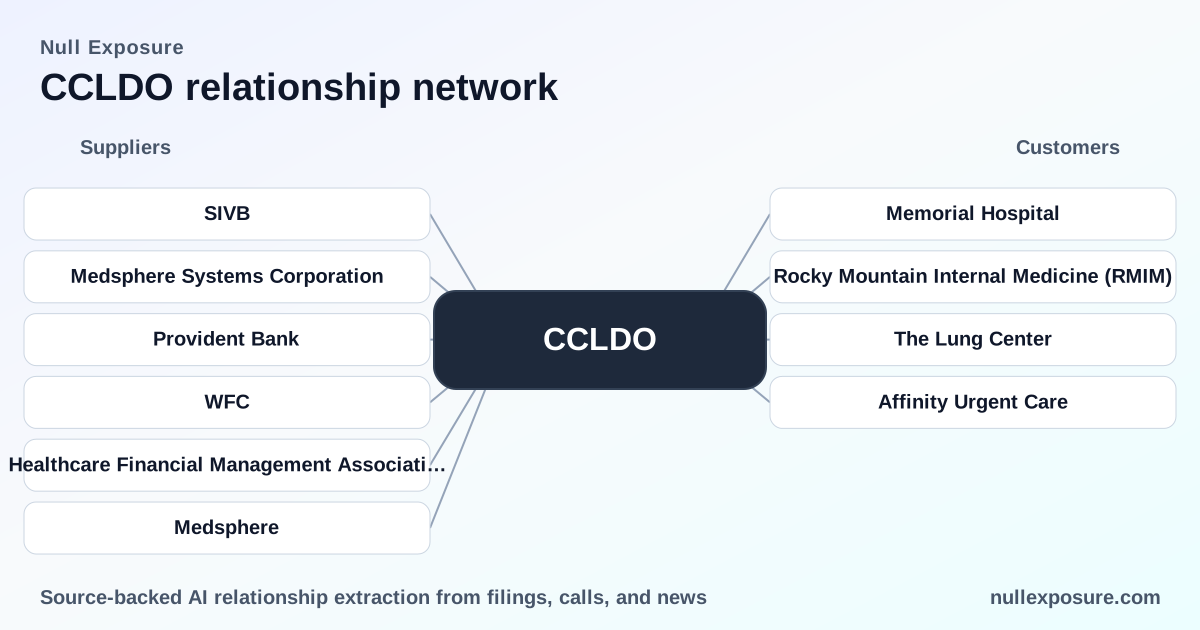
CareCloud (CCLDO): Supplier relationships, liquidity moves, and what operators and investors should price in
CareCloud is a U.S.-based healthcare IT vendor that monetizes through cloud-hosted practice management, electronic health records, and professional services sold to physician groups and hospitals, supplemented by targeted acquisitions that expand hospital-facing analytics and AI capabilities. Revenue comes from subscriptions and services, with strategic use of credit facilities to fund acquisitions and working capital. For supplier-risk and counterparty insight, visit https://nullexposure.com/ for tracking and alerts.
How CareCloud runs the business and where the money comes from
CareCloud sells recurring software and related services to healthcare providers and hospitals; the business model combines SaaS-like recurring revenue with professional services and inorganic growth to broaden product set. The company reported Revenue TTM of $120.5 million and Gross Profit TTM of $56.0 million, with EBITDA of $16.4 million, signaling positive operating leverage as the company scales hospital and integrated-health-system offerings. Quarterly revenue growth of ~21.9% YOY shows momentum, while a Profit Margin of ~8.96% illustrates the convertibility of revenue into operating profit.
CareCloud’s financial posture is active: it leverages external credit lines to fund acquisitions and migrated liabilities to achieve better terms and liquidity. These moves are material to supplier counterparties and operators because banking relationships and acquisition funding determine cash runway, vendor payments, and integration budgets. Learn more about how supplier exposure affects enterprise risk at https://nullexposure.com/.
What the public relationship signals show — a line‑by‑line read
Below are the relationships referenced in public releases and what each means for counterparties and investors.
Silicon Valley Bank (SIVB)
According to a GlobeNewswire press release on March 13, 2025, CareCloud fully repaid its Silicon Valley Bank credit line using internally generated cash flow, eliminating that counterparty exposure and improving liquidity flexibility. This repayment reduces near-term bank-concentration risk and signals internal cash generation sufficient to retire past borrowings.
Medsphere Systems Corporation
A September 9, 2025 GlobeNewswire release states CareCloud used financing to support the acquisition of assets of Medsphere Systems Corporation, indicating strategic expansion into Medsphere’s hospital IT capabilities and an explicit use of purchase-funding to accelerate product breadth. This transaction upgrades the company’s hospital-facing footprint and creates integration obligations.
Provident Bank
CareCloud announced on September 9, 2025 that it closed a new $10 million credit facility with Provident Bank, drawing approximately $8.3 million at closing to fund the Medsphere asset purchase, which directly links a working-capital bank relationship to acquisition funding. The Provident facility is a primary near-term liquidity source tied to the transaction and vendor obligations.
Wells Fargo (WFC)
In the same September 9, 2025 release, CareCloud disclosed that the Provident facility replaces a prior acquisition-related promissory note obligation to Wells Fargo, providing more favorable terms and strengthening liquidity for future growth. Moving away from the Wells Fargo note is a deliberate re-contracting step to lower cost or improve covenants, with implications for counterparty concentration among lenders.
Healthcare Financial Management Association (HFMA)
A GlobeNewswire announcement on September 29, 2025 documents CareCloud’s acquisition of MAP App, a hospital benchmarking tool created by HFMA, expanding its analytics and benchmarking capabilities for hospitals and integrated systems. This purchase gives CareCloud institutional benchmarking content and positions the company to sell higher-value analytics services to hospital finance and operations teams.
Medsphere (hospital IT business referenced)
In the September 29, 2025 GlobeNewswire release discussing strategic capabilities, CareCloud described that the business was strengthened by synergies from the recent acquisition of Medsphere’s hospital IT business, tying the Medsphere asset purchase to improved AI and hospital systems capabilities. This language confirms integration planning is under way to realize cross-sell and product-combination benefits.
What the constraints signal about CareCloud’s operating model
CareCloud publicly documents that it regularly engages consultants for cybersecurity assessments and complements internal efforts with third‑party technology providers for infrastructure and healthcare connectivity. This is a company-level signal indicating:
- Contracting posture: Hybrid—CareCloud retains core platform control while outsourcing specialized domains (cybersecurity, infrastructure, lab/prescription integrations) to third parties. That posture reduces fixed-costs but increases vendor-management needs.
- Concentration: Multiple external counterparties across banking, infrastructure, and interoperability functions indicate diversified supplier relationships rather than single-vendor dependency.
- Criticality: Third-party services are mission-critical, given the clinical and billing workflows running on CareCloud’s platform; supplier outages or integration failures would directly affect customer service and revenue collection.
- Maturity: The company has matured beyond pure in-house delivery by formalizing external engagements and using structured credit facilities for M&A, reflecting a scale-up phase focused on integration and product expansion.
These constraints mean suppliers should expect formal contracting, ongoing security validations, and performance SLAs; investors should price in integration execution risk and the costs of maintaining compliance in a regulated sector.
Risk and opportunity map for investors and operators
CareCloud’s recent moves create a clear set of trade-offs:
- Opportunities: The Medsphere and HFMA acquisitions expand marketable hospital analytics and AI capabilities, enabling higher‑ARPU sales to health systems and cross-selling into benchmarking and revenue-cycle management.
- Risks: Integration risk, execution on cybersecurity and interoperability, and bank-facility rollovers are the primary operational risks. Replacement of a Wells Fargo note and repayment of the SVB facility improve near-term liquidity but require monitoring of covenant and refinancing capacity.
- Counterparty considerations: Suppliers should negotiate clear payment terms and contingency SLAs given the company’s use of acquisition financing and third-party infrastructure providers.
Recommended immediate actions for operators evaluating or contracting with CareCloud:
- Validate cybersecurity and business-continuity attestations given the company’s reliance on consultants and third-party tech.
- Confirm contract transition provisions tied to acquisition integrations (Medsphere, MAP App).
- Monitor bank-facility schedules and covenant terms because funding cadence affects supplier payment risk.
For a concise supplier-exposure dashboard and ongoing alerts, check https://nullexposure.com/.
Bottom line for investors and procurement teams
CareCloud has moved decisively: it has monetized recurring software and services, is investing to extend hospital and AI capabilities through acquisitions, and has reshaped its bank relationships to optimize liquidity. The company is now positioned to drive higher-value hospital sales but must execute integration and maintain rigorous cybersecurity and operational continuity across an expanded supplier base. Investors should balance revenue growth and positive EBITDA against integration execution risk; procurement teams should prioritize contractual protections around uptime, security, and payment terms.
For continuous monitoring of supplier dynamics and to assess counterparty exposure in real time, visit https://nullexposure.com/ and sign up for tailored alerts.