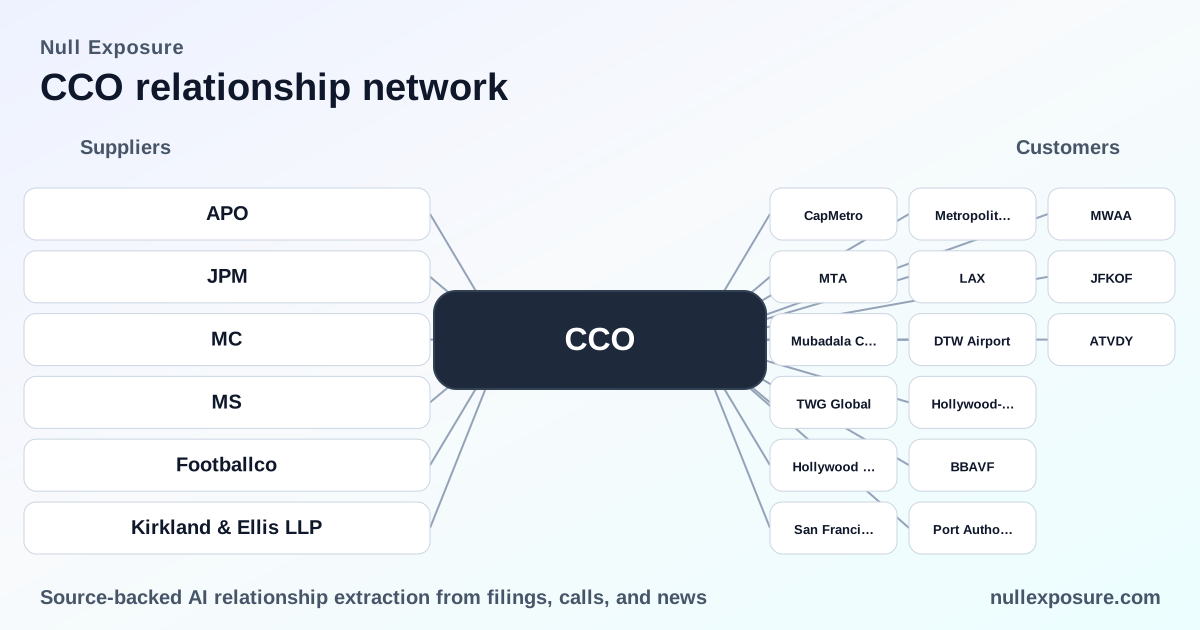
Clear Channel Outdoor (CCO): Supplier relationships that shape a privatization-era playbook
Clear Channel Outdoor operates and monetizes a national out-of-home (OOH) advertising platform by owning and operating large-format and digital displays, securing long-duration placement contracts with transit authorities and private landlords, and selling audiences and ad inventory to brand and agency buyers. The company's commercial model is a blend of real-estate-like concession contracts, capex-light manufacturing/distribution outsourcing, and data-enabled ad sales, with monetization derived from fixed-term site rights, digital impressions, and value-added audience insights. For investors and operators evaluating supplier exposure, the recent FY2026 transactions and partnerships crystallize how financial sponsors, banks, advisors, content partners, and law firms influence balance-sheet outcomes and operating cadence. Learn more about supplier relationships and risk intelligence at https://nullexposure.com/.
High-level takeaways investors should lock in
- Capital structure is being reshaped by sponsor-led financing: preferred equity and committed bank debt tied to the privatization transaction reprice both liquidity and governance vectors.
- Operational model runs on long-term, public-sector-facing contracts and outsourced fabrication/distribution; this reduces fixed manufacturing overhead but increases counterparty concentration and procurement risk.
- Content partnerships expand digital yields while professional advisors and law firms drive execution certainty.
How the recent FY2026 deals and partnerships connect to CCO’s supplier map
This section lists all reported relationships from the FY2026 news flow and explains each in plain English along with source context.
Apollo-managed funds (Apollo Funds)
Apollo-managed funds committed preferred equity to the acquisition of Clear Channel as part of the privatization package. This capital injection is a sponsor-level equity layer that alters investor returns and governance incentives going forward. Source: PR Newswire release announcing the acquisition (March 9, 2026).
JPMorgan Chase Bank, N.A.
A lending group led by JPMorgan Chase has committed debt financing for the buyout, indicating bank-led leverage underpins the transaction and that JPMorgan will be a primary creditor organizing syndicated financing. Source: PR Newswire acquisition announcement (March 9, 2026).
Moelis & Company LLC
Moelis & Company is serving as a financial advisor to Clear Channel in the transaction, providing valuation, process management, and negotiation support that shape sale terms and timing. Source: PR Newswire release on the acquisition (March 9, 2026).
Morgan Stanley & Co. LLC
Morgan Stanley is co-advisor to Clear Channel, sharing responsibility for structuring the sale and interfacing with bidders and lenders; this dual-advisor setup reflects the transaction’s complexity and scale. Source: PR Newswire release on the acquisition (March 9, 2026).
Kirkland & Ellis LLP
Kirkland & Ellis is acting as Clear Channel’s legal advisor, managing transactional documentation, regulatory clearance, and closing mechanics — a standard arrangement that reduces execution risk on a complex take-private. Source: PR Newswire release on the acquisition (March 9, 2026).
Footballco
Clear Channel has entered a commercial partnership with Footballco to display curated, real-time FIFA World Cup 2026 content across its nationwide digital billboard network, demonstrating how content partnerships drive short-term digital yield and audience engagement. Source: StockTitan news report covering the partnership (March 9, 2026).
What the company-level constraints reveal about supplier dynamics
The company disclosures give clear, actionable signals about how Clear Channel contracts and operates with suppliers:
-
Contracting posture: long-term concession style — Rights to display and sell advertising at airports and transit are typically awarded through competitive bids and run five to ten years with renewal options, which creates revenue visibility and enforceable site control. Evidence: company excerpt on airport and transit contract terms.
-
Counterparty mix: material government exposure — The business wins rights from public transit authorities and airport regulators through competitive processes, making public-sector counterparties a material source of contract wins and political/regulatory risk.
-
Procurement model: outsourced manufacturing and distribution — Clear Channel outsources fabrication and manufacturing to third-party suppliers and purchases digital display hardware through U.S. distributors, indicating a low fixed-cost manufacturing posture but higher vendor management and logistics dependencies.
-
Service and data relationships: third-party audience insights — The company purchases anonymous and aggregated audience behavior data from vetted providers to coordinate OOH with online campaigns, implying data vendors are critical to product yield and client targeting.
-
Financial maturity: audited controls and public-note obligations — The company’s consolidated financial statements were audited by Ernst & Young LLP (report dated February 24, 2025), and there is an indenture governing 7.875% Senior Secured Notes due 2030, signaling public-company audit rigor and existing secured debt in the capital structure.
These constraints combine into a clear operating profile: stable, long-dated site rights that depend on timely vendor execution and public counterparty negotiations, financed through a mix of secured debt and sponsor equity.
Operational and investment implications for suppliers and operators
-
For equipment manufacturers and distributors: Long contract terms favor suppliers that can offer predictable pricing and maintenance pipelines. However, the outsourcing model means opportunities are accessible to competitive vendors who can meet bid specs and logistics requirements.
-
For data and audience analytics firms: The company’s explicit reliance on third-party audience insights creates recurring revenue potential for partners able to integrate into CCO’s ad sales workflows and measurement regimes.
-
For lenders and sponsors: Committed debt led by major banks and preferred equity from sponsor groups reconfigures default economics; lenders will focus on cash-flow durability from long-term concessions, while sponsors will optimize digital monetization to extract yield.
Explore detailed supplier intelligence and risk scoring at https://nullexposure.com/ for actionable due diligence and counterparty monitoring.
Final read: what investors should watch next
- Execution of the privatization: closing mechanics, covenant packages, and any carve-outs negotiated by financial and legal advisors will materially affect creditor protections and operational flexibility.
- Renewal cadence with public-sector counterparties: renewals in key airports and transit hubs will determine mid-term revenue stability.
- Supplier concentration and vendor performance: given the outsourced fabrication and distribution model, vendor failures or procurement disruptions can compress ad inventory availability and increase retrofit costs.
Clear Channel’s FY2026 relationships show a transaction-driven capital reset supported by top-tier banks, sponsors, and advisors, while operational exposure remains anchored in long-term public-sector contracts and outsourced supply chains — a profile that rewards disciplined operational oversight and vendor diversification. For ongoing monitoring and supplier risk dashboards, visit https://nullexposure.com/.