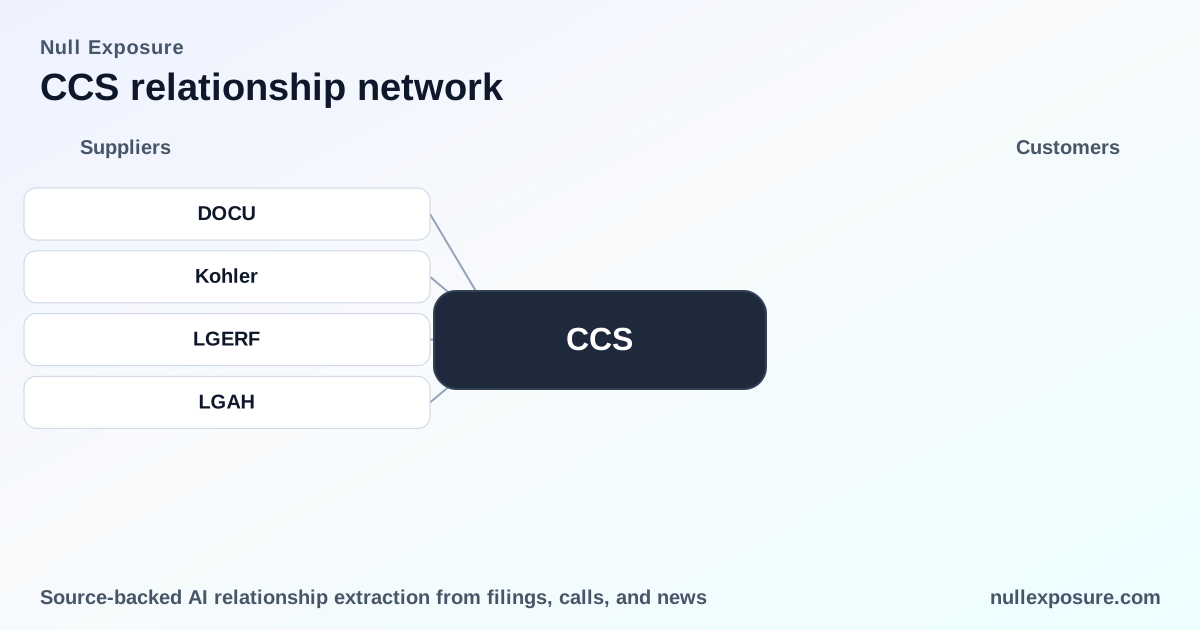
Century Communities (CCS) — supplier map and investment implications
Century Communities (ticker: CCS) operates as a national homebuilder that designs, contracts and sells finished homes, capturing margin through lot acquisition, home construction and option-driven upgrades. The company functions as a general contractor, sources finished goods and fixtures from branded manufacturers, and monetizes through unit closings and ancillary product selections; working capital and short-term repurchase facilities underpin construction activity and cash flow timing. For investors assessing vendor risk and commercial leverage, supplier relationships fall into three clear buckets: digital transaction infrastructure, branded appliance/fixture suppliers, and supply-chain materials. Learn more about how we extract and present supplier exposure at https://nullexposure.com/.
What the supplier footprint tells an investor about CCS
Century’s operating model combines homebuilding execution with financing to bridge construction cycles. Company-level signals from filings and news show a dual financing posture: significant long-term capital (senior notes and a revolving credit facility) alongside short-term repurchase facilities that finance inventory and lots. The organization acts as a general contractor and relies on external manufacturers and material suppliers for a continuous flow of inputs.
- Contracting posture: a hybrid of long-term capital structure support and short-term, execution-focused financing. The company recorded a 6.625% senior note issuance due 2033 and maintains a revolving credit line maturing in 2028, while repurchase facilities run into 2026 — this reflects mature capital-market access plus working-capital reliance (company filing, year ended December 31, 2025).
- Vendor criticality and concentration: Century is dependent on building-material suppliers for continuous construction flow; branded appliance and fixture suppliers are critical to finished-home specifications and buyer-facing value. This creates operational stickiness with certain vendors even when they’re non-exclusive.
- Spend scale: disclosed borrowing under repurchase facilities was $289.3 million at December 31, 2025, and revolving borrowings were $51.5 million — a signal that supplier and short-term financing commitments are material to working capital (company filing, FY2025).
- Maturity profile: long-term instruments reduce refinancing pressure, while repurchase facilities and revolving credit require active liquidity management through the near term.
If you want an actionable supplier risk view for portfolio decisions, review the full platform at https://nullexposure.com/ for integrated supplier credit and dependency scoring.
Who Century buys from — the supplier relationships in the record
Below are the supplier relationships surfaced in the available results, each summarized concisely with source context.
DocuSign — electronic contracting for purchase agreements
Century uses DocuSign® to execute purchase contracts electronically across multiple community openings, embedding e-sign workflows into the buyer journey and closing process. This relationship is documented in several community press releases in March 2026 that state buyers can “electronically sign a purchase contract via DocuSign®” (Finviz and StockTitan press postings, March 9, 2026: https://finviz.com/news/314578/century-communities-phoenix-announces-2-february-grand-openings-in-prime-east-and-west-valley-submarkets; https://www.stocktitan.net/news/CCS/century-communities-phoenix-announces-2-february-grand-openings-in-fiwv9ge9a8s5.html).
Kohler — branded water fixtures included in standard finishes
Century specifies Kohler® brand water fixtures as part of its standard or upgraded finish packages, making the supplier a visible component of product spec and buyer-facing amenities. News items describing community features list “Kohler® brand water fixtures” among included features (Finviz and Sahm Capital community announcements, February–March 2026: https://finviz.com/news/314578/century-communities-phoenix-announces-2-february-grand-openings-in-prime-east-and-west-valley-submarkets; https://www.sahmcapital.com/news/content/century-communities-joins-amenity-packed-concept-community-in-fairfield-ca-2026-02-26).
LG — stainless-steel kitchen appliances included in offerings
Century advertises LG® stainless-steel kitchen appliances within community feature lists and the Century Home Connect® package, positioning LG as a standard appliance supplier for many builds. Community press releases and marketing copy from February–March 2026 enumerate “LG® stainless-steel appliances” as included features (Sahm Capital and StockTitan press releases, February–March 2026: https://www.sahmcapital.com/news/content/century-communities-joins-amenity-packed-concept-community-in-fairfield-ca-2026-02-26; https://www.stocktitan.net/news/CCS/century-communities-phoenix-announces-2-february-grand-openings-in-fiwv9ge9a8s5.html).
How those relationships translate into investor risk and opportunity
Century’s supplier set is commercially logical: digital contracting lowers closing friction, while national brands (Kohler, LG) support resale value and buyer expectations. For investors, the key implications are:
- Operational criticality: branded appliance and fixtures are critical to the customer proposition; disruption or price shocks inflate rework and warranty cost and erode gross margin.
- Procurement leverage: Century’s scale gives negotiating leverage with appliance and fixture vendors, but the company’s role as general contractor also forces reliance on regional subcontractors and materials providers for execution.
- Liquidity sensitivity: the company’s use of short-term repurchase facilities (noted outstanding $289.3M at year-end 2025) signals exposure to working-capital cycles; persistent inventory build or lot slowdowns would stress this short-term layer even though long-term notes and the revolving line reduce refinancing tail risk (company filing, year ended December 31, 2025).
- Vendor risk profile: DocuSign is a low-capex, low-supply-risk vendor positioned around transaction efficiency; Kohler and LG are higher-impact manufacturing partners whose supply disruptions or pricing actions translate directly into build cost and consumer perception.
If you are evaluating CCS as a supplier exposure or counterparty, run a combined assessment of short-term liquidity, vendor concentration in critical SKUs, and the contractual posture of the builder. Our platform can accelerate that process — see https://nullexposure.com/ for supplier concentration tools.
Practical next steps for investors and operators
- Prioritize monitoring of repurchase facility utilization and revolving line borrowings, as movements there will be early indicators of inventory or lot financing stress.
- Verify contract terms and substitution clauses with Kohler and LG to understand replacement options and pass-through pricing should supply constraints arise.
- Model closing velocity sensitivity with and without e-sign adoption friction; DocuSign usage reduces closing friction and shortens cash conversion cycles.
For a deeper supplier-level scorecard and exposure report, visit https://nullexposure.com/ to download supplier intelligence and scenario modeling.
Bottom line
Century Communities runs a materially financed, execution-intensive model: long-term debt provides capital structure stability while short-term repurchase facilities underwrite a meaningful portion of working capital, and branded suppliers like DocuSign, Kohler and LG play distinct roles in transaction efficiency and finished-product differentiation. Investors should treat appliance and fixture suppliers as operationally critical, monitor short-term facility utilization closely, and incorporate supplier substitution risk into margin stress tests.