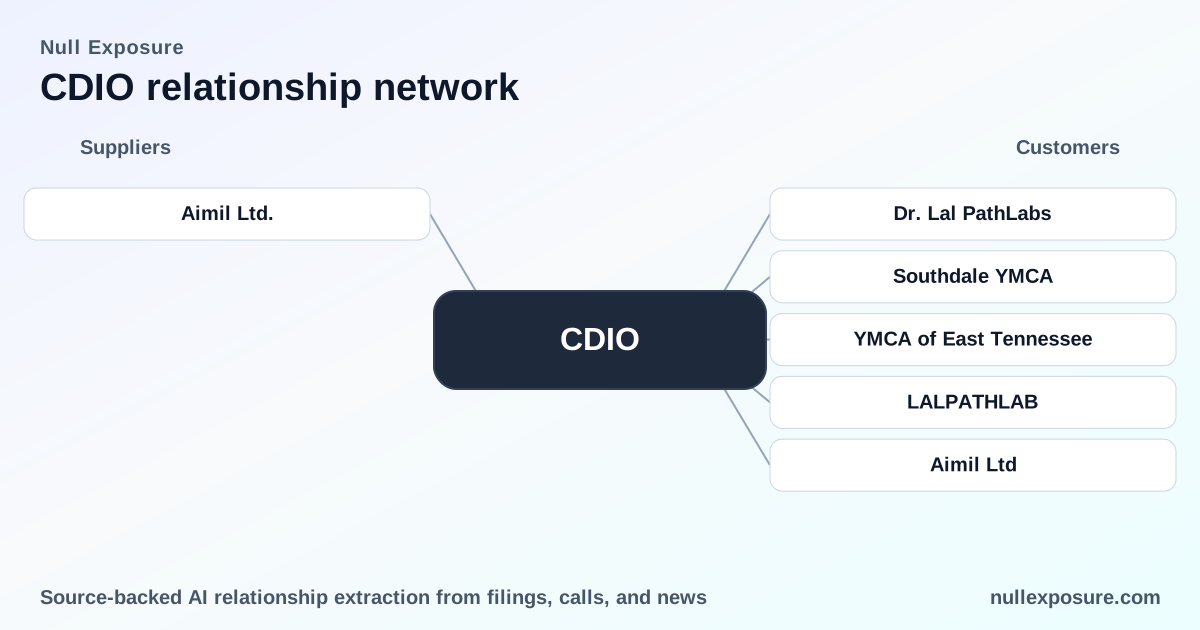
Cardio Diagnostics (CDIO): Supplier concentration meets opportunistic distribution in India
Cardio Diagnostics Holdings Inc (CDIO) develops epigenetics and AI-driven blood tests for coronary heart disease (PrecisionCHD™ and Epi+Gen CHD™) and monetizes through laboratory-performed diagnostics, sales of sampling kits and reagents, and distribution partnerships that place its tests into clinical channels. Revenue is nascent (RevenueTTM $14,820) while operating losses are substantial, making commercial partnerships the primary lever to scale test volumes and move toward meaningful revenue. For a concise briefing on counterparty risk and supplier exposure across CDIO’s ecosystem, visit https://nullexposure.com/.
Key takeaways
- Commercial access is expanding via strategic partners in India (Aimil Ltd. and Dr. Lal PathLabs).
- Operational risk is concentrated: a single CLIA laboratory, single contract manufacturer for proprietary reagents, and single-source collection tubes increase supply-chain fragility.
- Near-term value realization depends on execution of distribution agreements and stabilization of manufacturing/logistics.
What the India launch means for CDIO’s go-to-market
Cardio Diagnostics announced a strategic agreement to introduce its PrecisionCHD test into India through local partners. According to a BusinessWire release reposted on FinancialContent (January 7, 2026), CDIO signed with Aimil Ltd.—an instrumentation and distribution group—and Dr. Lal PathLabs, a large Indian diagnostic network, to roll out PrecisionCHD™ across India’s clinical channels. MPO Magazine also covered the collaboration on March 9, 2026, reporting the three-way arrangement to commercialize the test in India.
This arrangement is a near-term growth catalyst: Aimil provides distribution and instrumentation reach into broader hospital and lab networks, while Dr. Lal PathLabs supplies an established clinical laboratory and patient access through its 290+ labs and clinical network, enabling sample collection and diagnostic throughput at scale. According to the BusinessWire announcement (Jan 7, 2026), the partnership is positioned to accelerate test adoption in a high-prevalence market.
Supplier footprint and operational constraints investors must price
CDIO’s disclosures identify a tightly concentrated supply chain and a single laboratory execution point. In company filings the firm acknowledges reliance on a limited number of suppliers and a single contract high-complexity CLIA laboratory in Missouri to perform its tests; proprietary reagents are manufactured under GMP by one contract manufacturer in Michigan and the blood collection tubes in sampling kits come from a single manufacturer. The company also notes prior launch delays from pandemic-era training interruptions, demonstrating the real operational impact of these exposures.
These facts create a set of interlocking constraints:
- Concentration: Single-source manufacturing and a single CLIA lab mean any disruption—logistics, regulatory, or operational—translates directly into volume and revenue risk.
- Contracting posture: CDIO’s model is supplier-dependent with limited redundancy, which puts upward pressure on procurement and contingency planning costs should alternative sources be required.
- Criticality and maturity: The clinical tests are performed as laboratory-developed tests (LDTs) through an experienced CLIA facility; this is a mature route to market for novel diagnostics but depends on the uninterrupted functioning and certification of that one lab.
The net effect: operational leverage is high—successful scaling through partners like Aimil and Dr. Lal can transform revenue prospects quickly, but supplier and lab concentration is the predominant single-point-of-failure risk.
Why the partnership list matters for valuation (and a practical next step)
For investors valuing CDIO, the India partnerships are a concrete distribution milestone but not yet a revenue inflection until test volumes and reimbursement pathways are proven. Measure commercial announcements against two operational metrics: the pace of sample processing through the CLIA lab and the establishment of alternative reagent or kit suppliers. For deeper counterparty exposure analysis and to monitor supplier concentration trends, visit https://nullexposure.com/ for ongoing coverage.
Every recorded relationship in the public record
Aimil Ltd.
Cardio Diagnostics signed with Aimil Ltd. to leverage Aimil’s distribution and instrumentation networks to introduce the PrecisionCHD test in India; this was announced in a BusinessWire release redistributed on FinancialContent (Jan 7, 2026) and covered by MPO Magazine (Mar 9, 2026).
Dr. Lal PathLabs
CDIO partnered with Dr. Lal PathLabs to access clinical laboratory capacity and patient channels—Dr. Lal’s network of 290+ laboratories and clinical staff provides local scale for PrecisionCHD roll-out, as disclosed in the BusinessWire announcement (Jan 7, 2026) and MPO Magazine reporting (Mar 9, 2026).
Operational implications for supplier and partner risk
The company’s own disclosures label supplier dependence as material and, in some cases, critical. The language in filings highlights that an interruption in any part of the supply chain—from reagents manufactured under cGMP by a single contract manufacturer to the CLIA lab’s operations—can cause material delays and have direct market consequences for reported results. Historically, the company experienced launch delays during the pandemic that strained reported performance; that precedent is a live counterparty risk signal.
For practical risk assessment, investors should watch:
- Evidence of dual-sourcing for reagents and collection tubes.
- Any expansion or backup for clinical processing beyond the current CLIA laboratory.
- Contract terms and commercial KPIs with Aimil and Dr. Lal (test volumes, exclusivity, revenue share).
Investment implications and recommended investor actions
Cardio Diagnostics is a classical small-cap biotech growth story where commercialization partnerships determine the timing and scale of revenue realization. Upside derives from rapid adoption of PrecisionCHD in large markets like India through partners such as Aimil and Dr. Lal, while downside is concentrated in supplier and lab single points of failure. Given the company’s limited revenue base (RevenueTTM $14,820) and negative operating margins, investor returns will be driven by operational execution and diversification of supply and processing capacity.
If you evaluate provider and supplier exposure for portfolio allocation or counterparty monitoring, start with the partnership KPIs and supplier redundancy milestones rather than headline announcements. For a structured way to track and quantify these exposures, see ongoing analyses and tools at https://nullexposure.com/.
Final thought: the India partnerships are a meaningful step toward commercialization, but the company’s concentrated operational footprint is the dominant risk that will govern whether these partnerships convert into durable revenue.