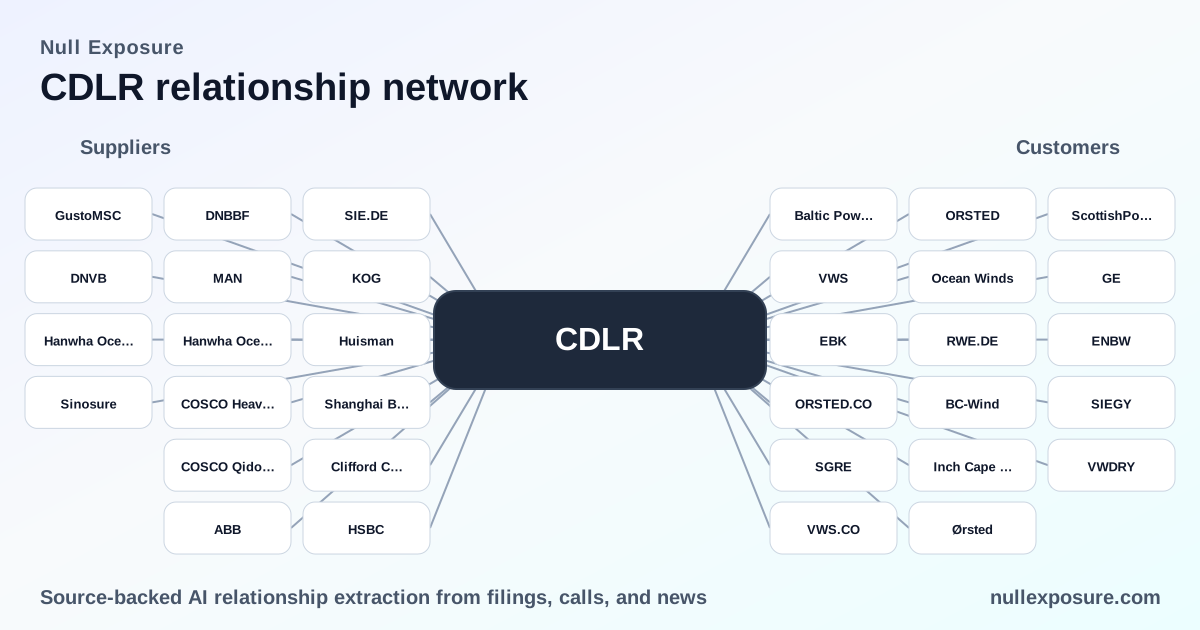
Cadeler (CDLR): supplier map and what it means for investors
Cadeler operates and monetizes as an asset-heavy contractor to the offshore wind industry: it owns and operates a modern fleet of jack‑up wind turbine installation vessels (WTIVs) and sells multi-year installation and operations & maintenance (O&M) services to project developers and utilities. Revenue is driven by high-utilization vessel contracts, secured through capital-intensive shipbuilding and structured debt facilities, while margins reflect scale in project execution and favorable fleet utilization. For deeper counterparty intelligence on Cadeler’s supplier and financing relationships visit https://nullexposure.com/.
Why suppliers and financiers matter for Cadeler’s economics
Cadeler’s business model is defined by three interlocking realities: capital intensity, single-asset criticality, and multi-year contracting. The fleet is the product; suppliers that build cranes, engines, dynamic positioning and the shipyards that deliver hulls are operationally critical and financially material. Financing partners and export-credit backstops shape the company’s ability to expand the fleet quickly and at scale. Against that backdrop, the relationship map below identifies where operational risk and financing optionality concentrate.
- Contracting posture: Cadeler contracts long-lead, bespoke equipment and newbuilds with global shipbuilders and engineering vendors, which implies tight vendor management and schedule risk.
- Supplier concentration: Multiple relationships across shipbuilders (Hanwha, COSCO, Shanghai Boqiang) and equipment suppliers (Huisman, Kongsberg, MAN, Siemens, ABB, GustoMSC) reduce single-vendor dependency while keeping technical integration complexity high.
- Criticality: Specialist vendors (crane makers, DP systems) supply one-off systems whose failure or delay directly halts revenue-generating activity.
- Maturity: Relationships span early-stage design co-operation (GustoMSC, ABB) to standard supplier deliveries (MAN engines), reflecting a mix of engineering partnerships and commoditized supply.
For investors tracking supplier risk, financing exposure, or contract delivery timelines, Cadeler’s counterparty map is a strategic input. Learn more about supplier intelligence at https://nullexposure.com/.
Detailed relationship register (all results covered)
Siemens
Cadeler’s jack‑up was equipped with a Siemens propulsion system, indicating Siemens supplies key propulsion and electrical systems for certain vessels (reported in Feb 2026). According to OffshoreWIND.biz (Feb 2026), the newly acquired vessel’s propulsion is Siemens‑supplied.
Kongsberg
Cadeler uses Kongsberg’s DP2 dynamic positioning system on at least one jack‑up, underscoring reliance on Kongsberg for station‑keeping and automated systems (OffshoreWIND.biz, Feb 2026).
Huisman
Cadeler’s vessels feature Huisman main cranes (2,200‑tonne cited), showing Huisman supplies the heavy‑lift equipment that determines turbine installation capability and cycle time (OffshoreWIND.biz, Feb 2026).
Shanghai Boqiang Heavy Industry Group
Cadeler acquired a newbuild vessel from Shanghai Boqiang, which underwent technical and visual upgrades before deployment to the He Dreiht project—this highlights Cadeler’s use of Chinese shipyards for cost‑effective hull acquisition (OffshoreWIND.biz, Feb 2026).
Clifford Capital
Clifford Capital is an arranger on Cadeler’s second unsecured green term loan facility (€60m, accordion to €80m), signalling non‑bank liquidity channels and structured green financing in FY2025 (SimplyWall.st coverage of FY2025).
HSBC
HSBC co‑arranged the same €60m unsecured green loan with Clifford Capital to support general corporate purposes, showing Cadeler’s access to international bank syndication in FY2025 (SimplyWall.st, FY2025).
DNB Bank ASA
Cadeler financed a vessel acquisition fully through DNB Bank ASA, with the acquisition completed in Q3 2025 and reported as debt‑financed below replacement cost—DNB is a principal lending partner for fleet expansion (StockTitan reporting, FY2026).
MAN
Cadeler’s jack‑up includes MAN‑supplied engines, confirming MAN as the provider of primary propulsion engines for at least one vessel (OffshoreWIND.biz, Feb 2026).
Hanwha Ocean
Hanwha Ocean built and delivered multiple WTIVs—including Wind Maker and Wind Mover—demonstrating Hanwha as a strategic shipbuilder partner delivering M‑class vessels in 2025–2026 (OffshoreWIND.biz, OEDigital, Maritime Executive, FY2025–FY2026).
ABB
Cadeler worked with ABB during vessel design and delivery, reflecting ABB’s role in electrical architecture and systems integration for the WTIV class (Maritime Executive, FY2025).
GustoMSC
GustoMSC participated in the WTIV design cooperation with Cadeler, indicating its role in specialized marine engineering for deepwater and complex installation capability (Maritime Executive / Inspenet, FY2025).
COSCO Heavy Industries
COSCO Heavy Industries is constructing an A‑class vessel for Cadeler (Wind Apex) with delivery slated in 2027, showing Cadeler’s diversification of shipyards across Asia (OffshoreWIND.biz, Dec 2025 reporting in FY2025).
COSCO Qidong yard
Cadeler launched Wind Ace at the COSCO Qidong yard, confirming on‑site construction and hull assembly execution for Cadeler’s newbuild program (MarineLink / OEDigital, FY2025).
DNV
DNV supported yard certification and project delivery at COSCO Qidong, participating in quality oversight and enabling fast hull erection—DNV’s involvement reduces technical delivery risk (OEDigital / MarineLink, FY2025).
Hanwha Ocean shipyard
The Hanwha Ocean shipyard delivered Wind Mover and was credited with an early delivery to the shipyard in South Korea, underlining Cadeler’s ability to take early delivery and accelerate revenue deployment under active contracts (Inspenet / Ocean‑EnergyResources, FY2025–FY2026).
Sinosure
Cadeler’s fleet expansion is supported by a EUR 525m Sinosure‑backed facility for next‑generation vessels, indicating export‑credit insurance and Chinese capital structures are part of the financing stack (StockTitan reporting, FY2026).
What investors should watch next
- Delivery schedules and yard performance: Cadeler’s revenue profile depends on timely vessel deliveries; any slippage at Hanwha, COSCO or Shanghai Boqiang will immediately affect utilization and EBITDA.
- Supplier integration risk: Heavy‑lift cranes (Huisman), DP systems (Kongsberg), and propulsion/engines (Siemens, MAN) are single‑point enablers for operations—spares, service agreements and lead times must be monitored.
- Financing cadence: The mix of DNB debt, Sinosure‑backed facilities, and unsecured green loans arranged by HSBC/Clifford shapes balance‑sheet flexibility; watch covenant tests and refinancing windows.
For primary source tracking and a consolidated supplier‑counterparty dashboard, go to https://nullexposure.com/.
Bottom line
Cadeler’s competitive position rests on a modern, expanding fleet, diversified shipbuilder partners, and structured financing that together reduce single‑counterparty concentration while increasing operational integration complexity. For investors evaluating counterparty risk or underwriting exposure to offshore wind installation capacity, these supplier and lender relationships are the operational levers that will determine utilization, margin durability, and capital efficiency over the next 24 months. Explore deeper supplier intelligence and counterparty timelines at https://nullexposure.com/.