Cadiz Inc (CDZI): Supplier relationships, long-term rights, and what investors need to know
Cadiz Inc operates and monetizes by developing natural-resource assets—primarily water rights and related infrastructure—and selling water and related services to municipal and regional water agencies while holding long-lived real-estate and right-of-way interests. Revenue is driven by contractual off-take and transport arrangements with large water agencies and the company's control of pipeline and land rights; margins depend on the timing of project approvals and the conversion of rights into recurring cash flows. Learn more at https://nullexposure.com/.
How Cadiz’s model converts scarce assets into cash flow
Cadiz is a utilities-sector, regulated-water developer that combines land ownership, long-term rights-of-way, and infrastructure development to create purchasable water supplies for urban customers. The company earns revenue through negotiated sales agreements and transport arrangements with third-party water agencies and records asset and lease liabilities when it secures long-term site and pipeline rights. Investors should read Cadiz as a project-developer with balance-sheet exposure to long-duration contracts and regulatory gating that determines commercial timing. The company reported TTM revenue of $15.98 million and an EBITDA loss reflecting ongoing project and corporate spending, underscoring the gap between asset development and steady-state cash generation.
The counterparty map you must evaluate
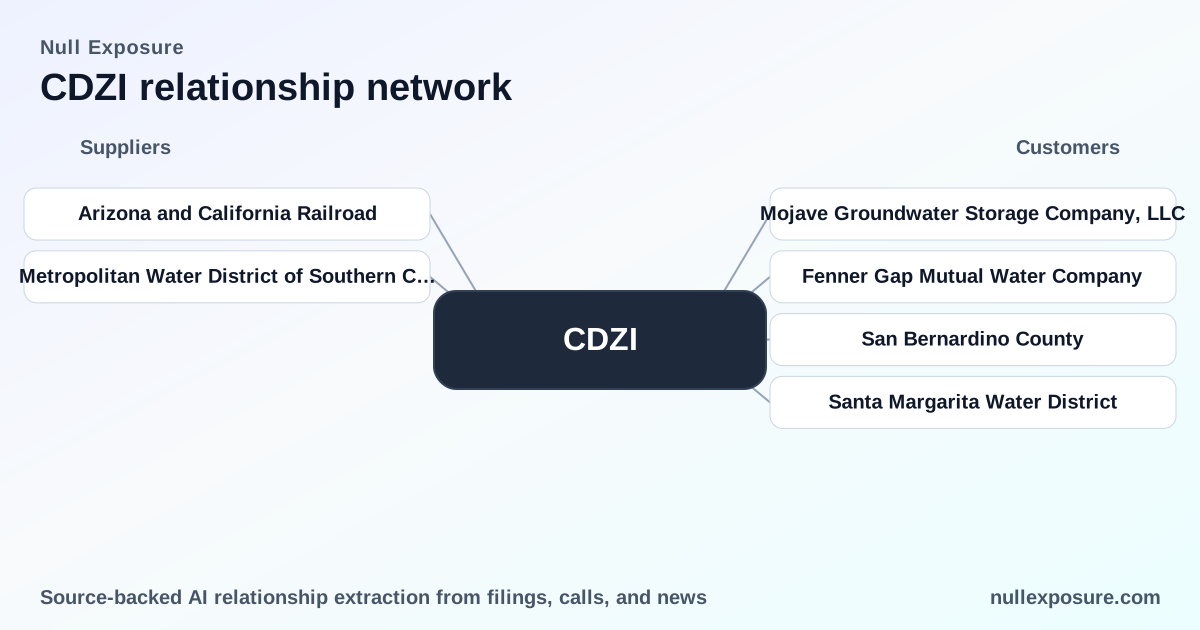
Cadiz’s supplier and partner relationships are concentrated around a small set of large infrastructure and agency counterparties. Below are the specific relationships captured in public reporting and media that are material to how the company executes projects.
-
Arizona and California Railroad
Cadiz signed a 99-year lease with the Arizona and California Railroad in 2008, a long-term land/rights arrangement that anchors access across key corridor property. This lease is cited in regional reporting on Cadiz’s Mojave Desert water plans (The Desert Sun, Oct. 16, 2017). Source: The Desert Sun article covering Cadiz pipeline and land arrangements, Oct. 16, 2017. -
Metropolitan Water District of Southern California (MWD)
Cadiz has engaged MWD as a prospective transport partner; Cadiz’s project plan included finalizing arrangements with water agencies to buy water and reaching agreement with the Metropolitan Water District to transport water to urban centers. This role for MWD as a transport counterparty is noted in the same regional reporting (The Desert Sun, Oct. 16, 2017). Source: The Desert Sun article describing Cadiz’s pipeline design and agency negotiations, Oct. 16, 2017.
Long-term contracting and government counterparty exposure
Cadiz’s contracting posture is explicitly long-term. According to company filings, effective February 1, 2024, Cadiz executed a 26-year right-of-way agreement with the U.S. Bureau of Land Management (BLM) for the Northern Pipeline asset, recording right-of-use assets and lease liabilities tied to multimillion-dollar future lease payments. In late 2024 the company also entered two operating leases for corporate offices with approximately 10-year terms. These disclosures signal a strategic commitment to multi-decade infrastructure positions and a willingness to carry long-duration liabilities on the balance sheet (company filing, 2024). The BLM engagement also flags government as an explicit counterparty type, which raises permit and regulatory sequencing as primary commercial risk vectors.
What this means for concentration, criticality, and project maturity
- Contracting posture: Cadiz is structurally committed to long-duration contracts—both for infrastructure rights and physical leases—embedding fixed obligations while revenue outcomes depend on project milestones and counterparty agreements.
- Concentration: The commercial model concentrates execution risk in a few large counterparties (regional water districts, transport providers, and government land managers). A small number of counterparties control access to demand and transport, increasing single-point failure risk.
- Criticality: Rights-of-way and transport agreements are mission-critical—without confirmed transport (e.g., MWD arrangements) and land access, the water sales pipeline cannot monetize.
- Maturity: Contracts and rights are long-dated and reflect mid-stage project development rather than near-term recurring utility cash flow; the company’s financials show development expense outpacing operating margins today.
For investors who need more granular counterparty analytics and monitoring tools, visit https://nullexposure.com/ for provider-level signals and alerting.
Key risks and where they arise
- Regulatory and permitting execution: long-term BLM rights and transport deals with agencies like MWD are essential to cash realization; failure or delay directly defers revenue.
- Counterparty concentration: dependency on a handful of transport and purchasing agencies concentrates counterparty credit and negotiation risk.
- Balance-sheet timing: long-term lease liabilities are on the balance sheet now while revenue tends to be milestone-driven, creating timing mismatches in cash generation versus obligations.
- Financial profile: Cadiz’s most recent operating metrics show limited revenue relative to market capitalization and negative EBITDA, underscoring project-development stage risk. Use active monitoring of disclosures and agency agreements to track progress.
Practical next steps for investors and operators
- Demand documentary proof of transport and off-take contracts (signed agreements and delivery schedules), and calendar key permit milestones tied to BLM and state approvals.
- Stress-test cash runway assuming delays in MWD transport agreements and extended permitting timelines.
- Monitor ownership and governance signals—high insider ownership can align incentives but also concentrate control during complex negotiations.
- Use targeted counterparty monitoring to watch the Arizona & California Railroad lease status and any formal agreements or amendments with MWD as project enablers.
If you want an operational-grade supplier map and continuous monitoring for Cadiz counterparties, start here: https://nullexposure.com/.
Bottom line: a rights-driven business that trades timing risk for future utility cash flow
Cadiz is a capital-intensive, rights-focused developer that monetizes through long-term water sales and transport agreements. The economics hinge on converting long-lived land and pipeline rights into enforceable off-take and transport contracts with major agencies; those same long-duration arrangements create concentrated counterparty and regulatory risk. For investors, the priority is monitoring the status and legal robustness of transport and governmental agreements—these are the gatekeepers to value realization. Further detail and ongoing signals are available at https://nullexposure.com/.