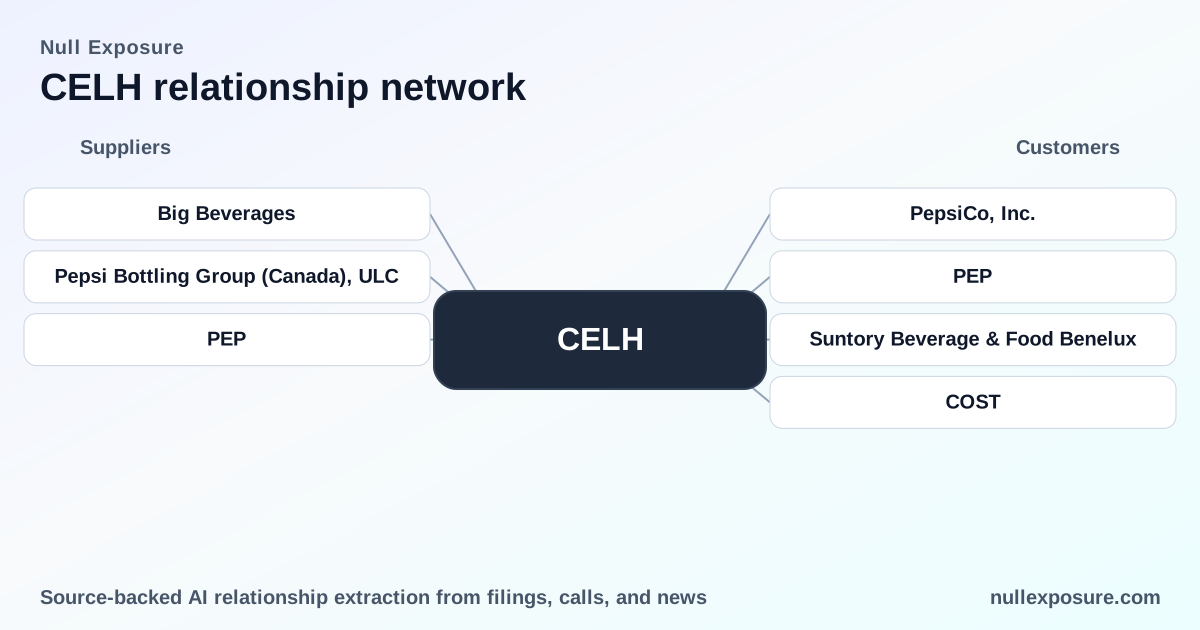
Celsius Holdings (CELH): supplier relationships and what they mean for investors
Celsius Holdings sells calorie-burning functional fitness drinks through a mix of owned brands and third-party brand partnerships, monetizing via retail and foodservice distribution, licensing/partnership fees, and direct sales augmented by national distribution agreements. Revenue growth is driven by distribution scale and brand positioning; supply-side arrangements (co-packers, bottlers, raw-material contracts) determine gross margins and execution risk. For a focused supplier-risk read, review how co-packing, a recent acquisition, and a strategic partner with board influence change the operational calculus. Learn more at https://nullexposure.com/.
How Celsius structures procurement and manufacturing — the operating constraints that matter
Celsius runs a multi-sourced manufacturing and logistics model that mixes third‑party co-packers with selective vertical ownership. Key company-level signals from recent filings and disclosures:
- Contracting posture is short-term for some inputs. The company discloses 12‑month agreements to stabilize aluminum costs, which reduces raw-material price volatility but increases renewal exposure.
- Manufacturing economics include usage-based fees. Co‑packers are paid on a per‑case basis, tying manufacturing cost straight to volume.
- Supply concentration is low today. Packaging materials and manufacturing are sourced across multiple suppliers, and management states no single supplier is currently critical.
- Capital and committed spend are material to scale. As of December 31, 2024, Celsius reported $494.1 million in purchase commitments, indicating meaningful near-term cash flow obligations to third parties.
- Celsius is integrating a co‑packer into ownership. The company completed an acquisition of Big Beverages (Huntersville, NC) on November 1, 2024, moving a longtime contract manufacturer onto the balance sheet.
These constraints imply a business model with high variable cost exposure (usage-based manufacturing), short contract tenors that provide flexibility but raise rollover risk, and growing vertical control through acquisition to reduce operating volatility and secure capacity.
The supplier roster: the three named relationships investors should track
Below are the supplier and partner relationships disclosed in the public record, each summarized plainly with source references.
Big Beverages
Big Beverages is a longtime Celsius co‑packer that Celsius acquired outright on November 1, 2024, converting a critical manufacturing partner into a consolidated, on‑balance-sheet resource located in Huntersville, North Carolina. According to the FY2024 Form 10‑K, the acquisition codifies a prior co‑packing relationship into ownership and positions the company to internalize manufacturing capacity and margins (FY2024 10‑K).
Pepsi Bottling Group (Canada), ULC
Celsius ships product to Pepsi Bottling Group (Canada), ULC, providing a channel into Canadian retail via an established bottler network; the arrangement is recorded in the FY2024 Form 10‑K as part of distribution and shipment activity into Canada (FY2024 10‑K).
PepsiCo (PEP)
News coverage in FY2026 reports that PepsiCo holds a stake in Celsius and reserves the right to nominate two directors to Celsius’s board, signalling strategic influence tied to distribution collaboration (StockTwits coverage, March 2026). Industry reports and equity commentary emphasize that the PepsiCo partnership delivers category captaincy and national distribution reach, and that Celsius has transitioned partner brands (notably Alani Nu) into PepsiCo’s distribution system, which has been cited as a driver of recent sales momentum (InsiderMonkey; Finviz; News.az, March 2026).
What these relationships mean for investors and operators
- Vertical consolidation reduces some co‑packing risk. The Big Beverages acquisition takes a longtime manufacturer in-house, which lowers dependency on external co‑packers and can improve margin capture, throughput control, and quality oversight. The company-level signals show co‑packers historically charged per‑case, so owning capacity converts variable cost into asset-driven throughput.
- Distribution concentration is a double‑edged sword. The PepsiCo relationship materially expands retail footprint and category leadership, improving sell‑through and pricing power; however, strategic investor influence (board nomination rights) increases counterparty leverage and creates governance implications for independent strategy choices.
- Short-term contracting for inputs reduces price shock but increases renewal exposure. Twelve‑month aluminum agreements stabilize input costs but require active management at each rollover—this is an operational cadence investors must monitor to anticipate margin volatility.
- Committed spend is non-trivial. Nearly half a billion dollars of purchase commitments is evidence that growth and operations require sustained supplier engagement; fulfillment of these commitments ties working capital and cash flows to supplier performance.
For deeper supplier-risk monitoring and operational intel, visit https://nullexposure.com/ for a structured look at counterparties and contract signals.
Operational indicators to watch next quarter
Focus on a short list of measurable signals that will reveal whether supplier-related advantages are materializing or turning into risks:
- Co‑packer utilization and yield at Big Beverages after integration (throughput, unit costs).
- Direction of per‑case manufacturing costs and any changes to co‑packer fee schedules.
- Progress of PepsiCo distribution rollouts and Alani Nu placement metrics in major retailers.
- Renewal terms or duration changes for aluminum and other raw-material contracts.
- Changes to purchase commitments that affect near‑term free cash flow.
Bottom line: monitor integration, distribution, and contract rollovers
Celsius operates a hybrid model that leverages third‑party scale while increasingly internalizing manufacturing capacity: the acquisition of Big Beverages materially shifts manufacturing risk from suppliers to Celsius’s balance sheet, and the PepsiCo stake plus distribution agreement materially accelerates retail reach. Investors should prioritize monitoring integration KPIs at Big Beverages, commercial execution within the PepsiCo system, and the cadence of short-term input contracts that influence gross margin volatility. For a practical supplier-risk checklist and prioritized counterparty scoring, see https://nullexposure.com/.
Actionable takeaway: track manufacturing cost per case, PepsiCo shelf placement progress, and the next set of raw‑material contract renewals to anticipate margin and volume inflection points.