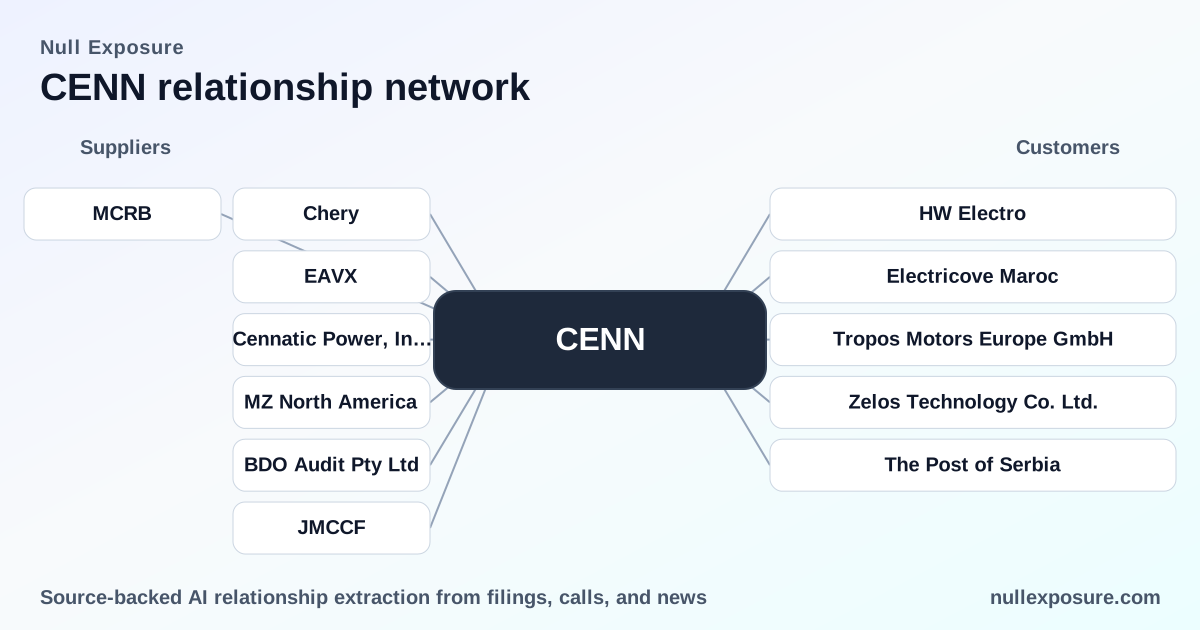
Cenntro Electric Group (CENN): supplier map and what it means for investors
Cenntro Electric Group sells light- and medium-duty electric commercial vehicles by outsourcing core manufacturing and assembling a global supply chain; it monetizes through vehicle sales and related components while using third-party manufacturers and internal battery pack development to scale without large incremental factory capex. The company operates an OEM outsourcing model, advances working capital to suppliers, and carries concentrated spend with a handful of material vendors—factors that amplify operational leverage and counterparty risk given Cenntro’s sub-scale trailing revenues and negative EBITDA. For a closer look at how these supplier ties translate to investment risk and opportunity, see Null Exposure’s supplier research homepage: https://nullexposure.com/.
How Cenntro’s supplier posture shapes the business
Cenntro’s operating model is built around outsourcing and selective vertical integration. The company contracts established third-party automakers to produce vehicle kits and finished units, while developing battery pack capabilities through a subsidiary. These choices drive a distinct set of characteristics investors should treat as company-level signals:
- Contracting posture — short-term supplier agreements. The company states it generally does not maintain long-term contracts with single-source suppliers, which preserves flexibility but increases execution risk if market conditions tighten. (Company 2024 Form 10‑K.)
- Concentration and spend profile — supplier dollars are concentrated. Public filings show multiple suppliers in the $1M–$10M spend band and several material suppliers in lower and higher bands, indicating that a relatively small number of vendors account for meaningful portions of purchases and advances. (Company 2024 Form 10‑K.)
- Criticality — supplier performance is material to results. Management warns that supplier failure to deliver acceptable volumes or prices could have a material adverse effect on the business. (Company 2024 Form 10‑K.)
- Relationship roles — buyer, manufacturer, logistics provider. Cenntro acts as buyer and contract partner while outsourcing manufacturing and relying on third‑party logistics for international shipping; the company also reports material advances to suppliers on the balance sheet (advance to suppliers ~$13.4M disclosed). (Company 2024 Form 10‑K.)
- Maturity — mixed: outsourced manufacturing today, incremental vertical integration via battery subsidiary. Cenntro is simultaneously reliant on OEM partners for vehicles and developing in‑house battery pack production through Cennatic Power, indicating an evolving maturity curve.
If you want a consolidated supplier risk brief and tracking tools, visit Null Exposure: https://nullexposure.com/.
Vendor-by-vendor: relationships investors need on their watchlist
Below are the supplier and related relationships disclosed in the collected records, with one-line summaries and source references.
-
Chery — Contract manufacturer for vehicle kits and completed vehicles. Cenntro disclosed contracting with Chery as one of several established third‑party automobile manufacturers used under its OEM model. (Cenntro 2024 Form 10‑K, FY2024.)
-
JMC (Jiangling Motors Corporation) — Contract manufacturer for vehicle kits and completed vehicles. JMC is named alongside other OEM partners that produce vehicle kits and finished units for Cenntro’s ECV models. (Cenntro 2024 Form 10‑K, FY2024.)
-
Seres — Contract manufacturing partner in Cenntro’s OEM manufacturing model. Seres is listed among the established third‑party automobile manufacturers contracted to manufacture vehicle kits and completed vehicles for Cenntro. (Cenntro 2024 Form 10‑K, FY2024.)
-
EAVX (JB Poindexter business unit) — Collaboration on all‑electric last‑mile and vocational work trucks. Cenntro entered a collaboration agreement with EAVX to develop industry‑specific all‑electric last‑mile and vocational solutions, extending product reach into vocational segments. (ValueTheMarkets analysis referencing FY2023 activity.)
-
Cennatic Power, Inc. — Subsidiary for battery cell and pack production that will supply Cenntro products. Cenntro announced production of battery packs in New Jersey and Germany and indicated it will incorporate battery cells produced by subsidiary Cennatic Power in future products. (NJ B Magazine coverage of Cenntro battery pack production, FY2023.)
-
MZ North America — Investor relations contact referenced in regulatory and press notices. Investor relations communications for Cenntro have been routed through MZ North America, which is cited as the contact in public extension and compliance notices. (StockTitan news item; Yahoo Finance press coverage of a compliance extension, FY2023–FY2025.)
-
BDO Audit Pty Ltd — former auditor that resigned prior to the reverse merger. Historical reporting notes that BDO resigned as the independent accounting firm prior to Cenntro’s reverse merger, an item that drove scrutiny when audited financials were not yet available. (InvestorPlace reporting on historical auditor resignation, FY2022.)
What the supplier map implies for credit and operational risk
Cenntro’s supplier model lowers capital intensity but increases counterparty exposure. With trailing revenue of roughly $18.5M and negative EBITDA reported in the public overview, the company’s reliance on third‑party manufacturers and material advances to suppliers (~$13.4M disclosed) concentrates working capital risk. Key implications:
- Execution risk is elevated. Short-term supplier agreements combined with material supplier concentration create vulnerability to supplier pricing shifts or production disruptions.
- Working capital sensitivity is high. Advances to suppliers and concentrated spend bands in the $1M–$10M range mean a small set of counterparties can affect cash conversion and margin volatility.
- Transition risk is present but strategic. The Cennatic Power integration into battery pack production reduces dependence on external battery supply over time but introduces execution and scaling risk in a capital‑intensive component of EV value chains.
- Governance and disclosure have been areas of market attention. Historical auditor resignation and extensions tied to compliance indicate governance milestones investors should monitor.
Practical monitoring checklist for investors
- Track audited reporting cadence and any auditor commentary for signs of financial control improvements.
- Monitor purchase and advance disclosures in quarterly filings to gauge concentration trends and amounts owed to material suppliers.
- Follow volume and delivery updates from OEM partners (Chery, JMC, Seres) and the progress of Cennatic Power’s production ramp.
For an actionable supplier risk scorecard and ongoing alerts, see Null Exposure’s tools at https://nullexposure.com/.
Bottom line: concentrated outsourcing is a lever, not a guarantee
Cenntro’s outsourced OEM model and emerging in‑house battery capability create a dual pathway for scaling without large factory investment, but the structure amplifies counterparty and working capital risk given concentrated supplier spend and short‑term contracting posture. Investors should treat supplier disclosures as leading indicators of operations: supplier concentration, advances, and the pace of battery integration will materially affect execution and valuation over the next 12–24 months. For continued monitoring and a supplier‑first view of risk, visit Null Exposure: https://nullexposure.com/.