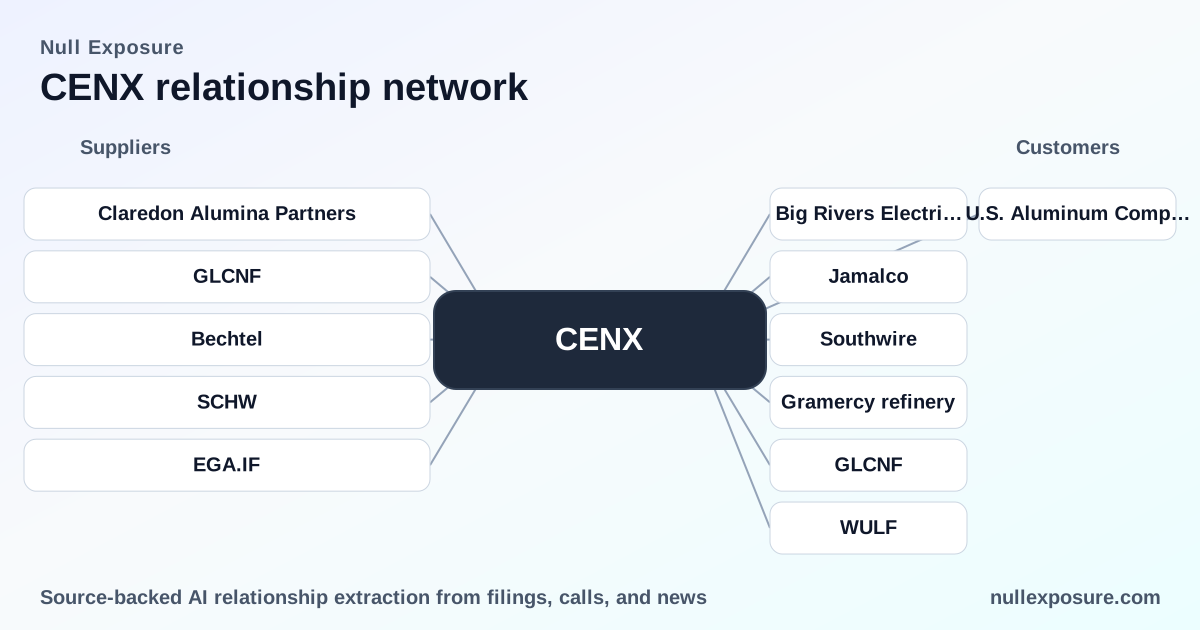
Century Aluminum (CENX): supplier map, contracts, and what investors should watch
Century Aluminum produces primary aluminum in the United States and Iceland and monetizes by selling standard and value-added aluminum products into industrial and specialty markets. Revenues are driven by smelter throughput and LME-linked pricing while margins are determined largely by two controllable inputs — alumina feedstock and electrical power. For investors assessing supplier relationships, the key questions are contract tenor, price linkage, counterparty scale, and how those inputs intersect with the company’s capital projects and geographic footprint. Learn more about supplier risk scoring and relationship intelligence at https://nullexposure.com/.
Why Century’s supplier relationships matter to valuation
Century operates capital‑intensive smelters where alumina and electricity are the single largest cost levers. The company’s public filings and remarks show a clear contracting posture: long‑term supply commitments where available, blended pricing approaches (fixed, LME‑linked and API‑linked), and reliance on partners for project delivery. Long‑dated power purchase agreements and multiyear alumina purchase contracts compress input price volatility but create concentration and renewal risk that investors must price into multiples and scenario models.
- Contract maturity is meaningful: contracts for power and alumina frequently extend multiple years and include extension mechanics, which means mid‑cycle negotiations or market moves can have outsized profit impact.
- Criticality of inputs: alumina and power are explicitly described by management as critical to gross margin. This elevates supplier creditworthiness and delivery certainty to first‑order risk factors for equity holders.
- Active project partnerships: Century is partnering on large greenfield projects where engineering selection and partner equity splits will determine capital allocation and timing for future capacity.
Relationship roll call: the counterparties on the record
Below are the counterparties flagged in public documents and calls, with plain‑English summaries and source notes.
-
Claredon Alumina Partners — Management said it will continue to work with the government of Jamaica and Claredon Alumina Partners to identify areas of need and provide support, indicating ongoing operational and community engagement tied to alumina supply infrastructure (2025 Q3 earnings call; comment recorded March 2026).
-
Glencore plc / Glencore — Century’s FY2024 10‑K discloses a material alumina/raw materials procurement relationship with Glencore, including a listed supply line of 500,000 tonnes per year through December 2028 with LME‑linked pricing, indicating both scale exposure and a market‑price linkage for a substantial portion of feedstock (FY2024 10‑K filing).
-
Bechtel — Multiple news reports from February 2026 note that Bechtel was hired by Century and Emirates Global Aluminium to perform preliminary engineering for a planned primary aluminum facility in Inola, Oklahoma, signaling that Century has selected an experienced EPC lead for early project development (news coverage, Feb 9, 2026).
-
Charles Schwab Corp. — A recently surfaced SEC‑related filing referenced Charles Schwab in the context of securities handling on February 27, 2026; this is an administrative/custodial mention tied to a Form 144‑type filing rather than an operational input contract (SEC filing published via third‑party filing aggregator, Feb 27, 2026).
-
Emirates Global Aluminium (EGA) — Management described a strategic partnership with EGA, combining Century’s U.S. operating and supply‑chain expertise with EGA’s smelting and construction know‑how, which underpins the Inola project development and positions Century as an equity partner rather than a sole operator (2025 Q4 earnings call; remarks recorded March 2026). News coverage characterizes the joint project as a partnership with EGA holding a majority stake in the Inola plan (Feb 2026 press reports).
How these relationships move the P&L and risk profile
Century’s contracts function as both shields and amplifiers for profitability. LME‑linked alumina supply from Glencore locks input exposure to market pricing, which preserves gross margin participation when metal prices rally but also transmits market downside during low LME periods. Long‑term power purchase arrangements across operations provide price certainty but concentrate counterparty and regulatory risk in regions where contracts expire on staggered dates through the late 2020s and into the mid‑2030s, per the company filing. The EGA partnership and Bechtel engagement convert project execution risk into a structured JV with an experienced builder/operator, de‑risking delivery but introducing partner concentration and capital allocation governance that investors should monitor.
Explore deeper counterparty analytics and contract expiry timelines at https://nullexposure.com/.
Operational constraints framed for investors
The public constraint signals establish a few firm characteristics of Century’s operating model:
- Contracting posture: long‑term and structured. Multiple excerpts in the company filing document long‑term power purchase agreements and supplier terms running through the late 2020s and 2030s, indicating a deliberate preference for multi‑year arrangements to secure baseload power and alumina.
- Concentration and criticality: inputs are material and critical. The 10‑K explicitly states that alumina and electrical power are the two largest components of cost of goods sold, elevating supplier performance to a profitability determinant.
- Maturity and stage: active, operating, and project development. The company is both operating existing smelters with ongoing commercial flows and actively developing a new plant with EGA and Bechtel, so its supplier posture spans routine procurement to strategic EPC engagements.
- Relationship roles: supplier, manufacturer and service provider. Century sources alumina from refining partners (including Jamalco‑related flows called out in filings) and contracts service providers for engineering and power arrangements — a mixed ecosystem that requires distinct diligence for trading counterparties versus EPC contractors.
Practical risk checklist for operators and investors
- Track contract expirations and renewal windows (notably the Glencore supply through Dec 2028 and similar long‑dated power agreements) and model mid‑term price scenarios into EBITDA sensitivity.
- Validate counterparties’ balance‑sheet strength (Glencore, EGA, and major utilities) and confirm dispute and termination mechanics embedded in those long‑term contracts.
- Monitor the Inola project cadence: engineering selection (Bechtel) is complete for preliminary work, but schedule, budget and partner equity dynamics will decide capital intensity and timing of incremental capacity.
Bottom line: positioning your exposure
Century’s supplier set is strategically organized around long‑dated purchasing and advanced project partnerships, which reduces short‑term supply shocks but concentrates negotiation and renewal risk in the late 2020s. For investors, the two priorities are (1) modeling the cost pass‑through and counterparty credit risk embedded in LME‑linked alumina purchases and (2) monitoring the EGA/Bechtel‑led Inola project for execution and capital allocation outcomes. For operators, the imperative is to maintain contract continuity and diversify optionality where practical.
If you evaluate supplier concentration for portfolio due diligence or need structured supplier intelligence for operational decisions, start with a targeted supplier risk review at https://nullexposure.com/. For an enterprise view across counterparties and contract expiries, see our analysis portal at https://nullexposure.com/.
This summary synthesizes Century’s public disclosures, recent earnings remarks, and press coverage to produce an operationally‑oriented investor view of supplier risk and project exposure.