Cantor Equity Partners VI (CEPS): Sponsor exposure and supplier posture for investors
Cantor Equity Partners VI (NASDAQ: CEPS) is a special purpose acquisition company that monetizes by raising capital from public investors and executing one or more business combinations; its economics flow from the deployment of IPO proceeds into a target and sponsor promote upon a successful merger. CEPS carries no operating revenue, negative book value, and an asset-light, event-driven business model that places sponsor relationships and transaction execution at the center of value creation.
For ongoing supplier and counterparty diligence, see full supplier intelligence at https://nullexposure.com/.
The high-level commercial picture investors need to hold
CEPS is a classic SPAC: it lists Class A ordinary shares, holds capital raised for combination, and consumes public market valuation until a merger completes. No revenue, no operating margin, and negative book equity underscore that investor returns depend entirely on the identification and successful closing of a target transaction and on sponsor alignment. The company reports a market capitalization of roughly $148.2 million (latest public snapshot), with shares outstanding and meaningful sponsor and institutional shareholders on the register.
CEPS is headquartered in New York and files on a December fiscal year cadence; the most recent quarter on record is 2025-09-30. These facts frame the counterparty posture: CEPS is a transaction vehicle rather than an operating supplier to end markets.
Why the Cantor Fitzgerald sponsorship changes the risk profile
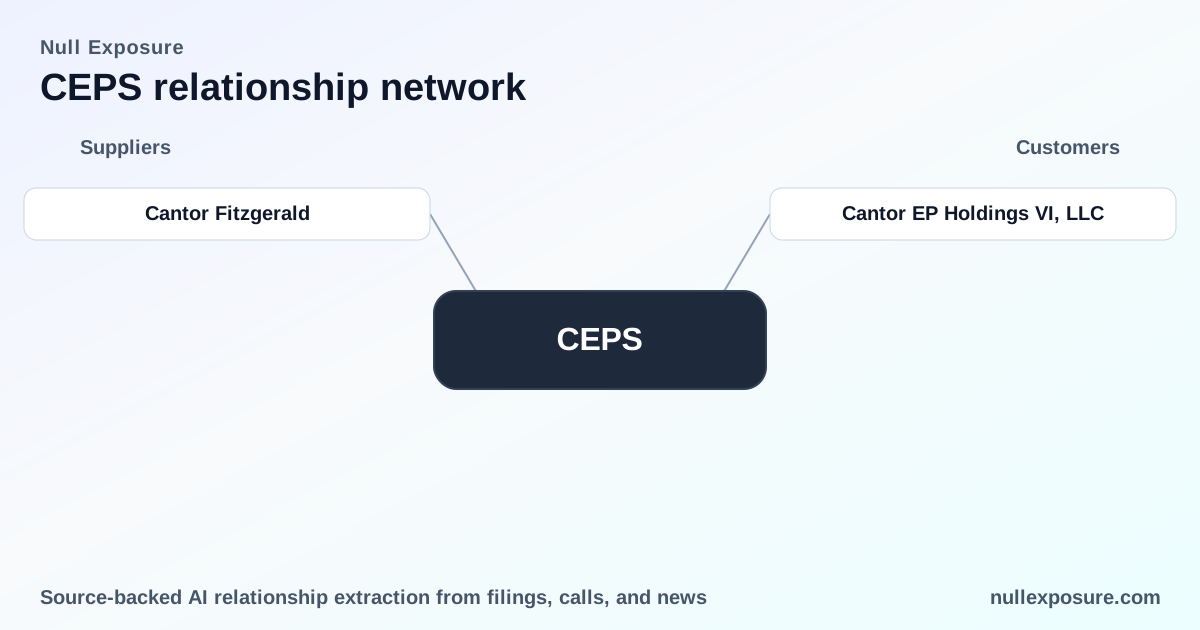
The primary supplier/relationship visible in public results is the SPAC sponsor: Cantor Fitzgerald. Sponsor firms control deal sourcing, negotiation leverage, and post-combination governance structures. Sponsor quality is the single most important supplier factor for CEPS because the sponsor sources targets, structures transactions, and supplies deal execution resources.
Relationship coverage (complete)
- Cantor Fitzgerald — Cantor Fitzgerald sponsors Cantor Equity Partners VI and provides the leadership and deal-sourcing platform that will drive CEPS’s business combination strategy; the SPAC is led by Chairman and CEO Brandon G. Lutnick under Cantor Fitzgerald sponsorship. A news report from Intellectia (March 9, 2026) noted the $100 million raise and the sponsor-led positioning across financial services and digital assets. (https://intellectia.ai/news/stock/cantor-equity-partners-vi-raises-100-million-for-spac)
Operational constraints and company-level signals
There are no explicit relationship-level constraints published in the supplier-scoped results. At the company level, the CEPS operating model generates a set of structural signals investors must incorporate into supplier diligence:
- Contracting posture: transactional and time-bound. CEPS operates under SPAC governance and contract terms that prioritize one-off merger transactions rather than ongoing procurement contracts with suppliers. Execution timelines and trust-account mechanics govern liquidity and counterparty payments.
- Concentration: sponsor-centric. Value creation is concentrated in the sponsor relationship; sponsor resources, reputation, and network determine deal flow and terms.
- Criticality: sponsor is critical. The sponsor is operationally and strategically critical — target sourcing, due diligence, and negotiation capacity are provided or coordinated by the sponsor.
- Maturity: pre-combination, limited operating history. CEPS is pre-merger and lacks operating revenue, so the company’s maturity is early-stage event-driven rather than scale operations.
- Governance and liquidity: public shareholder protections apply. CEPS’s trust mechanics and SEC/NYSE/Nasdaq disclosure regimes produce a predictable capital structure until a combination concludes.
These company-level characteristics translate into supplier diligence priorities: evaluate sponsor deal pedigree, alignment of economic incentives, and the sponsor’s track record in completing combinations that deliver shareholder value.
Financial context that matters to supplier risk
The public snapshot shows no operating revenue and zero EPS, consistent with a SPAC vehicle. Market indicators include a shares outstanding figure of ~11.8 million and float of ~9.15 million, institutional ownership near 12.3%, and insider ownership around 2.54%. Price action is narrow — 52-week high $10.18 and low $10.09, with moving averages at $10.13 — reflecting SPAC share-price stability around the IPO trust value.
These metrics underline a simple commercial truth: supplier and counterparty exposure is dominated by the outcome of the merger process rather than by operating performance today.
What this means for investors and counterparties
- Sponsor quality drives outcome. Cantor Fitzgerald’s role as sponsor is the central commercial relationship for CEPS; evaluate sponsor track record, sector relationships (financial services and digital assets cited), and leadership credibility.
- Event risk is dominant. Until a business combination closes, CEPS’s valuation and ability to pay third-party providers are tied to trust-account structures and sponsor-led financing activity.
- Limited downside from operating losses but control and timing risks are elevated. The lack of operating obligations reduces ongoing cash burn risk, but governance timelines (and potential sponsor-driven decisions on extensions or redemptions) concentrate decision risk.
- Counterparty diligence focuses on transaction terms, not service-level performance. Suppliers and counterparties should prioritize contractual protections related to termination, timing, and payment mechanics over SLA-style operational covenants.
For a targeted supplier risk report and sponsor-performance benchmarks, visit https://nullexposure.com/.
Practical recommendations for investors evaluating CEPS supplier relationships
- Confirm sponsor track record across comparable deals and sectors; quantify the sponsor’s successful combination rate and post-merger retention of value.
- Assess legal protections in SPAC documentation that affect counterparties (redemption rights, extension provisions, sponsor equity promote mechanics).
- Treat each counterparty relationship as contingent on deal outcome and prioritize counterparties whose economics scale with successful combinations (advisory, transaction services, roll-up partners).
Final takeaways
CEPS is a sponsor-driven SPAC with no operating revenue; the sponsor relationship with Cantor Fitzgerald is the single most consequential supplier relationship for investors. Evaluate CEPS through the lens of transaction execution and sponsor alignment rather than operating performance metrics. For ongoing coverage of sponsor and supplier relationships across event-driven public vehicles, see our wider intelligence hub at https://nullexposure.com/.
Endnote: the Cantor Fitzgerald sponsorship is documented in contemporaneous press coverage describing a March 2026 raise and sponsorship arrangement; that source is the basis for the relationship summary above (Intellectia, March 9, 2026: https://intellectia.ai/news/stock/cantor-equity-partners-vi-raises-100-million-for-spac).