Cerus Corporation (CERS): supplier map and what it means for operators and investors
Cerus commercializes the INTERCEPT Blood System and monetizes through the sale of capital systems and recurring consumable disposable kits and reagents that treat blood products; the business model depends on long-term manufacturing partners to supply finished disposable kits, the amotosalen inactivation compound, and specialty components. Revenue is driven by recurring consumable demand, while margin and supply continuity are concentrated in a small set of suppliers under multi-year contracts. Learn more about supplier risk and visibility at https://nullexposure.com/.
Why suppliers drive the thesis for Cerus
Cerus is a classic med-dev consumables franchise: durable installed base of devices plus recurring disposables that generate predictable unit economics when supply is uninterrupted. The company’s FY2024 filing documents explicit long-term supply contracts, sole-supplier relationships for key kit components, and formal renewal mechanics that lock in manufacturing partners through the late 2020s and early 2030s. Those structural elements reduce sourcing volatility but increase counterparty concentration and operational risk if a single manufacturer has issues.
- Concentration over diversification: key kit manufacturing and certain components are produced by single suppliers.
- Contract maturity: formal terms extend across multiple years with automatic renewals, creating visibility for production planning and revenue capture.
- Spend scale: Cerus reports material purchase commitments at the company level, indicating non-trivial supplier spend that underpins operations.
If you evaluate supplier exposure for procurement or M&A diligence, these are the practical levers to watch. For an investor-grade supplier risk profile and continuous monitoring, visit https://nullexposure.com/.
The supplier list — plain-English takeaways
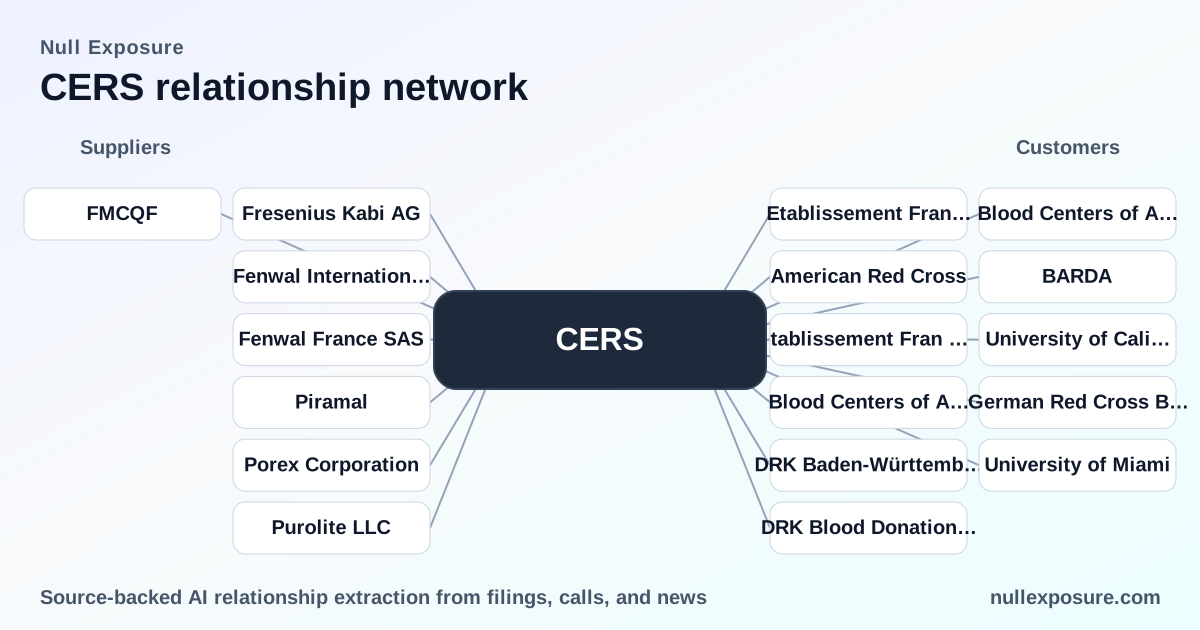
Fresenius Kabi AG
Fresenius Kabi AG is a principal manufacturing partner: under the Second Amended and Restated Supply and Manufacturing Agreement, Fresenius manufactures and supplies platelet and plasma disposable systems to Cerus, with the agreement running through December 31, 2031 and automatic renewal provisions. According to Cerus’ FY2024 Form 10‑K, Fresenius is the company’s manufacturing partner for finished disposable kits for platelet and plasma systems.
Fenwal International, Inc.
Fenwal International, Inc. is named alongside Fresenius in the 2022 supply agreement and participates in the manufacture and supply of the platelet and plasma systems to Cerus. The FY2024 10‑K lists Fenwal as part of the Fresenius group that provides these manufacturing services.
Fenwal France SAS
Fenwal France SAS is likewise included in the Fresenius group that manufactures and supplies Cerus’ platelet and plasma disposable systems under the 2022 Agreement. Cerus identifies Fenwal France in its FY2024 Form 10‑K as part of its supply chain for disposable sets.
Piramal
Piramal (formerly Ash Stevens, Inc.) manufactures amotosalen, the active inactivation compound used by Cerus in platelet and plasma systems; Cerus operates under an amended manufacturing and supply agreement that included an automatic renewal structure through at least December 31, 2025. The FY2024 10‑K describes the Piramal agreement for synthesis of amotosalen.
Porex Corporation
Porex Corporation supplies components of the compound adsorption devices in the disposable kits and, per the filing, is currently Cerus’ sole supplier for those devices under an amended agreement effective January 1, 2025 and extended through December 31, 2027. Cerus’ FY2024 10‑K identifies Porex as a third‑party manufacturer for these components and notes the 2025 Agreement extension.
Purolite LLC
Purolite LLC supplies raw materials used in the manufacture of the compound adsorption devices and is governed by an amended and restated supply agreement. The FY2024 filing references Purolite as the raw‑material supplier for those adsorption device components.
Fresenius (ticker FMCQF) — consolidated reference
Cerus also cites “Fresenius” as a consolidated supplier group (Fresenius Kabi AG, Fenwal France SAS, Fenwal International) and explicitly states Fresenius is the sole supplier for manufacture of finished disposable kits for platelet and plasma systems. The FY2024 Form 10‑K reiterates Fresenius’ sole-supplier role and the long-term nature of the 2022 Agreement.
Operational constraints and what they imply for operators and investors
The company disclosures create a clear operating picture with actionable constraints:
-
Long-term contracting posture: Multiple excerpts describe multi-year agreements with automatic renewals — Fresenius’ 2022 Agreement runs through 2031 with successive renewal mechanics, Porex’ arrangement was extended to 2027, and the Piramal agreement renewed to December 31, 2025 with automatic renewals. That structure provides production visibility and limits near-term re-sourcing flexibility, which is beneficial for demand planning but increases dependency on counterparty performance (FY2024 10‑K).
-
Manufacturing concentration and criticality: With Fresenius designated as the sole finished-kit manufacturer for platelet and plasma disposable kits, and Porex identified as the sole supplier for compound adsorption devices, operational continuity is concentrated in a handful of vendors. This concentration elevates single‑vendor risk for both supply interruptions and price negotiation leverage (FY2024 10‑K).
-
Supplier role clarity and maturity: The supplier relationships are primarily manufacturing and supply agreements rather than transactional spot purchases, reflecting mature, contract-bound manufacturing partnerships appropriate for regulated medical products. These arrangements typically include quality, capacity and regulatory obligations that both stabilize supply and create remediation complexity.
-
Company-level supply risk signals: Cerus discloses $31.6 million of short-term purchase commitments and $2.6 million of long-term purchase commitments on a consolidated basis, indicating meaningful committed spend with suppliers that is not on the balance sheet. The filing also notes at the company level that a contracted manufacturer previously experienced failures in manufacturing an active compound for the red blood cell system — a background operational risk that investors and operators must factor into resilience planning (FY2024 10‑K).
-
Negotiation dynamics and concentration risk: High institutional ownership (about 74.7%) signals investor attention to execution and margin, making supplier performance a direct driver of near-term earnings and long-term valuation multipliers. Cerus’ recurring revenue model increases the economic impact of any sustained supply disruption.
For procurement teams or investors, the priority actions are capacity verification, dual‑sourcing feasibility analysis for non-proprietary components, and contract terms review for service levels and remedies. If you want a supplier-risk dashboard tailored to med‑dev counterparty concentration, start at https://nullexposure.com/.
Practical investment implications and next steps
- Upside if suppliers continue to meet capacity and quality: recurring consumable economics compound gross margin and drive predictable revenue per installed system.
- Downside if a sole supplier fails to perform: short-to-medium term revenue hits and remediation costs; regulatory requalification of alternative suppliers could be lengthy and expensive.
- Active monitoring required: track contract expiry windows (notably 2027 and 2031), production KPIs from suppliers, and any public disclosures from named partners.
For operator diligence or investor monitoring, prioritize supplier audit access, inventory buffers, and contingency sourcing plans. To subscribe to continuous supplier relationship intelligence and monitor these exact agreements in real time, go to https://nullexposure.com/.
Cerus’ model is straightforward: recurring consumable sales anchored to long-term supplier relationships that are both a moat and a risk concentration. Investors and operators should value the visibility that contracts provide while preparing for the asymmetric impact if one of those manufacturing partners experiences disruption.