Conformis (CFMS) supplier relationships: what the advisory roster reveals to investors
Conformis (CFMS) operates as a medical-device supplier focused on personalized orthopedic implants and related services, monetizing through product sales and clinical partnerships with hospitals and surgical centers. The company's recent transaction activity centers the business around a strategic sale process that is being executed with top-tier external advisors; that process is the primary near-term value driver for investors evaluating supplier concentration, counterparty risk, and governance outcomes. For an investor-ready supplier relationship audit, the advisory roster and absence of reported supplier constraints are the most actionable signals available today.
Explore more company relationship intelligence at https://nullexposure.com/.
Why the advisor list matters more than usual right now
Conformis is not operating in a steady-state vendor ecosystem—it is in a transaction that changes the ownership and potentially the commercial posture of the business, so the identities of legal and financial advisors are direct proxies for execution capability, deal structure sophistication, and the speed of integration post-close. In an M&A context, a compact, elite advisory slate tends to indicate a high-touch, concentrated contracting posture with critical supplier dependencies re-evaluated under new ownership.
Key takeaway: the advisor roster signals a high-priority corporate finance agenda that will re-set supplier relationships and pricing leverage for the buyer and seller.
Who the company is working with (each relationship)
-
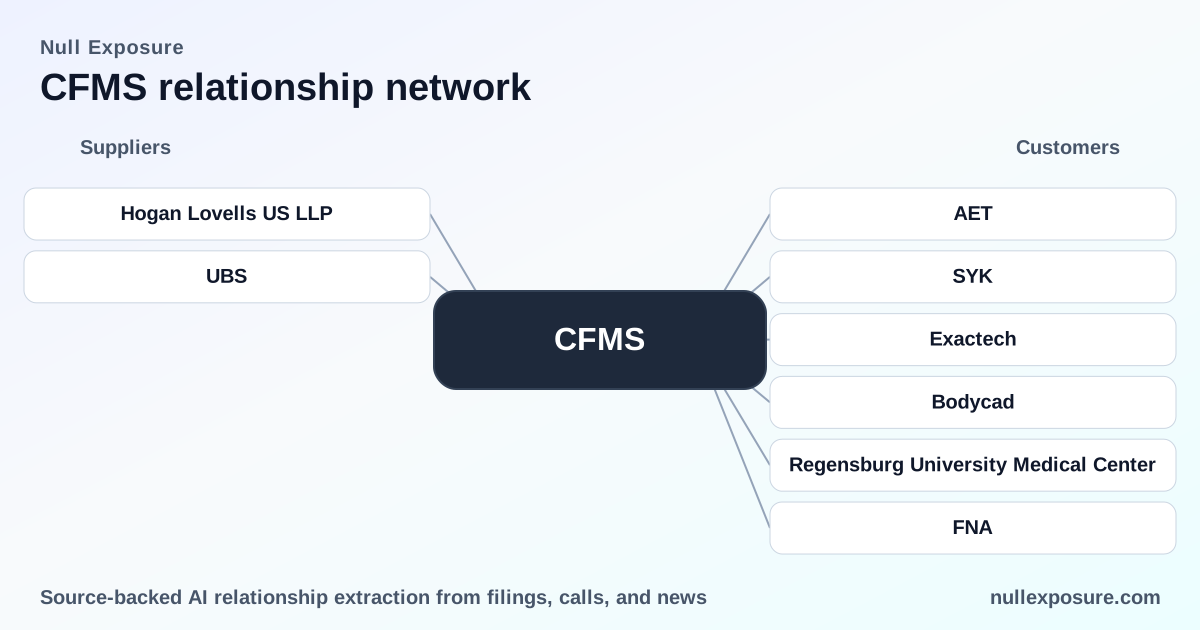
Hogan Lovells US LLP — Hogan Lovells is serving as legal counsel to Conformis in the announced transaction with Restor3D. This choice signals the company engaged a global law firm to manage deal documentation, regulatory matters, and closing conditions during the sale process. Source: CityBiz news report on the Conformis acquisition (March 9, 2026).
-
UBS Investment Bank — UBS Investment Bank is acting as financial advisor to Conformis, overseeing valuation, buyer outreach, and transaction negotiation support. Using a major investment bank indicates the company prioritized an institutional sales process and valuation discipline for the divestiture. Source: CityBiz news report on the Conformis acquisition (March 9, 2026).
Operating model and business-model constraints (what the signals tell investors)
The public relationship slate and the absence of explicit supplier constraints together outline the company-level operating model characteristics investors should weigh:
-
Contracting posture: Engagement of a single elite law firm and a global investment bank indicates an intentionally concentrated external contracting posture for the transaction—Conformis centralized deal execution with a small number of high-capability suppliers rather than a dispersed advisor pool.
-
Concentration risk: Concentrated use of top-tier advisors reduces execution risk for the sale but creates counterparty concentration during the critical window; key legal, financial, and escrow arrangements will depend on these few suppliers and their sub-processes (due diligence, financing commitments, regulatory filings).
-
Criticality of relationships: These advisors are mission-critical for a successful close—legal counsel and the lead banker directly influence timing, conditions, and the final purchase price, which in turn affects supplier payments, earn-outs, and post-close commercial arrangements.
-
Maturity signal: The choice of internationally recognized advisors signals corporate finance maturity and preparedness to execute a complex transaction that will reshape supply and commercial strategies under new ownership.
Because the constraint inventory for CFMS returned no named supplier constraints, this is a company-level signal rather than a relationship-level one: no reported constraints suggest either low public visibility into ongoing supplier limitations or that the transaction itself is the overriding operational constraint for counterparties.
What investors should watch next
- Deal close dynamics. Closing conditions and timing will determine when governance shifts and supplier renegotiations begin—legal and bank advisors will manage these milestones. Watch for regulatory filings and press updates that track the completion timeline.
- Supplier re-contracting under new ownership. Restor3D’s acquisition strategy will dictate whether Conformis’s existing commercial agreements are maintained, renegotiated, or terminated; expect supplier pricing and reimbursement arrangements to be a near-term focus.
- Counterparty concentration risk during transition. With a compact advisor set, any disruption to those advisors’ workstreams—litigation, financing, or regulatory hurdles—would directly delay the transaction and create operational continuity risk for customers and suppliers.
Explore a focused supplier relationship briefing and ongoing alerts at https://nullexposure.com/ to track changes to these dynamics as the transaction progresses.
Investment implications: risk, optionality, and near-term catalysts
- Upside optionality centers on deal execution and successful integration by Restor3D; successful close with minimal covenant friction unlocks immediate valuation realization for shareholders and clarifies supplier deal economics for the buyer.
- Downside risk is concentrated in execution: any legal or financing complication handled through the named advisors would materially affect timing and transaction value; this is not a diversified execution pathway.
- For operators and procurement teams, anticipate strategic repricing conversations and potential centralization of supplier contracts post-close; the new owner will likely re-assess critical vendors and volume commitments to optimize margins.
Bottom line and next steps for due diligence
Conformis’s advisor roster—Hogan Lovells as legal counsel and UBS as financial advisor—is consistent with a deliberate, institutional sale process. For investors and operator teams, the immediate priority is tracking transaction milestones and early signals of supplier strategy under Restor3D. The lack of reported supplier constraints should be read as an absence of disclosed issues rather than confirmation of no dependency risk; active monitoring is required.
If you are evaluating CFMS counterparty exposure or building a supplier risk playbook tied to this transaction, review the public transaction filings and monitor press updates daily. Access ongoing relationship intelligence and tailored alerts at https://nullexposure.com/ to remain aligned with closing developments and supplier re-contracting events.
Final call to action: For a concise, investor-ready supplier risk brief on CFMS and automated alerts on any changes to advisor engagement or disclosed constraints, visit https://nullexposure.com/ and sign up for tailored coverage.