CG Oncology (CGON): supplier posture and partner map investors should price into the story
CG Oncology develops CG0070, an oncolytic virus therapy for non‑muscle invasive bladder cancer, and funds operations primarily through equity markets while positioning for future revenue from product commercialization or licensing. The company operates a lean, outsourced manufacturing and services model and monetizes today by accessing capital (not product sales), with recent financing capacity and legal support structured into its equity program. For investors evaluating supplier risk and counterparty exposure, the most consequential relationships are capital markets intermediaries, a newly controlled contract manufacturer, and external legal counsel tied to offering activity. Explore a concise map of those relationships and what they imply for operational continuity and valuation.
For further supplier intelligence and monitoring tools, visit https://nullexposure.com/.
How CG Oncology runs manufacturing and vendor relationships — the operating model that matters to valuation
CG Oncology does not own clinical or commercial manufacturing capacity and relies on third parties for production, packaging, storage and distribution of its lead asset. Contracts are primarily spot / purchase‑order based rather than long‑term supply agreements, which concentrates execution risk around individual facilities and regulatory approvals. Company disclosures state that loss of access to an approved manufacturing site or supply interruption would “significantly impact” the ability to develop, obtain regulatory approval for or market cretostimogene. That wording is a direct operational red flag: manufacturing is both material and critical to the company’s ability to convert clinical progress into revenue.
Because the business is capital‑intensive and pre‑revenue, equity financing capacity is an operational lever—access to capital converts into runway that funds trials and supply-chain investments. The combination of a spot contracting posture, limited redundancy, and high regulatory dependency makes supplier relationships a first‑order risk for investors and a likely focus for counterparty diligence by prospective commercial partners.
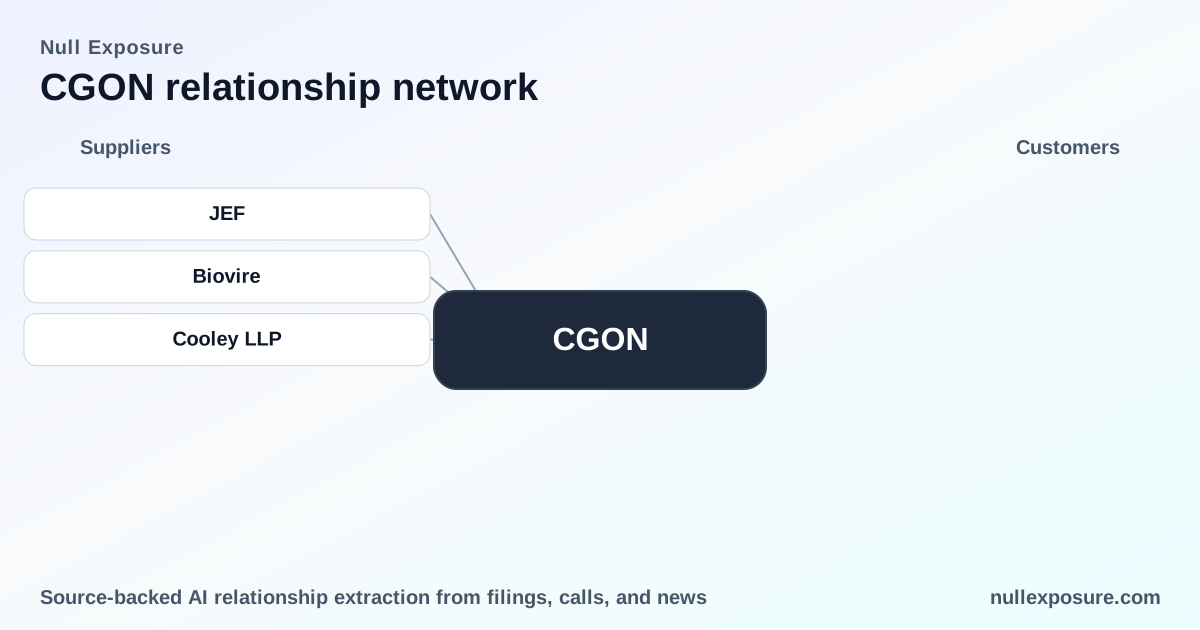
Supplier and partner map: the named relationships investors need on their model
Jefferies LLC — equity placement and open market sale capacity
Jefferies serves as a placement/intermediary for CG Oncology’s equity program, including an Open Market Sale Agreement (OMSA) that expands the company’s capacity to sell common stock into the market. According to press coverage of the company’s offering activity, CG Oncology entered an OMSA in March 2025 that authorized up to $550 million in common stock sales and had realized $147.1 million from that facility by the end of 2025. Source: Globe and Mail coverage and a TradingView summary of the company’s FY2026 SEC filings (March 2026).
Biovire — contract manufacturing organization brought under company control
CG Oncology has acquired control of Biovire, a contract manufacturing organization, to strengthen supply continuity for cretostimogene production; this is an explicit strategic response to single‑source manufacturing risk. The acquisition is presented as a deliberate move to secure manufacturing capacity and reduce dependence on external contract manufacturers. Source: TradingView’s summarization of CG Oncology’s FY2026 10‑K disclosures (March 2026).
Cooley LLP — legal opinion attached to equity offering amendment
Cooley LLP provided a legal opinion regarding the validity of shares in connection with an amendment to increase the company’s stock offering, a standard but important element of public‑offering governance that supports capital‑raising activity. This legal imprimatur accompanies the company’s expanded equity flexibility and underwrites the corporate actions used to monetize the business. Source: TradingView reporting on the company’s amendment filing (March 2026).
What the constraints tell investors about execution risk and negotiating posture
Company‑level signals in filings describe a clear set of constraints that shape both operational risk and bargaining power with suppliers and partners:
- Contracting posture is short‑term and transactional. CG Oncology obtains supplies on purchase order basis and does not currently maintain long‑term supply agreements for its critical components, which leaves the company exposed to pricing and availability shocks and reduces supplier lock‑in.
- Manufacturing is material and strategically critical. Filings warn that loss of FDA approval or other regulatory setbacks at supplier sites would significantly impair product development and commercialization prospects; this elevates regulatory oversight of supplier sites to a material investment‑risk factor.
- Role concentration across services and manufacturing. The company’s operational footprint is intentionally outsourced across manufacturing, packaging, cold‑chain logistics and clinical services, concentrating risk into a few external providers rather than internal capabilities.
- Relationship maturity is active but transitional. CG Oncology is actively dependent on third parties for ongoing trials and clinical work, while the Biovire control is an explicit step toward partial vertical integration—evidence the company is moving from pure outsourcing toward hybrid control where it judges critical.
These constraints combine to create a classic biotech trade‑off: low fixed cost and capital efficiency in the near term, but elevated operational hazard that directly impacts commercialization probability. Pricing and due diligence should incorporate the cost and timeline to establish redundant supply and to secure regulatory approvals at the manufacturing footprint.
Financial and strategic context that frames supplier risk
CG Oncology is a high‑valuation clinical‑stage biotech—market capitalization reported at roughly $5.56 billion with trailing revenue of $4.0 million and negative EBITDA—so equity access is the primary funding mechanism for operations. Analyst consensus skews positive (target price ~$80.93 with buy/strong buy ratings), which reinforces the practical need for continued access to capital partners like Jefferies and legal counsel to support offerings. Given the company’s valuation relative to current commercial revenue, supplier interruptions are not merely operational setbacks; they are events that directly threaten the company’s path to revenue and implied valuation.
For active monitoring of CG Oncology supplier signals and financing activity, visit https://nullexposure.com/.
What investors and operators should do next
- For investors: model a scenario where single‑site manufacturing hiccups delay commercial launch by 12–18 months and quantify the incremental cash required to secure redundant manufacturing capacity or to complete Biovire integration. Price in contingent capital needs and dilution risk.
- For operators and partners: prioritize contractual levers that secure capacity (capacity reservation, regulatory audit rights, and transition support) and convert spot purchasing into at least medium‑term supply commitments where possible.
- For governance teams: maintain continuous disclosure around Biovire integration milestones and manufacturing site approvals; investors should push for transparency on timelines and contingency plans.
To track updates on CG Oncology’s supplier relationships, capital programs, and regulatory milestones, go to https://nullexposure.com/.
Bottom line: CG Oncology’s commercial value depends on two vectors—clinical progress and uninterrupted manufacturing. Equity markets are underwriting operations today, and recent moves (OMSA with Jefferies, Biovire control, and legal support from Cooley) reflect management’s dual strategy of securing runway and shoring up critical supply. Investors must treat supplier relationships as valuation drivers, not ancillary details.