Comstock Holding Companies (CHCI): supplier relationships and what they reveal about the business
Comstock Holding Companies operates, develops and manages mixed‑use real estate in the Washington, D.C. metropolitan area and monetizes through a combination of development profit, leased office income, and fee-based property and operations services (including parking and hotel management). The company’s financial profile — modest market capitalization (~$117M), positive net margins and a high insider ownership stake — positions it as a developer/operator hybrid where recurring operating subsidiaries increasingly tilt revenue toward predictable fees. For a supplier‑level view of counterparties and how they change that risk profile, see NullExposure’s coverage at https://nullexposure.com/.
What matters for investors: a concise thesis
Comstock combines capital‑intensive development with growing fee streams that stabilize cash flow. Development generates upside but concentrates execution risk; fee‑based businesses like ParkX and hotel operations provide recurring revenue and operational margins. The recent decision to appoint an outside leasing specialist for its trophy office portfolio signals a strategy to professionalize asset monetization while retaining ownership upside.
Key financial signals:
- Market cap: $117M; Revenue TTM: $55.8M; Profit margin: 24.9% (company overview).
- Valuation multiples: Trailing P/E ~8.7, EV/EBITDA ~10.3 — valuation consistent with small‑cap REIT/RE developer peers that trade on asset value and recurring cash flow.
- Ownership: 66% insiders, 13% institutions, which drives concentrated control and governance dynamics.
Explore a deeper supplier risk map at https://nullexposure.com/ to evaluate counterparties and commercial exposure in context.
Supplier relationships that shape operations and risk
Below are the supplier and service relationships surfaced in recent public reporting. Each relationship is summarized plainly and tied to the source reporting.
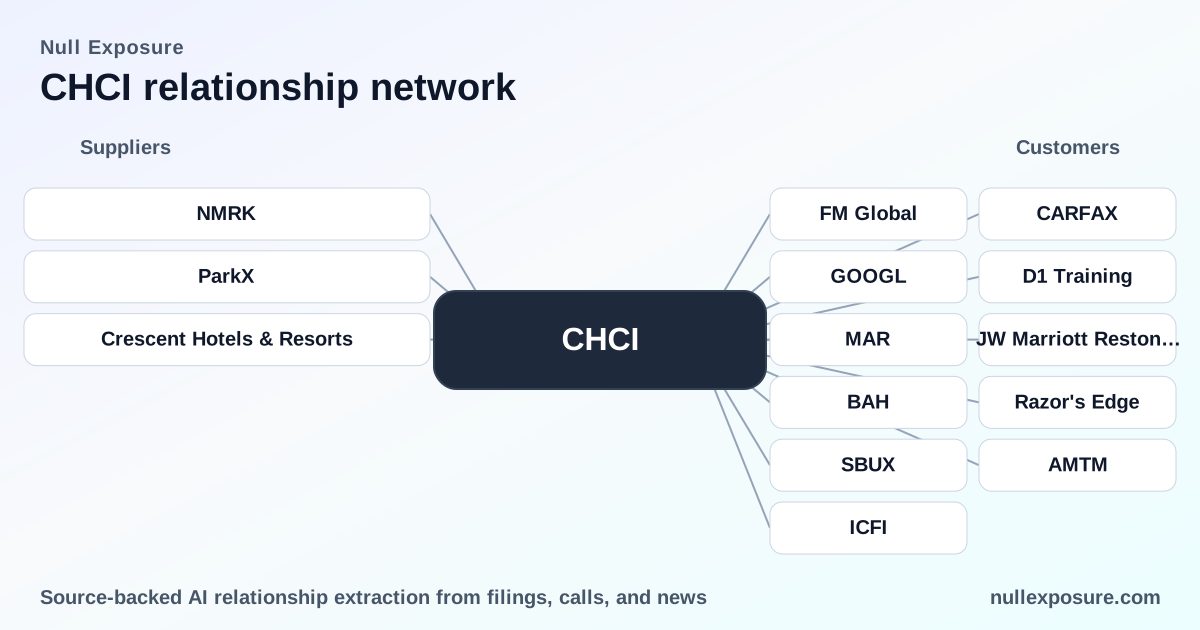
Newmark Group, Inc. — exclusive leasing agent for Dulles Corridor portfolio
Comstock appointed Newmark as the exclusive leasing agent for more than 3.2 million square feet of existing and planned Trophy/Class A office space across Reston Station and Loudoun Station, centralizing leasing execution for its Dulles Corridor assets. This is a material outsourcing of a front‑end commercial function to a national brokerage firm (announced 12 February 2026). Source: Newmark/press coverage of the Feb 12, 2026 announcement (Sahm Capital and Yahoo Finance coverage).
ParkX — growing third‑party parking management revenue
Comstock’s ParkX parking management business produced a 124% increase in third‑party revenue and contributed to a 42% surge in recurring, fee‑based revenues reported in Q2 FY2025, signaling that ParkX is a meaningful operating subsidiary driving fee income and margin stability. Source: Comstock Q2 earnings coverage in Yahoo Finance (FY2025 results).
Crescent Hotels & Resorts — operator/manager of JW Marriott Reston Station
Comstock partnered with Crescent Hotels & Resorts to bring JW Marriott Reston Station online, a 247‑room luxury hotel within its Reston Station master‑planned community; Crescent manages the property under the hotel brand, adding branded lodging to Comstock’s mixed‑use cash flows. Source: HotelBusiness coverage of the JW Marriott Reston Station opening (FY2025 reporting).
How these relationships reflect Comstock’s operating model
These supplier links reveal a dual operating posture: retain asset ownership while outsourcing specialized services to scale operations and reduce execution friction.
- Contracting posture: Comstock increasingly contracts specialized service providers for leasing (Newmark), hotel management (Crescent), and parking operations (ParkX), indicating a pragmatic outsourcing model that leverages third‑party expertise for customer‑facing functions.
- Concentration: High insider ownership (66%) signals concentrated decision‑making that accelerates strategic pivots but reduces the moderating influence of institutional shareholders; this affects negotiation leverage with suppliers and the speed of contractual changes.
- Criticality: Relationships with Newmark and Crescent are operationally critical — leasing and hotel management directly affect occupancy, rent roll and operating cash flow — while ParkX is both an operational revenue driver and a margin stabilizer through recurring fees.
- Maturity: Fee businesses like ParkX and hotel operations are ramped and commercialized, while development projects (Reston Station, Loudoun Station) remain execution‑dependent and carry traditional development cycle risks.
These are company‑level signals, not constraints tied to a single supplier, and they shape counterparty risk, working capital dynamics and cash flow predictability.
Investment implications and operational takeaways
Comstock’s supplier relationships reduce some execution complexity but leave development cycle and leasing risk concentrated in a few large projects. Investors and operators should focus on:
- Lease velocity and absorption under Newmark’s mandate — leasing pace will determine near‑term cash generation from the 3.2M sq ft portfolio.
- Recurring revenue growth from ParkX — continued third‑party wins convert development volatility into steady fee income.
- Brand and operating execution from Crescent on the JW Marriott asset — hotel performance will affect both asset valuation and cash flows at Reston Station.
For an actionable supplier exposure dashboard and contract‑level visibility, review the supplier map at https://nullexposure.com/ to prioritize diligence and counterparty stress testing.
Next steps for diligencing CHCI relationships
- Request Newmark’s leasing plan and performance KPIs tied to the exclusive appointment (leasing velocity, tenant mix, concessions).
- Verify ParkX third‑party contract terms and margin waterfall to understand recurrence and client concentration.
- Review hotel management agreement with Crescent for incentive structures, capital expenditure obligations and termination triggers.
For tailored supplier risk scoring and to map these contracts against Comstock’s financials, visit https://nullexposure.com/ and engage our supplier exposure tools.
Bottom line
Comstock’s strategy shifts the company from pure developer toward an owner/operator model that combines upside from development with stabilizing fee streams. The Newmark agreement centralizes leasing execution for a large office portfolio, ParkX is a clear contributor to recurring revenue growth, and Crescent’s hotel management ties branded demand to the Reston Station ecosystem. Collectively, these relationships decrease certain operational frictions but leave macro leasing and development execution as the primary investment risks. For investors and operators focused on supplier counterparty risk, NullExposure offers targeted insights at https://nullexposure.com/.