CHMI-P-A: How Cherry Hill’s preferred shares monetize agency exposure
Cherry Hill Mortgage Investment Corporation issues CHMI-P-A, a series of cumulative preferred shares that deliver fixed dividend income to investors while the REIT generates returns by owning a diversified portfolio of agency and non‑agency residential mortgage loans and mortgage‑backed securities. The company’s economics flow from interest spread and principal paydowns on mortgage assets, while preferred holders receive priority, consistent dividends—a structure that appeals to income-focused institutional allocators. For a consolidated view of supplier and counterparty exposure across mortgage providers, visit the NullExposure homepage: https://nullexposure.com/.
Why the counterparty map matters for CHMI-P-A holders
Cherry Hill’s asset composition is heavily weighted toward agency-backed securities, which changes the credit and liquidity profile of the preferred equity. Agency guarantees reduce direct credit loss risk but introduce sensitivity to agency policy, prepayment dynamics, and market technicals. Preferred shareholders benefit from predictable cash flows when coupons and prepayments are stable, and lose priority only to senior creditors and the common equity capital structure.
- Business model driver: interest income and yield capture on MBS and mortgage loans.
- Capital structure implication: cumulative preferred shares like CHMI-P-A offer fixed dividends that are paid ahead of common distributions.
- Risk vector: concentrated exposure to agency issuers shifts default risk away from Cherry Hill but concentrates policy risk and market liquidity dependency.
Explore further context and supplier signals on the NullExposure site: https://nullexposure.com/.
What the public signals show — counterparties you need to know
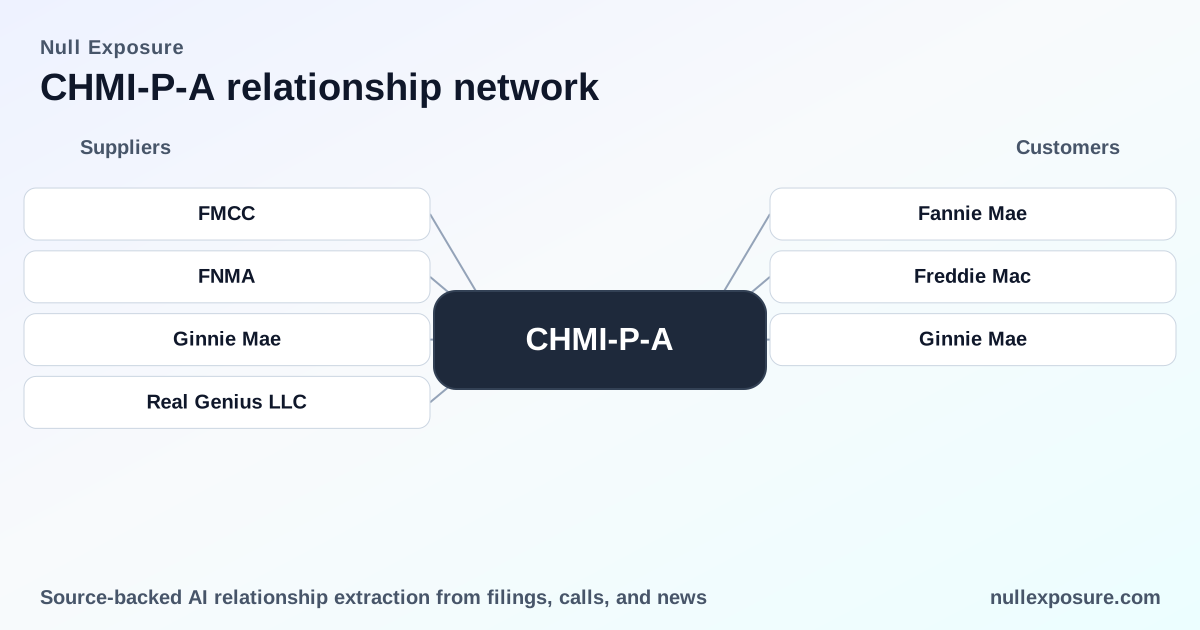
Cherry Hill’s public disclosures and market coverage identify a narrow set of supplier/counterparty relationships that define asset eligibility and portfolio behavior. Below I cover every relationship referenced in the collected results, with a concise plain‑English summary and source attribution.
Freddie Mac (FMCC)
Cherry Hill holds mortgage-backed securities that are issued or guaranteed by Freddie Mac, which provides credit support and servicing standards that influence asset performance and liquidity. According to a MarketBeat instant alert on February 11, 2026, Cherry Hill’s portfolio includes MBS tied to Freddie Mac guarantees (https://www.marketbeat.com/instant-alerts/cherry-hill-mortgage-investment-nysechmi-share-price-crosses-below-200-day-moving-average-heres-what-happened-2026-02-11/).
Fannie Mae (FNMA)
A material portion of Cherry Hill’s agency holdings are securities issued or guaranteed by Fannie Mae, which anchors the portfolio’s credit profile and affects prepayment and spread behavior. MarketBeat noted on February 21, 2026, that Cherry Hill’s assets include securities guaranteed by Fannie Mae (https://www.marketbeat.com/instant-alerts/cherry-hill-mortgage-investment-chmi-projected-to-post-quarterly-earnings-on-wednesday-2026-02-21/).
Ginnie Mae
Ginnie Mae‑guaranteed mortgage-backed securities are also present in Cherry Hill’s holdings; Ginnie guarantees credit risk for government‑insured loans and therefore changes the counterparty and cashflow dynamics relative to agency MBS. A MarketBeat instant alert from February 11, 2026 lists Ginnie Mae among the guarantors represented in the company’s portfolio (https://www.marketbeat.com/instant-alerts/cherry-hill-mortgage-investment-nysechmi-share-price-crosses-below-200-day-moving-average-heres-what-happened-2026-02-11/).
Real Genius LLC
Cherry Hill entered a strategic partnership and made an investment in Real Genius LLC, a Florida-based digital mortgage technology company, signaling a move into mortgage origination/technology channels to complement its asset strategy. Cherry Hill management disclosed this partnership in the Q3 2025 earnings call, as reported in an InsiderMonkey transcript (Q3 2025) (https://www.insidermonkey.com/blog/cherry-hill-mortgage-investment-corporation-nysechmi-q3-2025-earnings-call-transcript-1642330/).
Operating model and company-level constraints (what to watch)
The supplied data contains no explicit supplier-level contractual constraints or covenants. That absence itself is a signal: publicly available relationship data did not surface binding supplier covenants or unique third‑party operational constraints in the source set. Treat this as a company-level observation rather than a firm guarantee — full contractual detail lives in Cherry Hill’s regulatory filings and credit agreements.
From an operational and investor perspective, translate that into these characteristics:
- Contracting posture: portfolio construction follows conventional mortgage market channels and agency eligibility rules rather than bespoke vendor contracts; exposure is governed by securities holdings and agency program terms.
- Concentration: Cherry Hill’s asset mix is concentrated in agency and non‑agency RMBS, which delivers predictability in credit performance but introduces correlation to housing market cycles and agency policy shifts.
- Criticality: agency partners (Fannie, Freddie, Ginnie) are critical to liquidity and risk transfer; their guarantee frameworks materially affect Cherry Hill’s capital efficiency.
- Maturity: the company positions itself as a seasoned mortgage REIT with a management team that executes in both secondary MBS markets and selective mortgage technology investments.
Investment implications — what this means for CHMI-P-A investors
- Income‑first positioning: CHMI-P-A is structured to deliver steady preferred dividends backed by mortgage cash flows; investors trade upside for income stability.
- Policy and liquidity sensitivity: because the portfolio leans on agency guarantees, the primary risks are changes in agency policy, interest-rate driven prepayment volatility, and MBS spread moves, rather than idiosyncratic borrower defaults.
- Strategic diversification signal: the Real Genius partnership indicates management is seeking origination and technology levers to supplement MBS returns, which could affect future asset yield and funding mix.
Key takeaway: CHMI-P-A is a yield vehicle anchored by agency exposure and supported by a management strategy that blends secondary-market MBS investment with selective origination technology stakes—investors should underwrite agency policy risk and prepayment scenarios before committing capital.
For a deeper counterparty risk read and dashboarded exposure mapping, return to the NullExposure homepage: https://nullexposure.com/.
Final verdict for operators and investors
Cherry Hill’s preferred shares are best evaluated against a backdrop of agency dependence, dividend priority, and sensitivity to interest rate dynamics. The supplier relationships identified—Fannie Mae, Freddie Mac, Ginnie Mae, and a strategic partner Real Genius—define both the protective features and the vulnerability vectors in the capital stack. Investors seeking stable preferred income should underwrite prepayment and agency policy shifts; operators should monitor liquidity channels and the impact of originator partnerships on net yield.
Bold, disciplined underwriting of agency behavior and prepayment modeling is the decisive edge when evaluating CHMI-P-A in a portfolio context.