ChargePoint (CHPT): Supplier relationships and operational constraints that matter to investors
ChargePoint operates an EV charging network and sells hardware and software to fleets, businesses and the public sector while monetizing through equipment sales, recurring network subscriptions and energy services tied to charging station usage and software features. Revenue mixes hardware and high-margin software and services, but profitability is constrained by hardware manufacturing costs and investments in network scale. For a practical view into supplier exposure and operational constraints, see more at https://nullexposure.com/.
The quick read: suppliers identified and why they matter
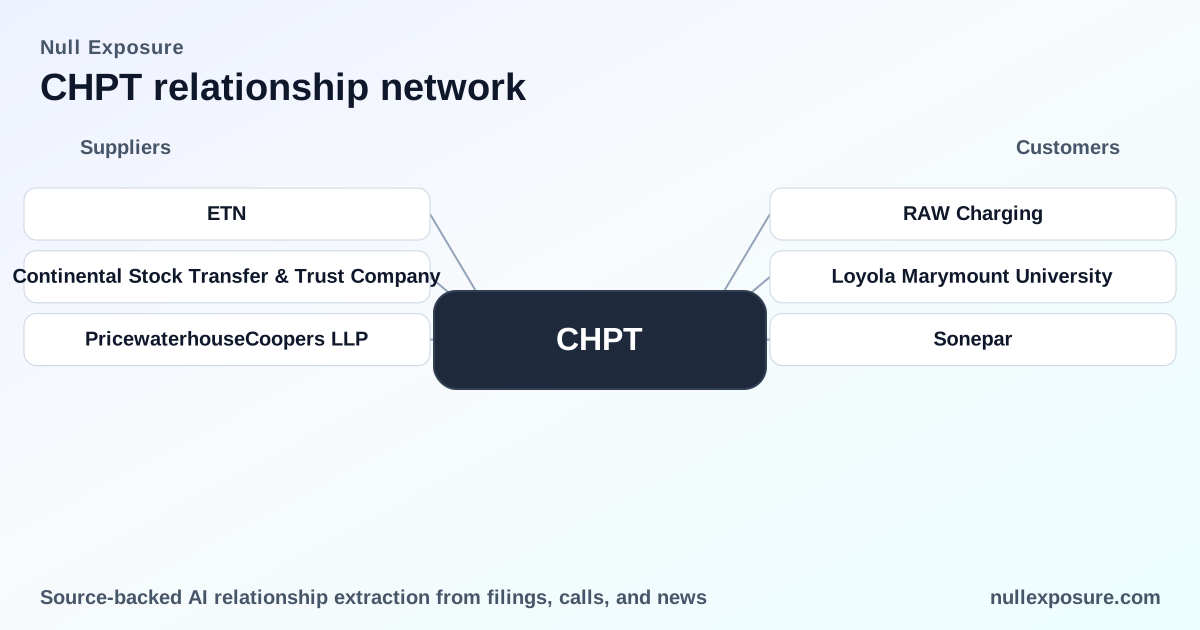
Three distinct counterparty relationships surfaced in public reporting and filings: Eaton as a technology supplier for ultrafast charging systems, Continental Stock Transfer & Trust Company serving as transfer agent during corporate actions, and PricewaterhouseCoopers LLP as the independent auditor. Below I unpack each relationship and what it signals for investors and operators.
Eaton — technology partner for ultrafast and V2X systems
ChargePoint’s ultrafast charging system is powered by Eaton and the announcement highlights vehicle‑to‑everything (V2X) capabilities and a modular DC grid design, positioning Eaton as a strategic equipment and systems supplier for high‑power offerings. According to a Yahoo Finance news item dated March 9, 2026, Eaton supplies key system components enabling ChargePoint’s V2X and modular DC architecture (https://finance.yahoo.com/news/chargepoint-holdings-chpt-unveils-ultrafast-161033574.html).
Continental Stock Transfer & Trust Company — transfer agent for shareholder communications
Continental Stock Transfer & Trust Company handled communications to stockholders of record related to ChargePoint’s reverse stock split and related ownership reporting, indicating normal administrative outsourcing for corporate actions. This was noted in an SEC‑related report reproduced by StockTitan on March 9, 2026 (https://www.stocktitan.net/sec-filings/CHPT/8-k-charge-point-holdings-inc-reports-material-event-a20e4cb9bbd8.html).
PricewaterhouseCoopers LLP — independent registered public accounting firm
Shareholders ratified PricewaterhouseCoopers LLP as ChargePoint’s independent auditor for the fiscal year ending January 31, 2026, reaffirming use of a Big Four firm for statutory audit and financial reporting oversight. The auditor appointment is documented in the same March 9, 2026 filing coverage (https://www.stocktitan.net/sec-filings/CHPT/8-k-charge-point-holdings-inc-reports-material-event-a20e4cb9bbd8.html).
What the constraint signals reveal about how ChargePoint runs its business
Public constraint excerpts describe ChargePoint’s supplier footprint and operational posture in plain terms. Use these company‑level signals to judge contract risk, concentration and supply‑chain strategy:
- Geography and manufacturing concentration: ChargePoint designs in‑house but outsources production to contract manufacturers in the United States, Mexico, Asia and Europe, with the majority of hardware built in Asia and Mexico and components sourced largely from the United States and Asia. This geography mix implies exposure to Asia/Mexico manufacturing dynamics (labor, logistics) and to U.S./Asia component supply chains.
- Contracting posture and maturity: The company intentionally uses third‑party contract manufacturers and design partners for targeted R&D and production to control development costs and reduce operating expenses. This reflects a mixed in‑house/design plus outsourced manufacturing model common to hardware‑centric growth firms.
- Role diversity: ChargePoint operates with both manufacturer relationships (contract manufacturers producing hardware) and service providers (external investment managers for cash management; AWS data centers for cloud operations), indicating hybrid criticality across physical and cloud infrastructure.
Together these constraints describe a company that leverages outsourced manufacturing to control capital intensity while relying on third‑party service providers for cloud operations and financial asset management. That hybrid model improves scalability but concentrates execution risk in contract manufacturers and global component suppliers.
For a deeper supplier risk assessment, visit https://nullexposure.com/ and explore supplier mapping tools.
How these relationships affect risk, cost and execution
ChargePoint’s supplier relationships fall into three practical buckets that investors should evaluate:
- Strategic technology partners (Eaton): Directly affect product capability and differentiation. A supplier that provides system-level components for ultrafast charging and V2X is a de facto strategic partner whose performance impacts time‑to‑market and product reliability.
- Administrative and governance providers (Continental Stock Transfer): Low operational criticality but material for corporate actions and investor relations. Transfer agents are replaceable but necessary for clean ownership records after events such as a reverse split.
- Auditors (PwC): High governance importance. A Big Four auditor supports financial credibility and signals a commitment to robust reporting controls.
Operationally, the company’s reliance on outsourced contract manufacturers concentrates execution risk in specific geographies. Supply disruptions, tariffs, or logistics shocks in Asia and Mexico would have an outsized effect on hardware availability and gross margins. Conversely, cloud and services exposure to third‑party data centers (AWS) creates recurring operating dependencies that are easier to diversify but still critical for network uptime and subscription revenue.
What investors and operators should watch next
- Monitor supplier concentration metrics and any public statements about alternative manufacturing capacity or second‑source agreements, since the manufacturing footprint in Asia and Mexico represents a primary single‑point exposure.
- Track partnership execution with Eaton for ultrafast/V2X rollouts; delays or performance issues could compress expected service revenue tied to higher‑power installations.
- Confirm continuity plans for cloud providers and audit governance; changes to AWS arrangements or to PwC’s engagement could signal shifts in operational risk or accounting approach.
If you are evaluating CHPT counterparty exposure for diligence or procurement planning, start with supplier and contract diligence reports available at https://nullexposure.com/ to map concentration and criticality across vendors.
Bottom line: practical takeaways for allocation and operations
ChargePoint combines hardware sales with recurring software and energy services, using outsourced manufacturing to limit capital intensity while partnering with major systems suppliers like Eaton to build premium products. Key investor risks are supplier concentration in Asia/Mexico and the operational execution of strategic supplier partnerships that enable ultrafast and V2X offerings. Governance relationships (transfer agent and PwC as auditor) are standard but important for corporate actions and reporting credibility.
For actionable supplier intelligence and to build a customized exposure profile for CHPT, visit https://nullexposure.com/ and request a supplier map tailored to your investment or operational priorities.