CH Robinson Worldwide (CHRW): how supplier ties power a logistics platform
C.H. Robinson operates as a multimodal third‑party logistics provider that monetizes by brokering transportation, managing logistics and operating warehousing and value‑added services; revenue is generated from shipment margins, transportation management fees, warehouse operations and ancillary programs such as quick‑pay and corporate expense services. With TTM revenue of $16.23 billion and a market capitalization near $20.2 billion, CHRW leverages scale and an extensive carrier network to extract spread on freight flows while insulating capital intensity through an asset‑light model.
For a closer look at supplier exposures and how they translate to operational and financial risk, visit the NullExposure homepage: https://nullexposure.com/
Why supplier relationships are the operational heart of CHRW
CH Robinson’s business model is inherently bilateral and transactional: customers contract for logistics solutions while the company sources transportation and storage from an enormous, diverse supplier base. This arrangement produces a set of predictable structural characteristics:
- Short‑term contracting and spot exposure: Most rate commitments are for one year or less and CHRW purchases a large portion of truckload services on the spot market, creating earnings sensitivity to freight market cycles and short‑term rate swings.
- Massive, heterogeneous counterparty base: The company reported over 450,000 transportation providers on its platform in 2024, ranging from owner‑operators to the largest national fleets, producing low counterparty concentration but high operational management complexity.
- Global footprint and criticality: Supplier relationships are global and described as critical to the company’s success, which underwrites the platform’s value but also raises dependency on continuity of carrier services.
- Service and manufacturer roles: CHRW sources both transportation services and product supply (for example, fresh produce from independent growers), so supplier programs span pure services and upstream manufacturing/sourcing relationships.
- Active and mature engagement model: The supplier base is described as active and transactional, which supports rapid scaling of capacity but reduces long‑term locked‑in pricing.
These characteristics produce a company that wins on scale, data and operations rather than through exclusive long‑dated supplier contracts. That operating posture supports capital efficiency but contributes to margin cyclicality and execution risk tied to carrier availability and spot market dynamics.
What the FY2026 relationship signals say about supply-side exposure
The most recent supplier mentions in FY2026 reinforce CHRW’s hybrid operating posture: facility leases and vendor services coexist with ongoing transactions such as quick‑pay and expense card programs. These news items should be read in the context of the constraints above: short contract durations, spot procurement, breadth of counterparty types, and criticality of supplier continuity.
For deeper supplier coverage and analysis, explore NullExposure: https://nullexposure.com/
Active supplier relationships cited in public reporting (FY2026)
-
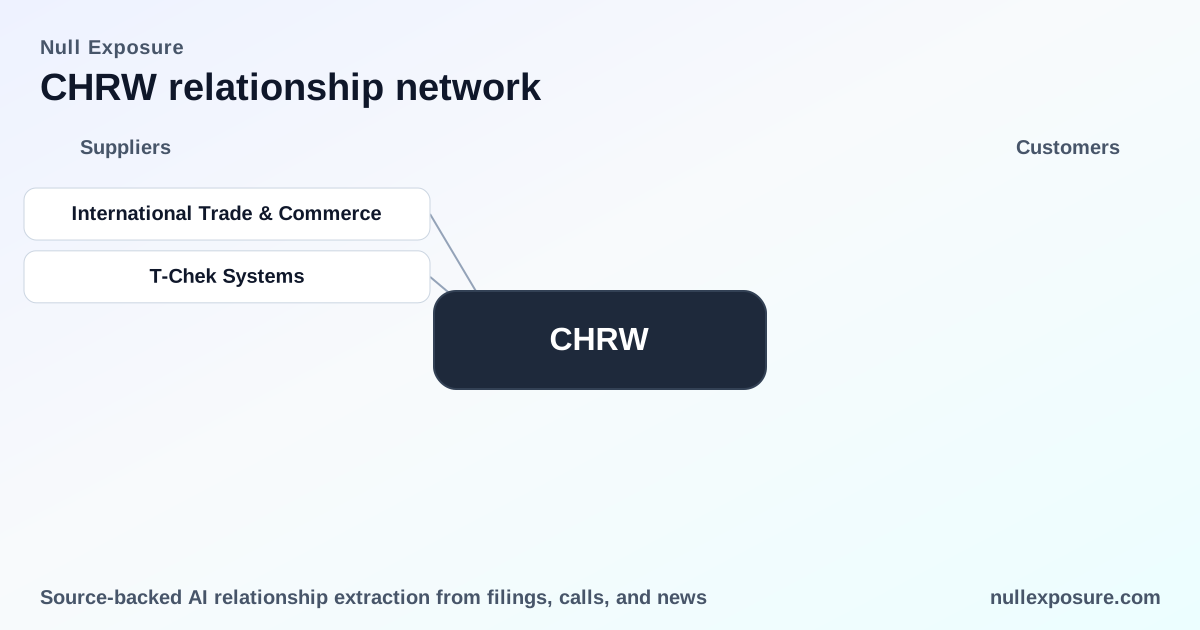
International Trade & Commerce — C.H. Robinson will use ITC’s 55,000‑square‑foot warehouse and distribution center in Laredo, Texas to support its cross‑border and distribution flows, signaling continued reliance on third‑party warehouse capacity in a strategic border market. — TruckingInfo, March 9, 2026.
-
T‑Chek Systems — Despite an ownership change, C.H. Robinson will continue to purchase T‑Chek services to advance funds to contracted carriers (its quick‑pay program) and to handle employee expense card services, preserving a vendor relationship that supports liquidity and operational convenience for carrier partners. — TruckingInfo, March 9, 2026.
Each of these relationships is operationally sensible: the ITC warehouse is a capacity and regional logistics play, while T‑Chek is a financial/operational service that smooths cash flows to carriers and supports labor/driver workflows. Both reinforce CHRW’s strategy of outsourcing non‑core, capital‑intensive functions while retaining customer‑facing integration.
What investors and operators should read into these ties
- Revenue durability vs. margin volatility: Outsourcing warehousing and relying on spot truckload procurement reduces capital burden and improves ROE, but also increases sensitivity to freight cycles. The FY2026 links to ITC and T‑Chek illustrate this balance — capacity and financial services are outsourced rather than on‑balance‑sheet.
- Low counterparty concentration reduces single‑vendor risk but increases operational oversight costs. With hundreds of thousands of carriers, CHRW avoids crippling vendor concentration while assuming the costs of onboarding, verification, and real‑time coordination.
- Critical services that enable the platform have outsized strategic value. Programs like quick‑pay and employee expense cards (T‑Chek) are operationally small relative to revenue but critical to carrier participation and satisfaction, so continuity of these services affects the overall supply funnel.
- Contracting posture drives renegotiation optionality. One‑year or shorter rate commitments and spot procurement give CHRW flexibility to reset terms with carriers quickly, which is advantageous in a rising rate environment but creates execution risk when capacity is constrained.
Read the signals, allocate the risks
For investors, the takeaways are straightforward: CHRW is a scale‑driven, asset‑light logistics platform whose supplier relationships are critical enablers of margins and service levels. The company’s exposure to short‑term contracts and spot markets increases earnings volatility but also allows rapid contractual response to market changes. Operators should prioritize continuity of quick‑pay and regional warehousing arrangements as operational risk mitigants.
If you evaluate supplier counterparties or need roll‑up exposure mapping for logistics platforms, start here: https://nullexposure.com/
Closing recommendation
Monitor CHRW’s supplier disclosures and third‑party services closely—warehouse partnerships and carrier financial services are small line items that disproportionately affect capacity and carrier loyalty. For ongoing supplier‑centric intelligence and company‑level relationship mapping, visit NullExposure to track changes as they occur: https://nullexposure.com/