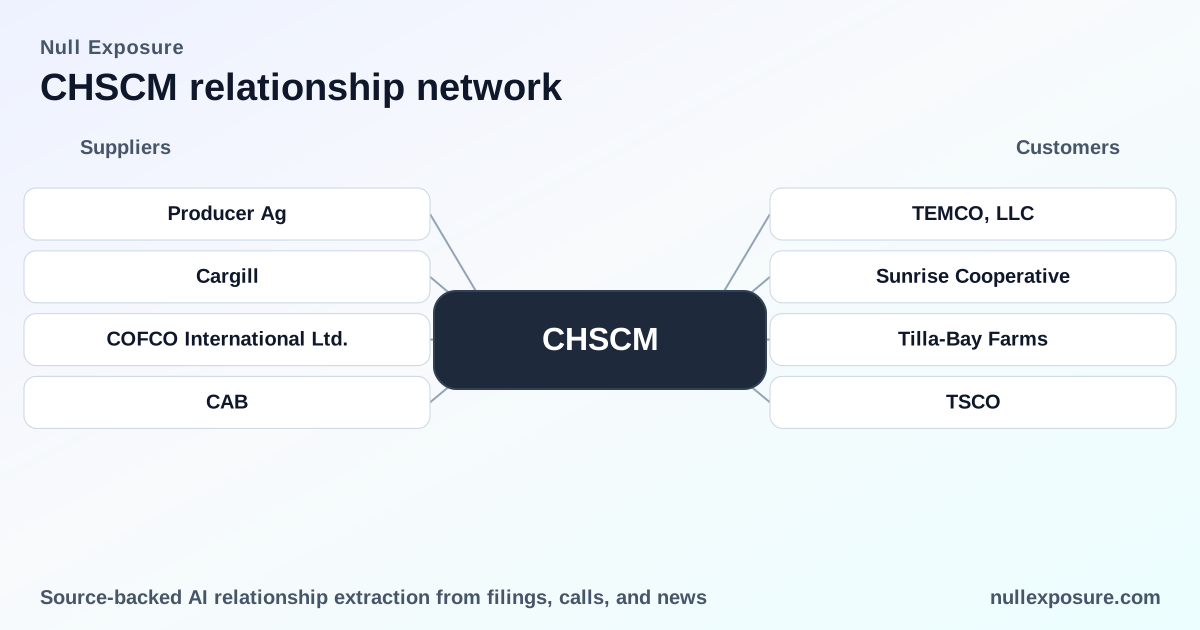
CHS Inc. (CHSCM) — Supplier relationships that move grain, fuel and margins
CHS Inc. is an integrated agricultural cooperative that monetizes through commodity trading, downstream fuel and food processing operations, logistics and long-term supply contracts. The company generates margin by aggregating farmer supply, controlling terminal and refinery throughput, and capturing basis and refining spreads across its grain, food and energy businesses. For investors evaluating CHSCM as a counterparty or supplier, the critical questions are how CHS secures feedstock, how it controls logistics, and how long-term contracts and financial hedges shape cash flow volatility.
Discover structured supplier intelligence and relationship tracking at NullExposure.
How CHS runs its supply book — long contracts, scale and dual roles
CHS operates with a dual buyer-and-seller posture: it buys commodities and refined products from third parties while also selling produced commodities and fuels through its retail and wholesale channels. Company disclosures show a contracting strategy that blends very long-term supply agreements with transactional purchases from individual producers and local cooperatives. This combination gives CHS both inventory security and exposure to commodity price cycles.
- Long-term supply commitments define strategic security. CHS disclosed a supply agreement tied to CF Nitrogen that entitles it to purchase up to 1.1 million tons of granular urea and 580,000 tons of UAN annually for ratable delivery through fiscal 2096, reflecting a multi-decade procurement posture described in its FY2025 filings.
- Counterparty mix skews toward agricultural producers and local co‑ops. The company buys from individual producers and cooperatives while also supplying those same channels, increasing bilateral dependency across rural markets.
- Financial scale and market-risk management matter. CHS reported foreign-exchange derivative notionals in the range of $1.5–1.7 billion (FY2024–FY2025), indicating meaningful hedging activity and large transactional exposures that influence working capital and treasury priorities.
These characteristics mean CHS is operationally mature and strategically concentrated on capture of supply-chain arbitrage rather than pure trading momentum.
Relationship map — the suppliers and partners that matter
Producer Ag
CHS identifies Producer Ag among equity investees and suppliers from whom it buys and sells grain and other agricultural commodities, signaling an ongoing commercial interchange with local grain aggregators. According to CHS’s FY2025 10‑K filing, Producer Ag is named explicitly among equity investees and counterparties for commodity flows. (CHS FY2025 10‑K)
Cargill
CHS executed a targeted asset acquisition from Cargill, announcing plans to buy eight Cargill grain facilities across five states to optimize CHS’s supply chain and expand physical footprint, a transaction disclosed in news coverage during FY2024. The move denotes asset-based vertical integration to reduce logistics bottlenecks. (DTN/Progressive Farmer and Brownfield Ag News, 2024)
COFCO International Ltd.
CHS assumed operations of COFCO International’s Cahokia, Illinois grain terminal under a lease that commenced January 31, reflecting CHS’s strategy to expand export and Gulf-supply capacity via commercial leases and terminal integration. This was reported in industry press in FY2026. (World-Grain, January 2026)
Cabela’s Inc.
A historical retail loyalty partnership between CHS (Cenex) and Cabela’s rewarded Cenex customers and integrated consumer channels, producing measurable loyalty program volume in earlier years; the program was documented in coverage from FY2011 and demonstrates CHS’s consumer-channel experiments beyond pure commodities. (CSP Daily News, 2011)
What these relationships mean for investors and operators
CHS is executing a physical-first expansion in supply chain control: acquiring Cargill facilities and leasing COFCO terminal operations push capacity and reduce dependence on third‑party terminal access. That strategy reduces exposure to transient logistic bottlenecks but increases capital intensity and integration risk. The historical Cabela’s loyalty tie underscores CHS’s willingness to monetize fuel retail and convenience channels, diversifying margin pools.
Key risk and opportunity takeaways:
- Risk: Capital allocation toward facilities and leases increases fixed-cost leverage. Asset purchases and terminal leases lock in maintenance and financing obligations while improving throughput control.
- Opportunity: Long-term fertilizer supply rights (CF Nitrogen) materially de‑risk input availability and cost for CHS’s agricultural customers, supporting margin stability in upward price environments. CHS disclosed a CF Nitrogen supply agreement through FY2025 filings that extends deliveries through fiscal 2096. (CHS FY2025 10‑K)
- Risk: Large derivatives and FX notionals reflect treasury complexity and potential P&L volatility if hedges are mismatched. The notional foreign-exchange contracts reported at roughly $1.7 billion as of August 31, 2025, signal significant market exposure that investors must monitor in quarterlies. (CHS FY2025 disclosure)
For a structured view of counterparty and supplier exposure, see proprietary guidance at NullExposure.
Execution and monitoring checklist for due diligence
Investors and operators should track the following items on a recurring cadence:
- Capital deployment plans and integration progress for acquired Cargill facilities and leased terminals. Evaluate realized throughput and basis capture versus pro forma expectations.
- Status and economics of long-dated supply agreements (e.g., CF Nitrogen terms and renewal mechanics) for evidence of secured input cost advantages.
- Counterparty credit among Producer Ag and local cooperatives—monitor receivables aging and prepayment patterns during seasonal stress.
- Derivative positions and hedge effectiveness, given $1.5–$1.7 billion FX derivative notionals reported through FY2025.
- Retail channel performance metrics from loyalty partnerships and Cenex marketer economics to confirm downstream margin capture.
These checkpoints translate CHS’s stated commercial strategy into measurable investor signals.
Bottom line and next steps
CHS combines physical asset control, long-term procurement contracts and a broad counterparty network to monetize agricultural and energy flows. The firm’s move to own or operate terminals, acquire Cargill grain facilities, and secure long-dated fertilizer supply positions it defensively for supply shocks while increasing capital intensity and hedging complexity.
For deeper supplier relationship analytics and to monitor CHSCM counterparty changes in real time, visit NullExposure.
If you are evaluating CHSCM as a supplier, borrower or investment exposure, start with these relationships, the CF Nitrogen supply disclosure and the terminal/asset moves as primary indicators of strategic intent and operational risk. Explore further at NullExposure for ongoing coverage and alerts.