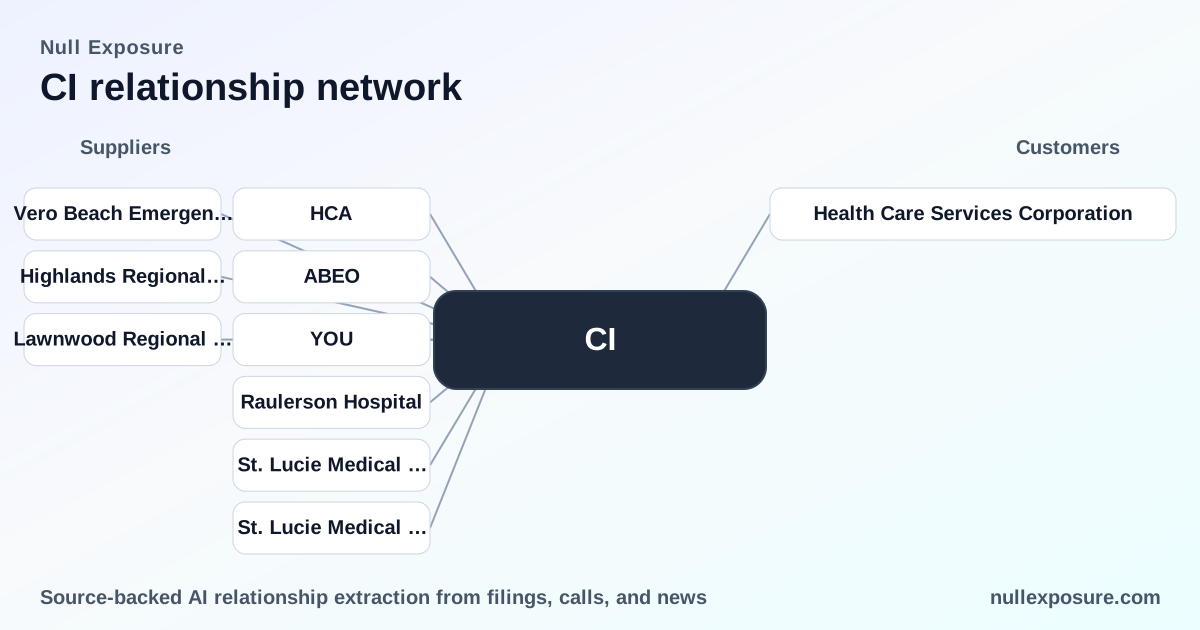
Cigna (CI): Supplier relationships, network depth and the investor implications
Cigna operates as a large-scale managed care and benefits company, monetizing through premiums and fee-for-service arrangements with employers and government programs, pharmacy benefit management and specialty pharmacy margins (via Evernorth), and network-provider contracting that controls utilization and cost. Its commercial strength is driven by scale: $275B revenue (TTM) and dense provider/pharmacy networks that translate to negotiating leverage and recurring cash flows. For investors and operators evaluating supplier exposure, the key questions are network concentration, contract tenor, and the mix of short-term commercial relationships versus longer-term financial arrangements. Learn more at https://nullexposure.com/.
How Cigna structures supplier and provider relationships — what matters to shareholders
Cigna’s supplier posture blends corporate financing structures with operationally short notice provider contracts. At the company level, there is active use of long-term debt and multi-year credit facilities that support capital allocation and share repurchases, while working-capital tools and supplier programs create flexibility in payables. Evidence shows both long-term instruments (senior notes and revolving credit facilities) and active short-term programs (commercial paper, 364‑day revolvers and supplier payment terms). This duality produces an operating model where financial liquidity is managed at the corporate level while many vendor and manufacturer relationships are commercially flexible and often terminable on short notice.
- Contracting posture: Corporate debt and credit facilities indicate financial maturity and multi-year funding capacity; supplier and pharmaceutical contracts are often short-term or nonexclusive, leaving operational access to some inputs dependent on renewing terms.
- Concentration: Approximately 60% of retail pharmacy stores in the largest network are in the ten largest chains, signaling meaningful exposure if large chains renegotiate or exit.
- Criticality and materiality: The company runs a voluntary supplier finance program and reports some supplier receivables sold into the program, suggesting low immediate impairment of supplier relations, but management flags that a major pharmacy chain dispute could be material to access and customer experience.
- Roles: Cigna acts as buyer in supplier-finance arrangements, as distributor through contracted pharmacies and wholesalers, and as manufacturer counterparty in rebate and specialty pharmacy programs. These roles create cross-functional dependencies between payor, PBM and provider segments.
For more in-depth supplier risk views and contract-level signals, visit https://nullexposure.com/.
Relationships on the radar — what each reported mention means for investors
Below are every supplier and partner cited in the available results, with concise, investor-focused takeaways and source context.
HCA Healthcare (HCA)
Cigna expanded its Medicare Advantage network to include HCA Healthcare sites in Central Florida and the Treasure Coast, broadening in-market provider access for MA members and supporting enrollment value propositions in those counties. According to Cigna’s newsroom (March 9, 2026), this is a deliberate network expansion to improve MA competitiveness.
Raulerson Hospital
Raulerson Hospital is listed among HCA’s Treasure Coast facilities now available to Cigna MA customers, increasing in-network inpatient and emergency coverage for local beneficiaries. Source: Cigna newsroom (March 9, 2026).
St. Lucie Medical Center
St. Lucie Medical Center is now in-network for Cigna MA members in the expansion counties, strengthening hospital access for Medicare Advantage enrollees. Source: Cigna newsroom (March 9, 2026).
St. Lucie Medical Center Emergency Room at Darwin Square
The emergency facility at Darwin Square is specifically included, improving urgent-care accessibility within Cigna’s MA network footprint in the region. Source: Cigna newsroom (March 9, 2026).
Vero Beach Emergency Room
Vero Beach Emergency Room, a campus of Lawnwood Regional Medical Center, is listed among added access points for Cigna MA customers, enhancing local emergency coverage. Source: Cigna newsroom (March 9, 2026).
Highlands Regional Medical Center
Highlands Regional Medical Center joins the set of HCA facilities made available to Cigna MA members, supporting inpatient, specialty and surgical care capacity. Source: Cigna newsroom (March 9, 2026).
Lawnwood Regional Medical Center
Lawnwood Regional Medical Center, as a campus hub for several included sites, strengthens the contiguous provider network and referral pathways for Cigna MA enrollees in the Treasure Coast. Source: Cigna newsroom (March 9, 2026).
Abeona Therapeutics Inc. (ABEO)
Cigna is one of the major commercial payers that listed policies covering Abeona’s ZEVASKYN, signaling broad early payer acceptance and an improved commercial pathway for that product’s adoption. The coverage footprint across large payers supports product uptake and potential revenue capture for the manufacturer. Source: GlobeNewswire via The Manila Times (March 9, 2026).
YouGov (YOU)
Evernorth commissioned YouGov to survey parents to quantify youth mental health impacts for employers, reflecting Cigna’s use of external market research to shape product design and employer offerings. Source: Cigna newsroom (May 2024; referenced March 9, 2026).
What investors should watch next
- Network concentration risk: The reliance on large pharmacy chains and major hospital systems creates leverage both ways — it underpins negotiating power but creates outsized exposure if a top counterparty exits or substantially renegotiates terms. This is a material strategic risk to monitor in contract renewals and claim access metrics.
- Contract tenor asymmetry: Corporate financing is long-term and robust, while many supplier and manufacturer contracts are short-term and nonexclusive; this mismatch requires active working-capital management and explains the use of commercial paper and revolving facilities.
- Operational resilience: The supplier finance program and multiple wholesaler relationships indicate operational redundancy and cash-flow smoothing, but investors should track participation metrics and any concentration among financial counterparties.
- Commercial coverage momentum: Payer coverage for new therapies (e.g., ZEVASKYN) is a positive commercial signal for Cigna as a payor — it enhances negotiated formularies and specialty routing through Evernorth.
Final read: investment implications and next steps
Cigna’s scale gives it pricing and network leverage, yet its operating model balances long-term corporate finance with a predominantly short-term contracting environment among suppliers and manufacturers. That combination creates predictable cash management at the top end while leaving execution risk in renewals and large-counterparty negotiations. Watch pharmacy and hospital contracting headlines and specialty coverage decisions as leading indicators of revenue mix and cost trends.
If you evaluate supplier and counterparty risk professionally, the right structured signals make a measurable difference — get targeted supplier intelligence and risk scoring tailored to investor needs at https://nullexposure.com/.
For a deeper, relationship-level briefing and ongoing monitoring of counterparty exposures, visit https://nullexposure.com/ and request a tailored review.