CEMIG (CIG): Modernization spending turns suppliers into strategic counterparties
Companhia Energética de Minas Gerais (CEMIG) operates generation, transmission, distribution and retail sale of electricity across Brazil and monetizes through regulated tariffs, contracted energy sales and grid services. The company is a capital-intensive, cash-generative utility with meaningful recurring revenue and a visible dividend stream; its current NYSE ADR listing (CIG) trades at a low multiple relative to cash flow. For investors and operator teams evaluating supplier relationships, the company’s push to modernize grid operations elevates certain vendors from routine suppliers to strategic partners whose implementation and technology risks directly affect service reliability and regulatory outcomes. Learn more and track supplier exposure at https://nullexposure.com/.
Investment posture in one paragraph
CEMIG presents as a large, established utility: market capitalization roughly $7.2B, revenue TTM ~BRL 42.4B, EBITDA ~BRL 7.1B and an EV/EBITDA near 4.5. The ADR trades at a trailing P/E of 5.3 with a forward P/E around 10.1, and the company distributes a measurable dividend (Dividend per share 1.31; yield ~0.596). These metrics signal an asset-heavy, cash-focused business where capital allocation, regulatory stability and execution of grid investments drive value.
What the numbers tell operators and investors
- Capital intensity and maturity: Low EV/EBITDA and positive ROE (14.2%) indicate an incumbent utility with stable operations and room to deploy modernization capital without destroying returns.
- Earnings and growth profile: Quarterly earnings have shown sharp volatility (quarterly EPS growth negative), while revenue growth is modestly positive year-over-year, reflecting regulated topline dynamics.
- Market perception: Institutional ownership is limited (~7.6%), and sell-side coverage is light with mixed ratings—investors must underwrite information asymmetry and governance exposure.
- Risk posture: Low beta (~0.31) suggests regulated cash flows, but operational risk is concentrated in transmission/distribution reliability and regulatory tariff setting.
Supplier relationship: SAP — a modernization anchor
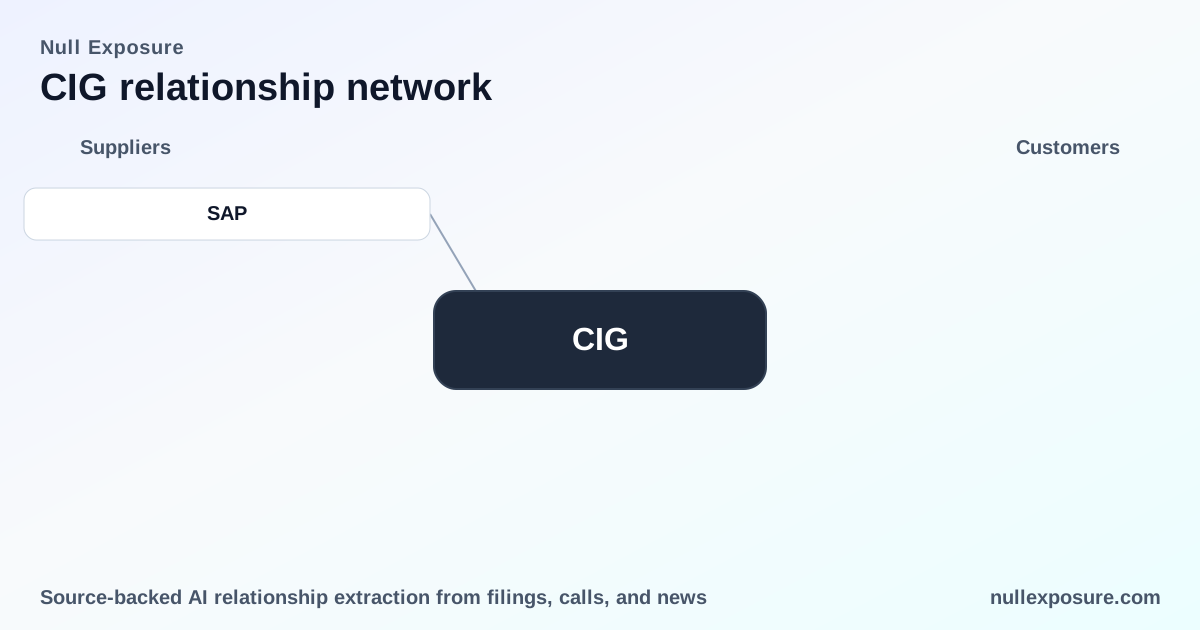
CEMIG has committed to a broad modernization program that includes deployment of SAP S/4HANA and distribution management systems such as ADMS to support smart metering and grid resilience. According to a Finviz news summary on March 9, 2026, those upgrades are core to a BRL 63 billion modernization plan that lists SAP technologies among the advanced systems being adopted. SAP is therefore a strategic IT supplier whose implementation success will materially affect CEMIG’s operational efficiency and customer service metrics. (Finviz news, March 9, 2026: https://finviz.com/news/116224/companhia-energetica-de-minas-gerais-cemig-ciglaunches-63b-modernization-plan)
Why this supplier list matters in plain English
CEMIG’s supplier relationships move along a spectrum from commoditized goods and construction contractors to mission-critical technology and systems integrators. The sponsorship of SAP S/4HANA and ADMS pushes a technology vendor into the high-criticality quadrant: implementation timelines, data migration, and integration with meter data and operational systems will have a direct bearing on outages, customer billing, and regulatory reporting.
Explore supplier analytics and track vendor concentration at https://nullexposure.com/.
Short summaries of relationships in the available results
- SAP — CEMIG has included SAP S/4HANA among major systems in its large-scale modernization effort to upgrade meters, strengthen grid resilience and modernize operations, per a March 2026 Finviz news report. (Finviz, 2026-03-09: https://finviz.com/news/116224/companhia-energetica-de-minas-gerais-cemig-ciglaunches-63b-modernization-plan)
Constraints and company-level signals that affect supplier risk
No explicit supplier-level constraints were provided in the source material. At the company level, the available indicators give clear signals about contracting posture, concentration, criticality and maturity:
- Contracting posture (company-level signal): As an integrated utility with regulated distribution businesses, CEMIG operates under long-term tariff frameworks and capital planning cycles; supplier contracts for grid and IT modernization are likely to be multi-year with performance and regulatory compliance covenants embedded.
- Concentration (company-level signal): The business is diversified across generation, transmission and distribution, but modernization spending concentrates operational risk into a smaller set of technology suppliers and systems integrators.
- Criticality (company-level signal): Grid management systems and meter IT are mission-critical — outages, billing errors or compliance lapses translate into regulatory scrutiny and possible tariff impacts. The SAP relationship elevates that risk.
- Maturity (company-level signal): Financial ratios (EV/EBITDA, ROE, stable revenues) and a dividend policy reflect corporate maturity and predictable cash flows, enabling significant capital programs but also creating scrutiny on execution and ROI.
Implications for diligence and portfolio risk
For investors underwriting CEMIG’s performance going forward, supplier execution risk is a central variable. A failed SAP/ADMS rollout would not merely be an IT budget overrun — it would have downstream effects on meter accuracy, outage response, customer billing and regulatory relationships. Operational diligence should therefore prioritize:
- Contract structure and SLAs for SAP and systems integrators, including penalties and acceptance testing.
- Implementation governance: staffing, local partner ecosystem, and rollback/contingency plans.
- Data migration and cybersecurity posture for meter and grid telemetry systems.
- Vendor concentration and replacement pathways in case of non-performance.
- Regulatory disclosure and tariff mechanisms that could accelerate or dampen capex recovery.
Practical diligence checklist:
- Confirm contract duration, milestone payments and acceptance criteria.
- Review integration architecture between SAP S/4HANA, ADMS and meter data management.
- Assess cybersecurity and disaster recovery provisions.
- Quantify vendor concentration and substitution costs.
Bottom line and next steps
CEMIG’s modernization program transforms certain suppliers into strategic counterparties whose performance will directly influence operational reliability and financial returns. The SAP relationship is the clearest example in the available data: it converts an ERP vendor into a mission-critical partner for grid modernization. Investors and operator teams should prioritize contract detail, implementation governance and regulatory alignment when evaluating exposure.
For deeper supplier-level visibility and to monitor changes in CEMIG’s vendor posture, visit https://nullexposure.com/. To integrate supplier intelligence with investment due diligence, start tracking supplier relationships and constraints at https://nullexposure.com/.