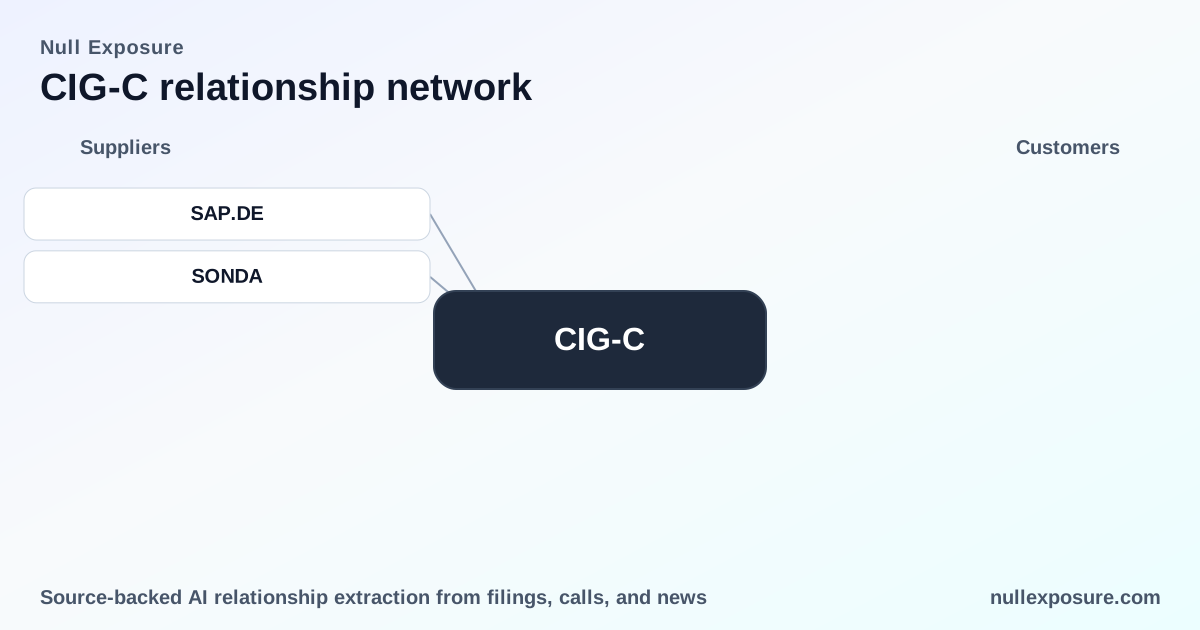
CEMIG (CIG‑C) Supplier Map: SAP and Sonda underscore a modernization-led operating posture
Companhia Energética de Minas Gerais (CEMIG, ticker CIG‑C) operates and monetizes through integrated power generation, transmission, distribution and retail sales, collecting regulated and market-based tariffs across Brazil while converting heavy capital investment into recurring cash flow. The company’s operating leverage and dividend profile are supported by steady revenue (Revenue TTM: 42,427,142,000) and material EBITDA (7,104,524,000), while recent procurement choices show a clear strategic pivot to digital grid transformation and enterprise IT consolidation. For investors and procurement leaders tracking supplier risk and opportunity, this supplier map isolates two active vendor relationships and translates them into actionable commercial implications. Learn more at https://nullexposure.com/.
Modernization is the thesis behind the supplier moves
CEMIG’s recent vendor activity centers on two types of vendors: enterprise systems providers and integrated IT services. These relationships are not discretionary back-office projects; they are components of grid modernization and operational resilience that directly influence reliability, regulatory compliance, and long-term cost structure. The combination of SAP S/4HANA and advanced distribution management system (ADMS) initiatives alongside a five‑year IT services contract signals a contracting posture oriented toward multi‑year vendor commitments and high switching costs.
- Capital intensity and long-term contracting: Utilities convert capex into regulated returns; CEMIG uses vendors under multi‑year arrangements to standardize operations and amortize integration costs.
- Criticality and operational dependency: IT/OT vendors here are tied to grid reliability, making supplier performance a determinant of regulatory and reputational outcomes.
- Maturity and vendor selection: Engagements with established enterprise vendors indicate prioritization of proven, enterprise-grade platforms over niche providers.
- No explicit constraints captured in the supplier data feed itself; treat the above as company‑level operational signals derived from observed supplier activity and CEMIG’s business model.
The relationships you need to know
CEMIG’s disclosed supplier activity in the recent reporting window includes two explicit vendor relationships. Each entry below is a concise, plain‑English summary with source context.
-
SAP — CEMIG has advanced its grid and enterprise transformation by adopting SAP S/4HANA and related systems to support smart meters, ADMS integration, and operational efficiency. According to a Yahoo Finance report published March 9, 2026, these upgrades include moving core systems to SAP S/4HANA and deploying ADMS functionality to improve grid resilience and service reliability. (Source: Yahoo Finance, March 9, 2026)
-
Sonda — CEMIG finalized a five‑year agreement with IT services provider Sonda to strengthen IT management and operational support, embedding outsourced services into multi‑year delivery for continuity and efficiency. Ad‑hoc News reported the contract and characterized it as a deliberate step to boost operational efficiency through enhanced IT management in FY2026 reporting. (Source: Ad‑Hoc News, March 9, 2026)
What those relationships mean for investors and operators
The two disclosed suppliers reveal a coordinated strategy: standardize core enterprise systems, outsource operational IT under long contracts, and couple IT modernization to distribution automation. That strategy has three direct consequences for financial and operational stakeholders:
- Cost rhythm and capex-to-opex shift: Upfront implementation costs for SAP and ADMS will depress near‑term free cash flow but enable predictable operating expense patterns once managed services from Sonda scale. CEMIG’s current margins (Operating Margin TTM: 0.102) and EV/EBITDA (4.482) show room to absorb productivity investments that lift long‑run cash conversion.
- Vendor concentration and switching risk: The adoption of SAP S/4HANA introduces platform lock‑in risk and concentrated upgrade dependency; the five‑year Sonda contract reduces short‑term vendor churn but increases switching costs mid‑contract. Investors should treat platform migration timelines and contractual exit clauses as active risk factors.
- Operational criticality and regulatory exposure: Because these contracts touch meters, ADMS and customer systems, vendor outages or integration failures translate directly into regulatory penalties and service impacts. Vendor performance becomes a component of operational risk.
For procurement and risk teams, track these variables tightly: SLA adherence, change‑management cadence, cybersecurity posture of integrated platforms, and remediation terms in the event of vendor underperformance.
Learn more about supplier risk frameworks at https://nullexposure.com/.
How to assess counterparty and contract risk now
Operational leaders and buy‑side analysts should take the following practical steps when evaluating CEMIG’s supplier posture:
- Review Sonda’s contract scope and SLAs to determine the degree of outsourced operational dependency and what continuity plans exist for mission‑critical services.
- Validate SAP implementation milestones and integration testing outcomes for ADMS and meter data systems; timeline slippage is the primary execution risk to service quality and cost realization.
- Quantify integration costs and projected OPEX savings to test whether modernization will materially improve the company’s operating margin trajectory versus the reported Operating Margin TTM of 10.2%.
- Monitor regulatory filings and outage reports for any vendor‑related incidents that could trigger fines or accelerated remediation spend.
Bottom line: a modernization-led supplier posture that changes the risk profile
CEMIG’s relationship set — enterprise ERP and a multi‑year IT services partner — positions the company to extract efficiency and operational resilience gains, but it also centralizes risk around platform dependency and contract execution. Financial metrics such as EBITDA and EV/EBITDA provide a cushion for implementation spending, but investors should price in integration risk and evaluate how vendor commitments affect free cash flow and dividend sustainability (DividendPerShare: 1.31; DividendYield reported: 0.453).
For a consolidated view of supplier relationships and to map counterparty concentration across portfolios, visit https://nullexposure.com/ and incorporate supplier signals into your investment and operational diligence.
Watch the SAP rollout milestones and Sonda delivery metrics as the primary near‑term indicators of whether CEMIG’s modernization program will convert into durable margin improvement and reduced operational risk.