Chimera Investment Corporation (CIM‑P‑B): Preferred Income Backed by Active M&A Play
Chimera Investment Corporation’s 8.00% Series B preferred (CIM‑P‑B) delivers fixed-income yield inside a REIT wrapper that monetizes through mortgage finance exposure and active balance‑sheet management. Chimera generates cash flow from interest spread on mortgage loans and mortgage‑related securities, and it uses preferred issuance as a capital tool to fund portfolio activity and preserve common equity optionality. For income-focused investors, CIM‑P‑B is a play on high cash yield combined with an issuer that pursues strategic asset transactions to re‑shape its book.
Explore Chimera supplier and advisor relationships in depth at https://nullexposure.com/.
Deal activity drives supplier selection — what happened
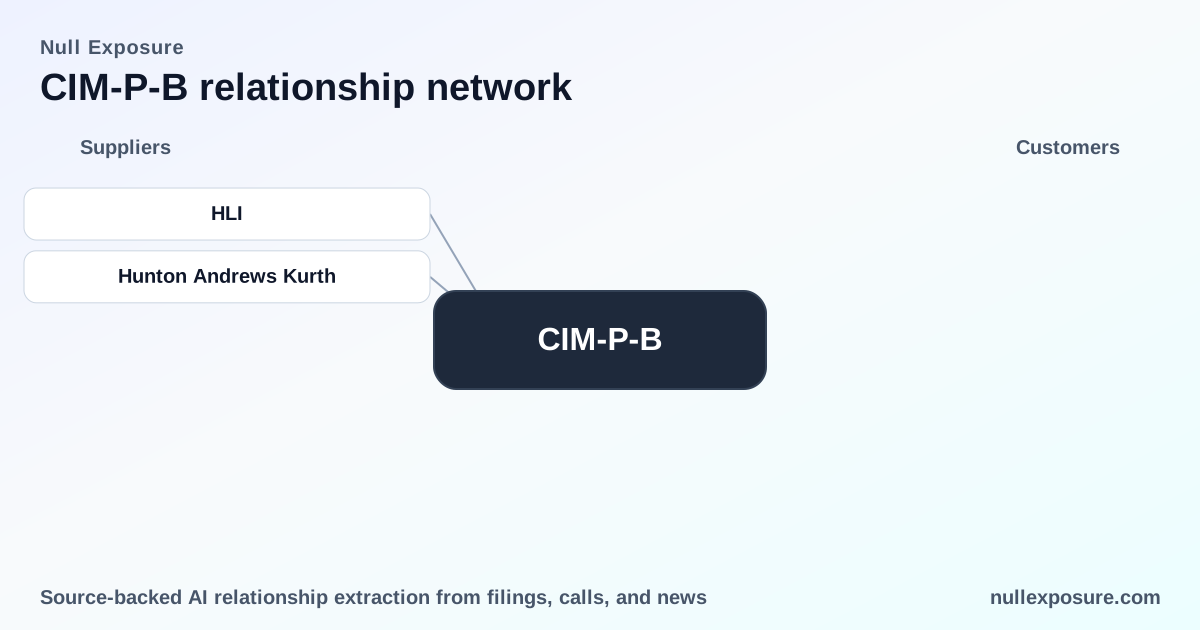
Chimera completed a strategic transaction to acquire Palisades Group’s alternatives asset management business, and management retained external advisors to execute the deal. Chimera named Houlihan Lokey as exclusive financial advisor and Hunton Andrews Kurth as legal counsel for the transaction. A Dakota.com report covering the Palisades acquisition (published March 9, 2026) notes both advisor appointments and frames the deal as part of Chimera’s effort to diversify fee income and asset management capabilities.
Who Chimera engaged (and what it signals)
The relationships uncovered in the supplier sweep are direct, discrete, and functionally aligned to a single transaction—advisor selection for an M&A purchase. Below are the findings with concise, plain‑English summaries and source attribution.
Houlihan Lokey — financial advisor
Chimera selected Houlihan Lokey as its exclusive financial advisor to execute the Palisades Group alternatives asset manager acquisition, signaling a focus on deal execution and valuation discipline. According to a Dakota.com article (March 9, 2026), Houlihan Lokey will steer strategic and financial aspects of the transaction.
Hunton Andrews Kurth — legal counsel
Chimera retained Hunton Andrews Kurth to provide legal counsel for the same transaction, indicating the company required specialized corporate, regulatory, and transactional legal support. Dakota.com reported (March 9, 2026) that Hunton Andrews Kurth was retained in tandem with Houlihan Lokey to manage deal documentation and regulatory compliance.
Constraints and company‑level signals
The supplier relationship feed did not return any explicit constraint excerpts. At the company level this is a signal in itself: no recorded contracting constraints, litigation disclosures, or supplier limitations were captured in the current feed for CIM‑P‑B. That absence should be treated as a neutral data point, not proof of absence of legal or financial limits in Chimera’s governance; formal filings and counsel disclosures remain the definitive source for binding constraints.
What the advisor choices reveal about Chimera’s operating model
The choice of advisor and counsel for a strategic acquisition is revealing about Chimera’s posture and maturity as a corporate operator:
- Contracting posture: Transactional and advisor‑centric — Chimera relies on external financial and legal specialists for major M&A rather than handling complex execution internally, consistent with a capital markets‑focused REIT.
- Concentration and criticality: Advisor engagements are high‑impact but limited in concentration; a small number of specialist suppliers (investment bank and law firm) are critical to successful deal completion.
- Maturity and governance: Using established advisors signals corporate maturity and a governance framework that prefers proven external expertise for material strategic moves.
These characteristics imply Chimera runs a pragmatic, outsourced model for non‑core competencies while retaining control of capital allocation and portfolio strategy.
Risk implications for preferred holders
For holders of CIM‑P‑B, advisor hires tied to an acquisition carry concrete implications:
- Execution risk and upside: Reliance on top‑tier advisors increases the probability of a clean execution, which supports the preferred’s credit profile if the deal enhances recurring fee income or cash flows. The Houlihan Lokey hire is a positive signal on execution capability.
- Legal and compliance coverage: Retaining a national firm like Hunton Andrews Kurth reduces regulatory and documentation risk during integration, which preserves the stability of dividend servicing for cumulative preferreds.
- Balance sheet and capital posture: M&A that expands fee revenue is constructive for the issuer’s long‑term cash profile, but investors should monitor whether Chimera funds integration with incremental leverage or equity/preferred issuance, which would affect capital structure and preferred security priority.
Actionable investor checklist
Investors and operators evaluating this supplier slate should take three practical steps:
- Review Chimera’s next filings and investor materials for transaction economics and integration plans—advisor selection is helpful, but deal terms determine credit impact.
- Monitor capital‑raising activity tied to the deal; new debt or preferred issuance would materially affect preferred‑holder risk.
- Validate regulatory disclosures and counsel opinions once available to confirm representations about tax, governance, and transfer restrictions.
For a deeper supplier and transaction view, visit https://nullexposure.com/ to access structured relationship intelligence and primary‑document pointers.
Final takeaways
The advisory relationships disclosed for CIM‑P‑B are concise and transaction‑specific: Houlihan Lokey is advising on valuation and execution; Hunton Andrews Kurth is responsible for legal documentation and regulatory coverage. Both hires underscore Chimera’s commitment to professional execution as it diversifies into alternative asset management capabilities. For income investors, the immediate implication is that Chimera is using preferred capital and strategic deals to reshape recurring revenue — a constructive tactical move if deal economics are accretive and financed conservatively.
If you evaluate supplier risk, counterparty selection, or the capital structure implications of REIT M&A, start with the primary documents and advisor statements. Learn more and track ongoing supplier disclosures at https://nullexposure.com/.