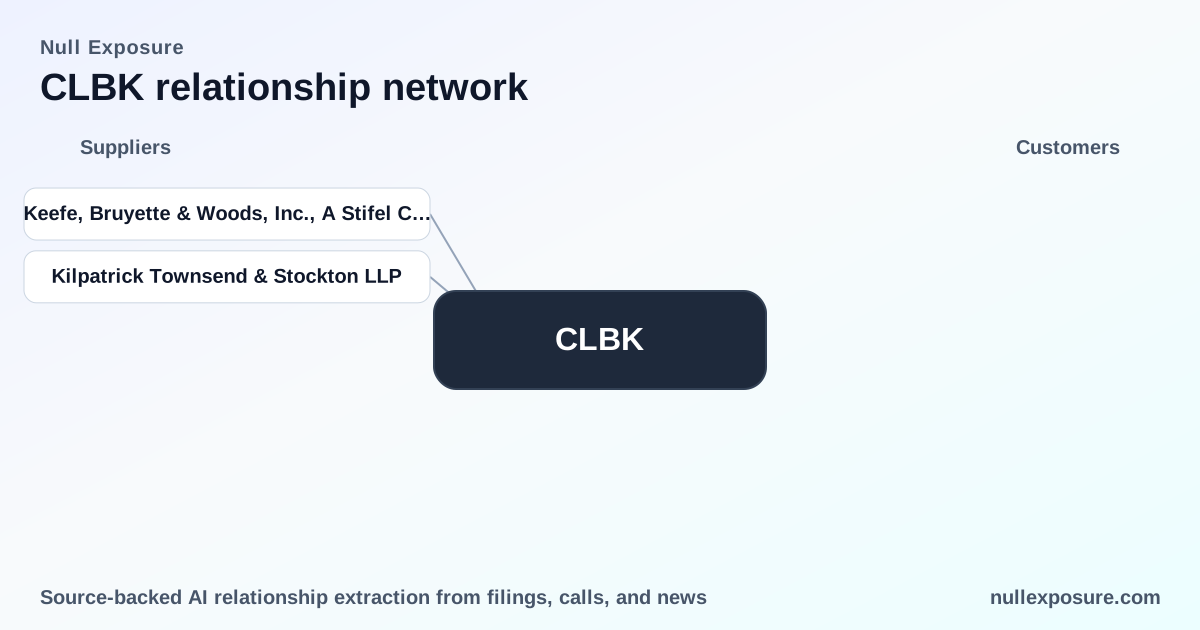
Columbia Financial (CLBK): Adviser and counsel lineup signals a controlled, transaction-focused posture
Columbia Financial Inc. operates as a regional bank holding company, monetizing through net interest margin on loans and deposits, fee income and balance-sheet management; its near-term strategic priority is inorganic growth, evidenced by an announced merger process that deploys external advisers and legal counsel to execute the transaction. For investors and counterparties, the choice of financial advisor and outside counsel is a window into transaction seriousness, execution capability and allocation of spend — all relevant when evaluating supplier relationships and counterparty risk. Learn more at https://nullexposure.com/.
How Columbia runs deals and pays for execution
Columbia’s operating model blends traditional regional banking with active balance-sheet management: loan originations, loan participations and deposit funding are central to revenue, while interest-rate hedges and third-party services support risk management. The firm’s recent merger activity has a clear playbook: engage a specialist investment bank for deal structuring and a national law firm for regulatory and transactional work. That combination signals a controlled, conventional contracting posture rather than an opportunistic or speculative approach.
- Columbia outsources legal and advisory work when executing M&A and relies on external counterparties to hedge short-term interest exposure. Company disclosures recorded material interest-rate swap positions and loan participations as of year-end 2024, indicating meaningful transactional counterparty spend that exceeds typical retainer-level engagement.
If you track supplier positions and diligence related parties, examine detailed relationship records at https://nullexposure.com/ for sourcing and monitoring.
Deal advisers on the table — what the filings show
Keefe, Bruyette & Woods, Inc., A Stifel Company — financial advisor
Keefe, Bruyette & Woods is serving as Columbia’s financial advisor in connection with the announced merger with Northfield Bancorp. According to the company’s February 2, 2026 press release and related coverage, KBW is handling deal valuation and negotiation support for Columbia in the transaction (GlobeNewswire, Feb 2, 2026; Yahoo Finance coverage, Mar 9, 2026). This is a conventional selection: a regional-bank-focused adviser with sector expertise deployed to drive execution and price discovery.
Kilpatrick Townsend & Stockton LLP — legal counsel to Columbia
Kilpatrick Townsend & Stockton is acting as legal counsel to Columbia in the same transaction, while Luse Gorman, PC represents Northfield. The engagement is documented in public announcements surrounding the merger (GlobeNewswire, Feb 2, 2026; NJB Magazine coverage, Mar 9, 2026). Selecting a national firm for regulatory, securities and transactional documentation suggests Columbia expects a standard, document-intensive closing process requiring established securities and banking law capabilities.
Operational constraints that shape supplier relationships
Public disclosures and filing excerpts reveal a compact set of constraints that inform supplier diligence and commercial terms:
- Short-term contracting posture for interest-rate hedges. Columbia executes interest-rate swaps simultaneous with short-term FHLB advances to hedge interest expense, indicating counterparty relationships tied to the tenor and sizing of borrowings rather than long multi-year frameworks.
- Geographic and counterparty concentration in New York banking corridors. Disclosures reference the FHLB of New York and the Federal Reserve Bank of New York as funding sources, signaling regional counterparty concentration for wholesale funding lines.
- Dual role exposures. The company acts as a buyer of financial hedges and participates in outsourced services — for example, third-party penetration testing and other cybersecurity functions — which renders some suppliers mission-critical from a risk standpoint.
- Active procurement posture. Columbia began using deposit placement services in 2023 and brokered deposits in 2024, marking a shift to more active, fee-bearing supplier arrangements for deposit sourcing.
- Material spend and counterparty scale. As of December 31, 2024 Columbia reported 31 interest-rate swaps with notional amounts totaling $378.7 million and purchased loan participations totaling $174.2 million; these figures place certain supplier engagements well into the >$100 million spend band, implying meaningful commercial leverage and operational reliance.
These items are taken from the company’s regulatory disclosures and press materials for the 2024/2025 reporting period and are a core part of how investors should calibrate supplier concentration and continuity risk.
Learn how to benchmark these supplier signals for portfolio review at https://nullexposure.com/.
What the adviser and counsel choices imply about concentration, criticality and maturity
- Concentration: KBW’s role is transaction-specific rather than an ongoing bancassurance or coverage mandate, which limits recurring dependency but increases short-term criticality until deal close. Likewise, Kilpatrick’s engagement is concentrated around a regulatory-forward closing process.
- Criticality: Both relationships are highly critical for the immediate M&A timetable; operational suppliers (cybersecurity, funding counterparties) remain critical for day-to-day continuity but are more distributed.
- Maturity: The selection of established firms (a specialist bank adviser and a national law firm) reflects a mature procurement approach for legal and financial services — Columbia is buying capability rather than building internal expertise for this type of transaction.
Risk factors for investors and operators
- Funding and hedge counterparty risk is material. The short-term nature of FHLB advances and simultaneous swaps creates rollover exposure that requires active counterparty management.
- Supplier concentration in geography and function elevates the operational impact of any disruption at specific counterparties or service nodes (for example, FHLB access or outsourced cybersecurity failure).
- Governance and alignment. Columbia’s profile shows unusually high insider ownership and modest institutional ownership, which can accelerate decision timelines but concentrate negotiating leverage and potential strategic direction among insiders.
Bottom line — where this leaves investors and procurement teams
Columbia Financial’s adviser and counsel selections are consistent with a deliberate, transaction-focused sourcing posture: KBW provides sector execution capability while Kilpatrick covers legal and regulatory needs. Company filings indicate material, short-term hedging and funding activity plus growing use of brokered deposits and purchased loan participations, all of which create supplier relationships with meaningful commercial scale and operational importance.
For investors and vendor managers assessing counterparty exposure, prioritize:
- verification of counterparty credit and concentration metrics for swap and funding counterparties;
- continuity plans for outsourced cybersecurity and deposit placement services; and
- monitoring of M&A timelines and fee structures with KBW and Kilpatrick as short-term critical suppliers.
If you want a deep dive into supplier exposures and relationship mapping for CLBK, explore additional records and monitoring tools at https://nullexposure.com/. For portfolio managers evaluating bank holding companies, aligning supplier diligence with funding and hedging schedules is essential — see more at https://nullexposure.com/ for structured coverage and alerts.
Sources: Columbia press release via GlobeNewswire (Feb 2, 2026); media coverage on Yahoo Finance, CityBiz and NJB Magazine (Mar 2026); Columbia financial disclosures referencing December 31, 2024 positions and service arrangements.