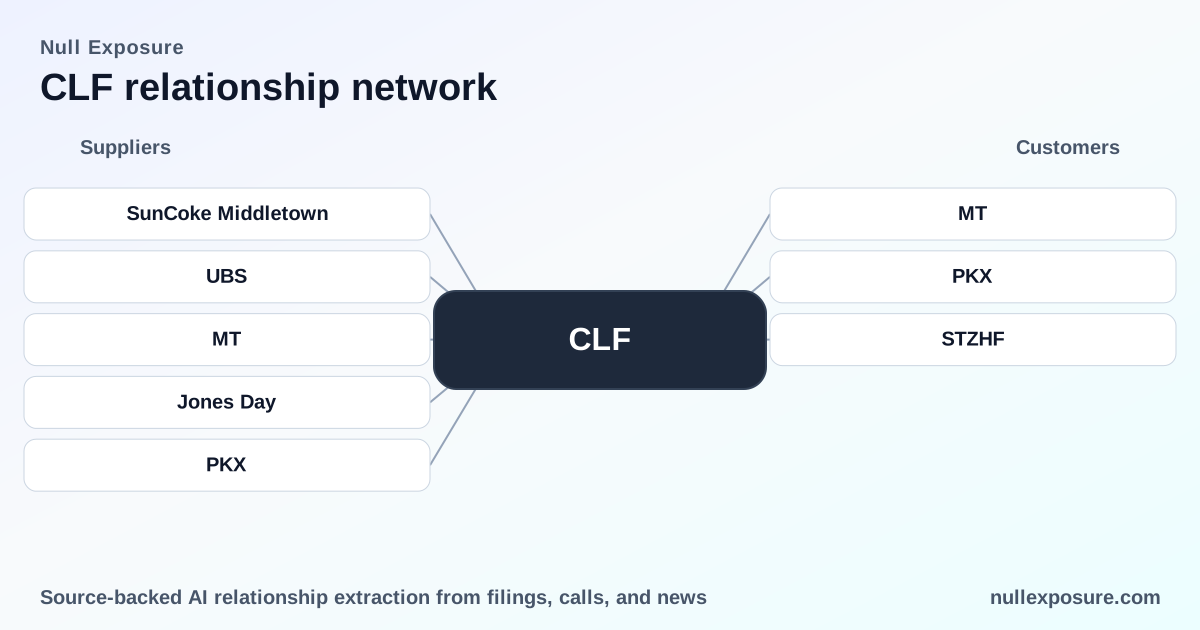
Cleveland‑Cliffs (CLF): supplier dynamics that drive margins and operational risk
Cleveland‑Cliffs operates an integrated iron ore and steel supply chain: it extracts and processes ferrous raw materials and sells steel and upstream inputs to industrial customers, while managing costs through a mix of long‑term purchase agreements, annual contracts and spot buys. The company monetizes primarily through sales of raw materials and steel products and preserves margin by locking in supply for critical inputs where possible, while using short‑term financing and capital markets to manage liquidity when markets are stressed. For investors and operators, the interplay between secured long‑term supply, recently terminated legacy contracts, and active capital markets activity defines near‑term cashflow variability and strategic optionality.
For a structured view of counterparties and how they affect CLF’s operating posture, see NullExposure’s supplier intelligence hub: https://nullexposure.com/
Why counterparty posture matters for CLF’s economics
Cleveland‑Cliffs runs a hybrid contracting model that balances secured supply with market exposure. The company holds long‑term commitments for some inputs while deliberately purchasing other materials on annual or spot terms when multi‑year contracts are unavailable or uneconomic. This posture produces three practical characteristics:
- Cost certainty where necessary: long‑term agreements reduce input price volatility for critical items and protect production lines.
- Flexibility and exposure: annual and spot purchases expose margins to commodity cycles and necessitate active trading and working‑capital management.
- Liquidity layering: CLF uses short‑term supply‑chain finance as a working‑capital tool—these amounts are modest but recurring, and therefore relevant for short‑term liquidity planning.
The company’s filings list $29 million and $21 million classified as short‑term financings at year‑end 2024 and 2023 respectively, reflecting active use of supply‑chain financing in the working capital stack. CLF also identifies a significant degree of North American sourcing for ferrous raw materials from its mines in Michigan and Minnesota and its scrap facilities across several states and Ontario, which is a company‑level signal of geographic concentration in input supply.
Explore the full supplier map and relationship scoring at NullExposure: https://nullexposure.com/
Counterparty map: the relationships you need to price into your model
SunCoke Middletown
Cleveland‑Cliffs has committed to purchase all the coke and electrical power generated by SunCoke Middletown and has contracted to buy the facility’s expected production through 2032, placing this supplier in a long‑tenor, mission‑critical role for CLF’s cokemaking and energy needs. According to CLF’s 2025 Form 10‑K, this is a long‑term supply commitment that materially reduces coke and power supply risk for its integrated operations (FY2025 10‑K).
UBS Securities LLC
UBS acted as the sole underwriter on a proposed offering of common shares and held a 30‑day option to purchase an additional allocation (11,250,000 shares), indicating a concentrated capital markets relationship used to raise equity when CLF elected to access public markets. SEC filing summaries and the company’s offering materials (October 29, 2025 underwriting agreement) identify UBS as the exclusive underwriter for that transaction (news coverage and SEC filing pages, Oct 2025).
Jones Day
Jones Day provided a legal opinion and consent in connection with the underwriting agreement tied to the October 29, 2025 offering, functioning in the standard legal‑counsel role that supports capital‑markets transactions and underwriting compliance. This appears in the underwriting documentation filed alongside the offering information (underwriting agreement, Oct 2025 filings).
ArcelorMittal
CLF terminated an index‑based slab supply contract with ArcelorMittal during 2025; the company and market commentary described that contract as “onerous” and it expired at year‑end 2025. This termination reduces a legacy contractual drag on margins and indicates management’s willingness to unwind contracts that are misaligned with current economics (2025 Q4 earnings call and contemporaneous industry reporting, FY2025–Q4 2025).
POSCO
CLF signed a Memorandum of Understanding (MOU) with POSCO to potentially form a strategic partnership that would leverage CLF’s domestic operations and POSCO’s global footprint; this is positioned as a strategic development rather than a binding commercial supply contract. The 2025 Form 10‑K references the MOU as a prospective partnership exploration with Korea’s largest steelmaker (FY2025 10‑K).
What the relationship mix implies for investors and operators
- Operational criticality is concentrated but managed. SunCoke’s long‑term supply commitment through 2032 is a material insulation against coke and power shortages for CLF’s facilities—this reduces upside volatility for operations but creates a counterparty concentration that requires credit and operational monitoring.
- Contracting posture is pragmatic and transactional. CLF combines long‑term buys for strategic inputs with annual and spot sourcing when market conditions require flexibility; this design preserves optionality but increases earnings sensitivity to commodity cycles.
- Capital markets activity is active and concentrated. The UBS‑led underwriting and Jones Day legal support show CLF accesses equity markets on a concentrated, underwritten basis when liquidity needs or strategic recapitalizations demand it.
- Legacy contract cleanup is a positive. The expiration and termination of the slab contract with ArcelorMittal removes an onerous cost structure and should improve margin dynamics if replacement supply is cheaper or internal production fills gaps.
- Strategic partnerships are exploratory. The POSCO MOU signals potential future cooperation that could change supply and demand dynamics, but it is currently a non‑binding strategic option.
Key risks: counterparty concentration (SunCoke), spot exposure on non‑covered inputs, and the need to execute capital raises when market windows exist. Key opportunities: improved margins from terminated legacy contracts and optional strategic upside from POSCO engagement.
Practical next steps for portfolio and operations teams
- Stress test models for input cost exposure under scenarios where annual/spot purchases replace contracted volumes; prioritize monitoring of the SunCoke supply and counterparties that underpin transportation and coke flows.
- Track near‑term liquidity and capital plans tied to the UBS underwriting events and monitor short‑term supply‑chain financing balances as a leading indicator of working‑capital stress.
- Maintain engagement with strategic partners and legal counsel inputs—POSCO MOU progress and contract renegotiations will directly affect mid‑cycle cashflow.
For a deeper counterparty breakdown and real‑time alerts on changes to these supplier relationships, visit NullExposure: https://nullexposure.com/
Investors who want to quantify counterparty concentration and contractual tenure in financial models should prioritize the items above and revisit assumptions as CLF executes on its strategic initiatives. Stay positioned for improved margins from contract simplification while monitoring working‑capital plumbing and capital markets access.