Clean Energy Fuels (CLNE): supplier relationships and what they mean for investors and operators
Clean Energy Fuels monetizes by supplying natural gas fuels — primarily renewable natural gas (RNG) and conventional CNG/LNG — and by operating and supporting vehicle-fueling infrastructure. The company sources RNG under long-term offtake agreements and sources conventional natural gas on spot and short-term contracted terms, then resells fuel and services to fleet operators and station partners. This combination creates a two-sided exposure: commodity price and supplier concentration on the procurement side and service and customer demand on the distribution side. For a concise, structured view of suppliers and counterparty risk, see https://nullexposure.com/.
How the filings describe CLNE’s supplier posture — fast-moving gas, long-term RNG anchors
CLNE’s public filings lay out a bifurcated procurement model. Conventional natural gas is sourced on spot or short-term forward bases, including take-or-pay arrangements that lock in minimum volumes for limited windows. Those clauses drive near-term cash commitments and reduce flexibility to shift volumes when market prices run high. According to CLNE’s FY2024 Form 10‑K, the company had quarterly fixed-price natural gas purchase contracts with take-or-pay commitments extending through March 2025 and purchases under industry-standard base contracts.
At the same time, CLNE secures RNG through long-term offtake agreements with a broad set of producers. The 10‑K notes that CLNE purchases RNG from bp and other third‑party producers and that its RNG supply network comprises over 150 supply sources, typically contracted on long-term terms. That structure provides volume certainty and green branding for customers but also creates long-dated supply commitments that lock in price and delivery profiles.
Key operating constraints and takeaways from the filing:
- Contracting posture: Mixed — short-term and spot for conventional gas; long-term for RNG offtakes.
- Concentration and materiality: Procurement is materially concentrated — one to three suppliers accounted for ≥10% of natural gas expense in 2022–2024, indicating potential counterparty concentration risk.
- Role and criticality: CLNE is primarily a buyer of fuel inputs and a seller of finished fuel and fueling services; fuel supply is a critical operational input.
- Segment signal: The company also references equipment manufacturers (e.g., SAFE S.p.A.) focused on global natural gas fueling compressors, which signals exposure to hardware and service supply chains.
These points come from CLNE’s FY2024 Form 10‑K and related disclosures.
For more supplier-centric analysis and to track counterparty signals over time, consult https://nullexposure.com/.
Supplier relationships: the record in CLNE’s filings
bp — a named long-term RNG supplier
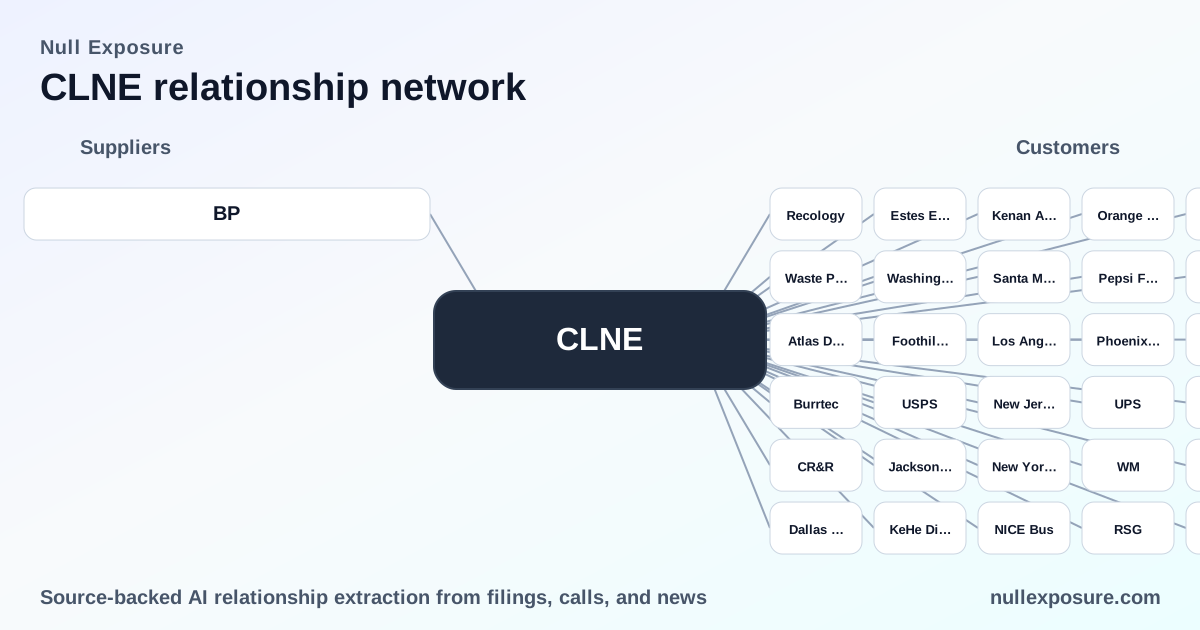
Clean Energy states it purchases RNG from bp and other third‑party producers, typically under long-term RNG supply offtake agreements, placing bp among CLNE’s long-term RNG counterparties as disclosed in the FY2024 Form 10‑K. (Source: CLNE FY2024 10‑K, disclosure on RNG sourcing.)
The filing explicitly links bp to CLNE’s RNG supply program; investors should treat bp as part of the company’s long-term feedstock base when modeling contracted volumes and green-fuel credentials.
Financial context that matters for supplier risk
CLNE’s financial profile amplifies supplier-risk considerations. In filings through the most recent reported quarter (2025‑12‑31) the company shows TTM revenue of $424.8 million and an EBITDA loss of $107.6 million, with negative operating and net margins. Analysts project a target price near $4.75 and a consensus skewed toward buy ratings, but the company’s negative profitability and high EV/EBITDA multiple reflect market skepticism about near-term margin recovery.
Operationally, that means CLNE must balance the benefits of long-term RNG contracts (volume certainty and decarbonization value) with the cash-flow demands and price exposure introduced by short-term conventional gas obligations and take-or-pay commitments. The filings identify supplier concentration that has been material in recent years, so counterparty stress or pricing shocks in a few suppliers would be meaningful to cash flow and margins.
What investors and operators should watch — practical implications
The supplier disclosures and constraints imply a clear playbook for active monitoring and risk mitigation:
- Hedge and procurement strategy alignment. Short-term exposure for conventional gas requires active hedging or flexible supply arrangements to avoid taking volume at peak prices. Long-term RNG contracts provide revenue stability but can lock CLNE into price differentials that pressure margins if RNG premiums compress.
- Counterparty concentration monitoring. The 10‑K shows one to three suppliers represented ≥10% of natural gas expense historically; investors should track supplier-by-supplier share and counterparty credit to model downside scenarios.
- Operational resilience around hardware and service chains. CLNE’s mention of global equipment vendors such as SAFE S.p.A. indicates exposure to capital equipment and service continuity that underpin station uptime and rollout schedules.
- Contractual nuance matters. Take-or-pay clauses and quarterly fixed-price contracts create cash commitments even when demand is lumpy; operators should stress-test cash flow under varying demand and price cases.
If your due diligence requires synchronized supplier-level tracking and scenario analysis, visit https://nullexposure.com/ for tools that map supplier relationships and contractual posture.
Bottom line: strategic strengths offset by execution and concentration risks
Clean Energy’s model combines long-term RNG offtakes (anchoring green supply) with short-term conventional gas buys (flexible commodity sourcing) — a structure that supports customer-facing decarbonization offers but creates acute procurement and cash-flow management challenges. The FY2024 10‑K disclosure that CLNE buys RNG from bp and over 150 other producers under long-term agreements is a strategic strength for branding and volume certainty, but the same filing highlights take-or-pay and short-term contracts that concentrate near-term price risk and cash commitments.
For investors and operators, the actionable items are clear: stress-test supplier concentration, quantify take-or-pay exposures across scenarios, and integrate hardware and service-chain contingency into deployment timelines. For a practical supplier-risk toolkit and ongoing monitoring, go to https://nullexposure.com/.