Clipper Realty (CLPR): Lender and Supplier Relationships That Drive Near‑Term Financial Risk
Clipper Realty is a New York–focused residential REIT that acquires, renovates and operates multifamily properties composed of both rent‑regulated and market‑rate units. The company monetizes through stabilized rental cash flow, value‑add renovations that unlock higher net operating income, and financial engineering via mortgage and mezzanine financing; dividends are a distribution of those cash flows and are supported by a modest payout profile relative to current operating results. For investors and operators, the critical lens is on Clipper’s capital structure and service dependencies—these determine refinancing flexibility, margin volatility, and operational continuity.
Learn more at https://nullexposure.com/.
Why Clipper’s supplier and lender map matters now
Clipper’s balance sheet is weighted toward property‑level mortgage financing rather than short‑term vendor spend. The company reports over $1.27 billion of indebtedness secured by properties, and that profile creates long maturities and concentrated counterparty exposure that govern strategic options (refinancing, dispositions, or equity raises). Operationally, Clipper relies on third‑party service providers for key functions including cybersecurity and property management tasks, which makes vendor performance a component of asset performance. Taken together, capital partners and service providers are both financial and operational levers for Clipper—not peripheral relationships.
- Long-term contracting posture: Mortgage and mezzanine maturities extend into the late 2020s and early 2030s, locking future refinancing decisions into a defined horizon.
- Large absolute spend/indebtedness: The company’s secured indebtedness is in the nine‑figure to billion range, which elevates counterparty importance and credit negotiation leverage.
- Service provider reliance: Third‑party vendors are material to cybersecurity and operations, so vendor stability and contract terms matter for risk budgeting.
The lender and supplier relationships you need on your radar
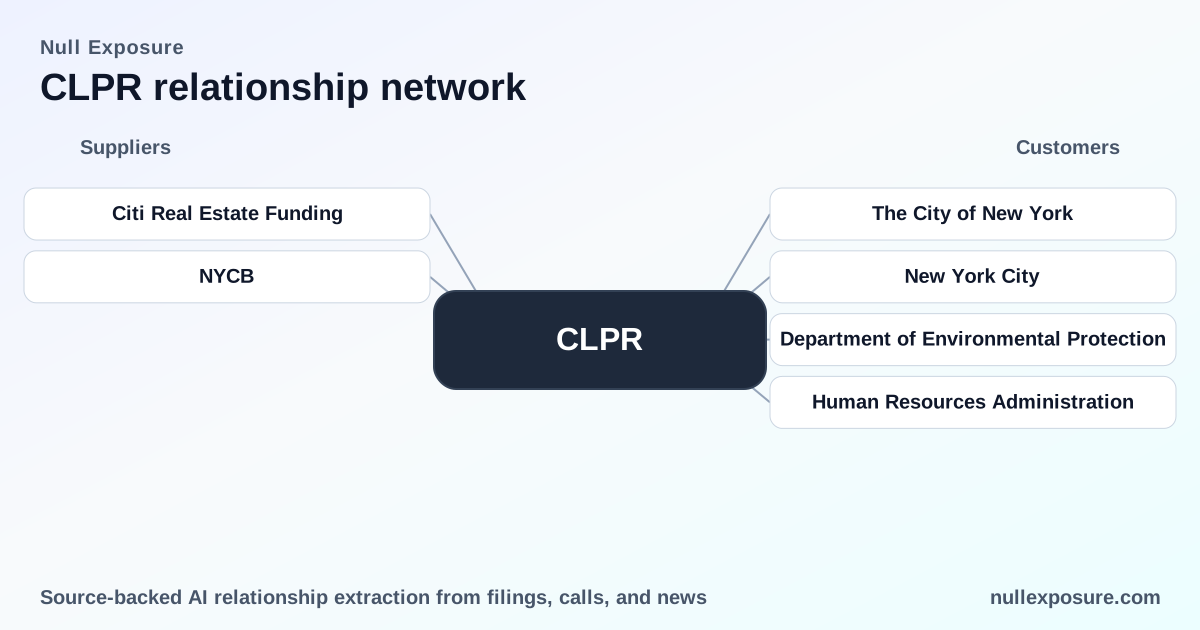
Citi Real Estate Funding — $125 million loan (FY2025)
Clipper’s entity Unit 250 Livingston Owner LLC entered into a $125 million loan agreement with Citi Real Estate Funding in FY2025, a transaction disclosed in a March 2026 SEC filing and reported by MarketScreener. This facility is a sizeable, property‑backed loan that increases the company’s secured leverage and establishes Citi as a material capital provider for that asset. (MarketScreener coverage of the SEC filing, March 9, 2026.)
New York Community Bank — $246 million legacy financing (2018 / discussed FY2023)
In 2018 Clipper received a $246 million loan from New York Community Bank to replace debt on Flatbush Gardens, signaling historical reliance on NYCB for large‑ticket financings of stabilized assets; that arrangement was referenced in a 2023 Real Deal piece documenting the company’s tax‑break discussions and violation history. The relationship highlights Clipper’s use of traditional commercial mortgage lenders for portfolio recapitalizations. (The Real Deal, August 7, 2023.)
What the disclosed constraints tell investors about the operating model
The document‑level signals extracted from Clipper’s filings point to company‑level characteristics that shape risk and opportunity:
- Contracting maturity and predictability: The portfolio carries long‑dated mortgages (maturities stretching to 2028–2032), which provides scheduling certainty for debt servicing but concentrates refinancing risk into multi‑year windows rather than an even cadence.
- Scale of financial commitments: With over $1.27 billion of indebtedness and limited cash on hand, Clipper is operating with meaningful secured leverage, signaling that lender negotiations and capital markets access are first‑order governance items for management.
- Service provider dependency: Filings disclose reliance on third‑party vendors for cybersecurity and other functions, which makes vendor selection and contracting posture relevant to operational continuity and indemnity exposure.
Those constraints are company‑level signals—they describe how Clipper runs its business and structures counterparties rather than tying any single constraint to a named supplier unless expressly indicated.
Investor implications: risks you must underwrite
Clipper’s supplier and lender footprint creates a set of action‑oriented implications:
- Refinancing calendar is the headline risk. Large mortgages with clustered maturities mean interest‑rate environment and lender appetite over the next five years will materially affect cash flow and equity value.
- Counterparty concentration matters. Major financings from institutional lenders such as Citi and historical dependence on NYCB underscore the need to monitor each lender’s underwriting posture and secondary market appetite for CRE loans.
- Operational vendor risk is non‑trivial. Outsourced cybersecurity and management functions create low‑probability, high‑impact operational exposures that can affect rent collections and compliance costs if vendor performance deteriorates.
- Liquidity and margin stress are real levers. Reported cash and restricted cash are modest relative to secured debt; downside scenarios will pressure either operating margins or force dispositional actions.
If you want deeper, transaction‑level visibility to stress test these exposures, visit https://nullexposure.com/ for comparative supplier and lender analytics.
How operators should act differently
Property operators and asset managers evaluating relationships with Clipper should:
- Push for clear maturity schedules and waterfall mechanics in JV or management agreements so refinancing risk is allocated predictably.
- Treat large mortgage lenders as strategic partners—establish lines of communication with lead arrangers early, and document covenant cure mechanics.
- Contractually require cybersecurity SLAs from vendors and tertiary audit rights, because third‑party failures flow directly to tenant experience and regulatory scrutiny.
Bottom line and recommended next steps
Clipper Realty runs a classic leverage‑driven urban multifamily playbook: value‑add operations monetized through rents and recapitalization events, supported by large, long‑dated mortgage facilities. The company’s lender relationships—most recently a $125 million Citi facility and a prior $246 million arrangement with New York Community Bank—are central to its capital flexibility, and they deserve ongoing monitoring. Investors should underwrite refinancing windows, lender concentration, and vendor continuity before increasing exposure.
For comparative supplier intelligence, trend monitoring, and to map these relationships into a risk‑adjusted valuation view, start your review at https://nullexposure.com/.