Clearwater Paper (CLW): Strategic supplier posture after the Augusta plant acquisition
Clearwater Paper produces and sells private-label bleached paperboard and tissue products while monetizing through manufacturing-scale sales to retailers, packaging converters and foodservice buyers. The company operates integrated mills, owns energy-producing biomass assets that offset fuel needs, and supplements production with purchased natural gas and electricity; Clearwater monetizes scale, contamination control in food-grade board, and private-label contracts. The recent purchase of Graphic Packaging’s Augusta, GA paperboard plant expands Clearwater’s manufacturing footprint and brings a set of counterparties and advisors that matter to sourcing, regulatory exposure and integration risk. For a quick reference on Clearwater supplier mapping and relationship signals, visit https://nullexposure.com/.
How the Augusta deal changes the supplier and advisory map
Clearwater’s acquisition of the Augusta facility is an operational acquisition rather than a financial investment: it transfers production capacity and the upstream supplier commitments that come with running a large bleached paperboard mill. That transaction increases Clearwater’s exposure to raw-material sourcing, energy consumption and environmental obligations tied to site operations. The deal also introduces external advisors (financial and legal) into Clearwater’s execution chain — a signal that the company is pursuing a transaction with external governance and specialized counsel rather than an internal-only integration.
According to a PR Newswire release dated March 9, 2026, Graphic Packaging signed a definitive agreement to sell the Augusta paperboard manufacturing facility to Clearwater Paper, formalizing the transfer of an operating mill and the attendant supplier relationships and environmental responsibilities. This is a strategic capacity play that strengthens Clearwater’s private-label and board production scale.
For more context on how we map these supplier and advisory relationships and what they imply for creditors and operators, see https://nullexposure.com/.
Counterparties and advisors named in the announcement
- Graphic Packaging Holding Company — Clearwater agreed to acquire Graphic Packaging’s Augusta, Georgia bleached paperboard manufacturing facility; the transaction transfers an operating mill and its immediate operational liabilities to Clearwater. According to a PR Newswire release (March 9, 2026), the sale is a definitive agreement between the two firms.
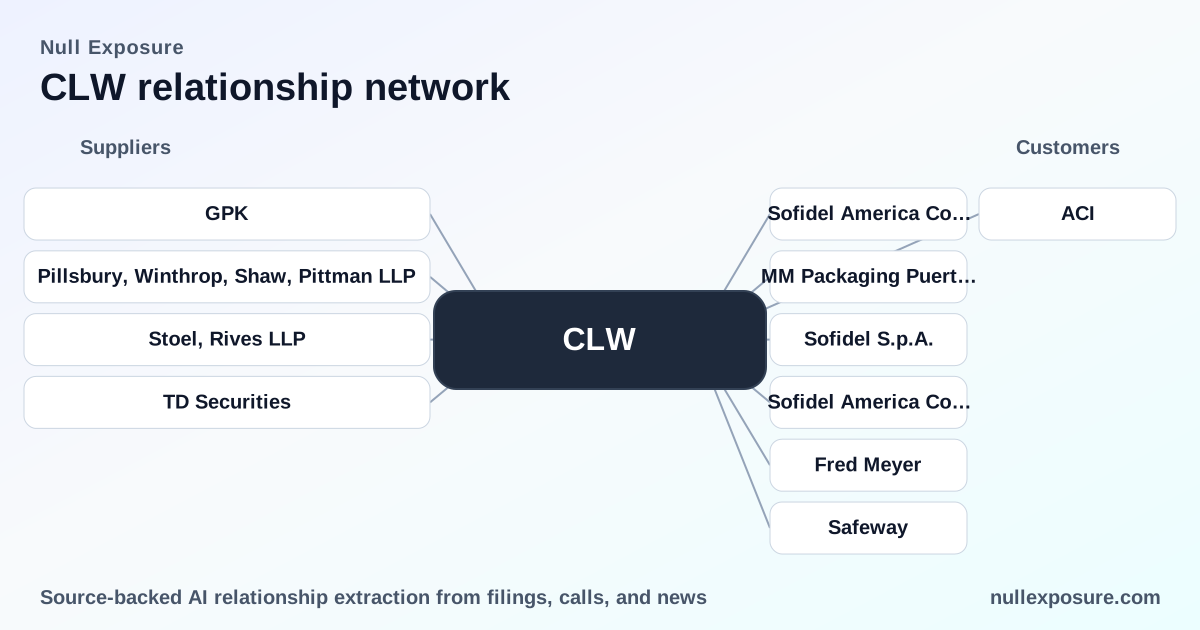
- Pillsbury, Winthrop, Shaw, Pittman LLP — Served as lead transaction counsel for Clearwater Paper on the Augusta acquisition, providing primary legal coverage for the deal structure and closing conditions, per the PR Newswire announcement (March 9, 2026).
- Stoel, Rives LLP — Engaged by Clearwater Paper to provide environmental counsel tied to the Augusta asset, signaling focused legal attention on permitting, environmental liabilities and site remediation obligations referenced in the deal announcement (PR Newswire, March 9, 2026).
- TD Securities — Acting as Clearwater Paper’s financial advisor on the transaction, TD Securities provided deal advisory and valuation support during negotiations, according to the March 9, 2026 PR Newswire release.
Each of these relationships is transactional and concentrated around the acquisition event; the advisors’ roles are confined to deal execution and environmental diligence rather than long-term supplier contracts.
What the supplier constraints disclose about Clearwater’s operating model
Company disclosures show a mixed contracting posture across energy and raw-material procurement that affects operating leverage and supply risk.
- Short-term coverage for utilities: As of December 31, 2024, short-term contracts covered approximately 44% of expected average monthly natural gas and electricity needs through 2025, indicating material near-term exposure to energy-price volatility and market procurement cycles. This is a company-level disclosure tied to utilities coverage and not attributed to any single counterparty.
- Longer-term raw-material and energy arrangements: Clearwater reports that it enters into third-party contracts for raw materials (pulp, logs, chemicals) that can extend beyond one year, and that many energy supply contracts commit providers to facility-level requirements with market-based pricing mechanisms. The company uses a blend of self-generated biomass energy and contracted supply, which reduces absolute price exposure but retains material counterparty dependency.
From an investor perspective these constraints translate into clear business-model characteristics:
- Contracting posture: Deliberate mix of short- and long-term contracts—short-term for flexibility on utilities, longer-term for critical raw materials.
- Concentration: High dependence on a finite set of suppliers for pulp, logs and chemicals, and on facility-level energy supply, increasing operational concentration risk at each major mill.
- Criticality: Energy and raw materials are critical input streams; interruptions or price shocks in either line item directly affect throughput and margins.
- Maturity: Supplier relationships are a mix of mature, longer-term raw-material agreements and rolling short-term energy purchases, implying both stability in supply for raw inputs and cyclic exposure for utilities.
Operational and investment implications for buyers and operators
The Augusta acquisition increases Clearwater’s physical footprint and brings the company deeper into site-specific supplier and environmental obligations. Investors and operational managers should focus on three areas:
- Integration and remediation cost risk: Environmental counsel (Stoel, Rives) involvement highlights the potential for site-specific environmental liabilities; diligence and reserve adequacy will determine near-term cash flow impact.
- Energy procurement strategy: With 44% of utility needs covered short-term into 2025, management’s hedging or procurement strategy for the remaining ~56% determines margin volatility for the coming year.
- Supplier concentration and pricing: Long-term raw-material contracts reduce spot exposure but create headline risk if suppliers require price escalators; buyers should monitor pulp and log contract tenors and any exclusivity clauses.
Investors looking for a structured supplier-risk brief on Clearwater can access broader mapping and signal analysis at https://nullexposure.com/.
Practical recommendations and red flags to monitor
- Obtain the integration plan and projected synergies from the Augusta transaction; unexpected remediation or capex needs are the primary downside risk.
- Track hedging and contract roll schedules for natural gas and electricity beyond 2025; a failure to lock favorable terms could compress operating margins.
- Request disclosure of major raw-material counterparties and contract duration where feasible; concentration among a few pulp/log suppliers increases operational fragility.
If you are evaluating CLW for portfolio inclusion or vendor management, use these signals to test management’s execution capability and contingency planning. For a hands-on supplier risk assessment and to compare Clearwater’s profile against peers, start at https://nullexposure.com/.
Bottom line
Clearwater Paper’s acquisition of the Augusta mill is a capacity-accretive move that brings immediate operational and environmental responsibilities. The combination of partially short-term energy coverage and longer-term raw-material contracts creates a hybrid exposure profile: flexibility on utilities but concentrated, critical dependencies on raw inputs and site-level compliance. Active monitoring of integration costs, energy procurement actions, and supplier concentration is essential for investors and operators assessing CLW’s risk-reward profile.