Chemomab Therapeutics (CMMB): supplier map and operational implications for investors
Chemomab Therapeutics is an Israeli‑headquartered clinical‑stage biotech that develops biologic drugs for inflammatory and fibrotic diseases and monetizes primarily through IP-based licensing, clinical development milestones and eventual commercialization or partner transactions. The company funds R&D through a mix of equity raises, at‑the‑market offerings and government R&D grants, while outsourcing manufacturing and many development functions to third parties. For buy‑side and operator diligence, the critical question is not whether Chemomab can advance CM‑101 clinically, but whether its outsourced supplier network and legal/IP posture create concentration or execution risk that could derail value capture.
For a quick gateway to the vendor intelligence view, visit https://nullexposure.com/.
The headline operating model — outsourced, IP‑centric, capital‑intensive
Chemomab runs a lean internal headcount focused on R&D and IP stewardship while relying on third‑party service providers for accounting, legal, investor relations, clinical site management and all clinical manufacturing. Company filings and press releases show no product revenues; the firm is pre‑commercial and depends on external manufacturing partners for clinical supplies and on licensing to capture future value. This creates two structural characteristics investors must price: high operational leverage to successful trials and high supplier concentration risk tied to cGMP compliance and sole‑source arrangements.
Operational constraints and supplier signals investors should read as a single view
Company disclosures make several persistent signals that shape the supplier‑risk profile:
- Licensing is embedded in the business model. Chemomab holds exclusive licenses to inventions and retains the right to sublicense—an IP foundation that is central to its strategy and future monetization. Company filings describe a December 2011 license agreement granting exclusive rights and sublicensing authority.
- Government funding supports R&D. The Israel Innovation Authority has partially financed R&D, indicating public program leverage that reduces near‑term cash burn but can create audit and reporting obligations.
- Clinical geography is transatlantic. Trials are actively recruiting in the U.S., Europe and Israel, so operational execution spans NA and EMEA regulatory environments and logistics.
- Manufacturing is critical and concentrated. Disclosures state that all clinical manufacturing is outsourced, the company is completely dependent on contract manufacturers for cGMP compliance, and a sole supplier produces CM‑101 — a material single‑point‑of‑failure.
- Service provider posture is dominant. The company lists a roster of external service providers across legal, audit, IR and sales agents; these relationships are active and operationally material.
Together these constraints form a coherent company‑level profile: IP owner + outsourcer model, with critical single‑supplier manufacturing dependency and multinational clinical operations. These are not theoretical risks — they are structural and priced into the equity.
The supplier and advisor roster you need to know
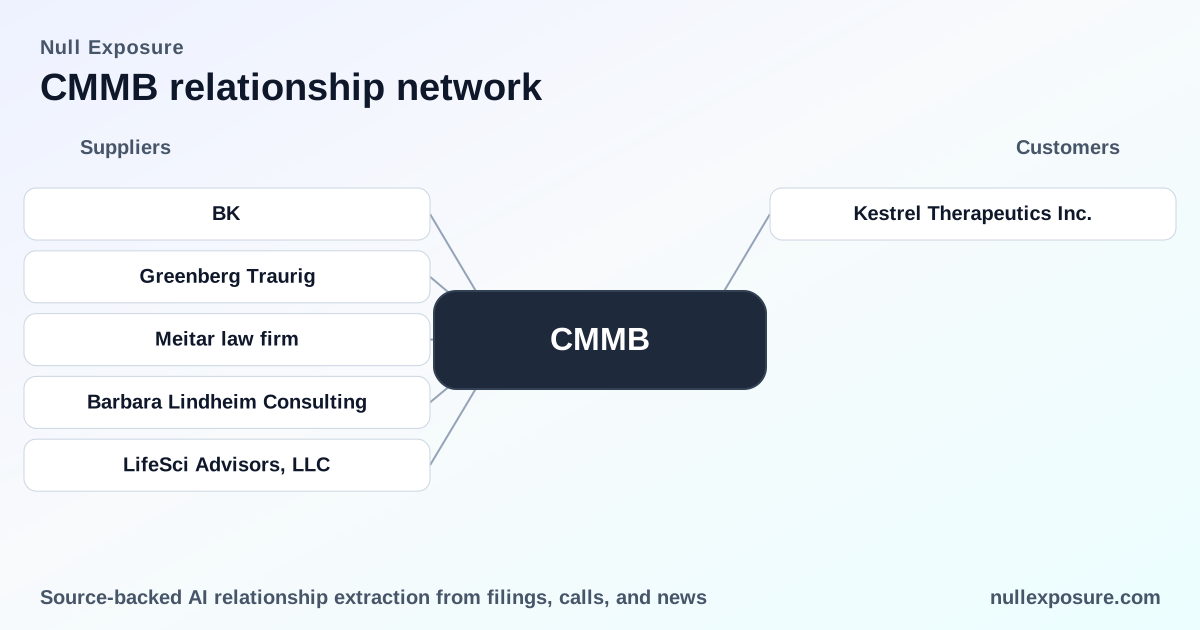
Below I list every named relationship surfaced in public releases and what it practically means for investors and operators.
The Bank of New York Mellon — depositary bank for ADS program
According to a GlobeNewswire release (Q2 2025, Aug 14, 2025), The Bank of New York Mellon serves as the depositary bank for Chemomab’s ADS program and is responsible for arranging exchanges on the effective date, which is an administrative but essential role for liquidity of ADS holders. Source: GlobeNewswire Q2 2025 release.
Greenberg Traurig — external legal counsel in merger activity
A PR Newswire release covering the completed merger with Anchiano (FY2021) lists Greenberg Traurig as one of the law firms representing Chemomab, indicating use of international legal counsel for transformational corporate transactions. Source: PR Newswire, merger announcement (FY2021).
Meitar law firm — local counsel for corporate transactions
The same PR Newswire release (FY2021) names Meitar as Chemomab’s Israeli legal counsel for the Anchiano merger, reflecting standard practice of combining local and international law firms for cross‑border deals. Source: PR Newswire, merger announcement (FY2021).
Barbara Lindheim Consulting — investor and public relations
A GlobeNewswire corporate update (Q3 2025, Nov 20, 2025) lists Barbara Lindheim Consulting as the company's Vice President Investor & Public Relations contact, which signals outsourced IR and media management for U.S. investor engagement and corporate communications. Source: GlobeNewswire Q3 2025 release.
LifeSci Advisors, LLC — investor relations consulting support
A PR Newswire release reporting top‑line Phase 2a results (FY2023) identifies LifeSci Advisors as a consulting IR contact, reinforcing a pattern of outsourced investor relations during clinical readouts and capital markets activity. Source: PR Newswire, CM‑101 Phase 2a results (FY2023).
(Every relationship above is drawn from the company’s public releases and filings; each role is operationally active rather than anecdotal.)
For a deeper vendor risk score that overlays these relationships with contract maturity and concentration metrics, see https://nullexposure.com/.
What investors should price in now
Translate the operational map into valuation and risk implications:
- Concentration risk is real and material. A sole CM‑101 supplier plus full outsourcing of clinical manufacturing elevates the chance of supply disruptions and regulatory non‑compliance delaying programs. This is a binary, path‑dependent risk for a pre‑revenue biotech.
- IP and licensing are the upside lever. The exclusive license and sublicensing rights provide the principal route to commercialization value through partnerships or asset sales. Protecting patents and freedom‑to‑operate is therefore strategically critical.
- Capital strategy and market access matter. The company uses an ATM program and ADS structure (with BNY Mellon as depositary) to manage liquidity and capital raises; investors should watch dilution risk and timing of milestone financing.
- Geographic execution adds complexity but market optionality. Running trials in NA, EMEA and Israel broadens regulatory pathways for approval but requires robust CRO and supply chain management across jurisdictions.
Key investor takeaway: value realization depends equally on trial outcomes and flawless supplier execution. Operational failure in manufacturing or IR missteps during capital raises can extinguish equity value even when clinical data read well.
Final thoughts and next steps
Chemomab is a classic IP‑centric, outsourced biotech: upside comes from clinical success and licensing, downside from concentrated manufacturing and execution risk. For active managers and operators, the near‑term monitoring list should include supplier audits, cGMP certifications, documentation around the sole CM‑101 supplier, and the schedule and terms of any financing through the ATM/ADS structure.
Explore vendor profiles, supplier concentration scoring, and transaction history for Chemomab at https://nullexposure.com/ to convert these insights into actionable risk limits. If you need a tailored supplier risk brief for CMMB to inform diligence or portfolio stress testing, start at https://nullexposure.com/ and request a focused review.