Clearmind Medicine (CMND): Supplier and Clinical Partner Map for Investors
Clearmind Medicine operates as an early-stage pharmaceutical developer focused on next-generation, non-hallucinogenic neuroplastogens (notably MEAI) and a separate clinical program, CMND-100 for alcohol use disorder. The company monetizes primarily through progress milestones in formulation and clinical development, followed by licensing, out-licensing, or commercial partnerships once clinical validation is achieved. Investors should value progress rather than current revenue: Clearmind carries no revenue, a negative EBITDA, and relies on scientific partnerships and clinical site relationships to derisk its programs and unlock optionality. For a structured view of supplier and clinical counterparties, see our coverage hub: NullExposure homepage.
How Clearmind’s operating model translates into supplier relationships
Clearmind is a classic pre-commercial biotech: it contracts specialized third parties for formulation development and contracts leading clinical centers to run early human trials. That contracting posture is transactional and milestone-driven rather than vertically integrated. The company shows high partner concentration—a handful of specialized vendors and academic sites carry critical deliverables—so partner performance is material to program timelines and value creation. The relationships documented for FY2026 indicate criticality concentrated on a few high-quality clinical sites and a formulation partner; maturity is early (preclinical to Phase I/IIa), so operational execution in the next 12–24 months will determine investor returns.
Supplier and clinical relationships in plain English
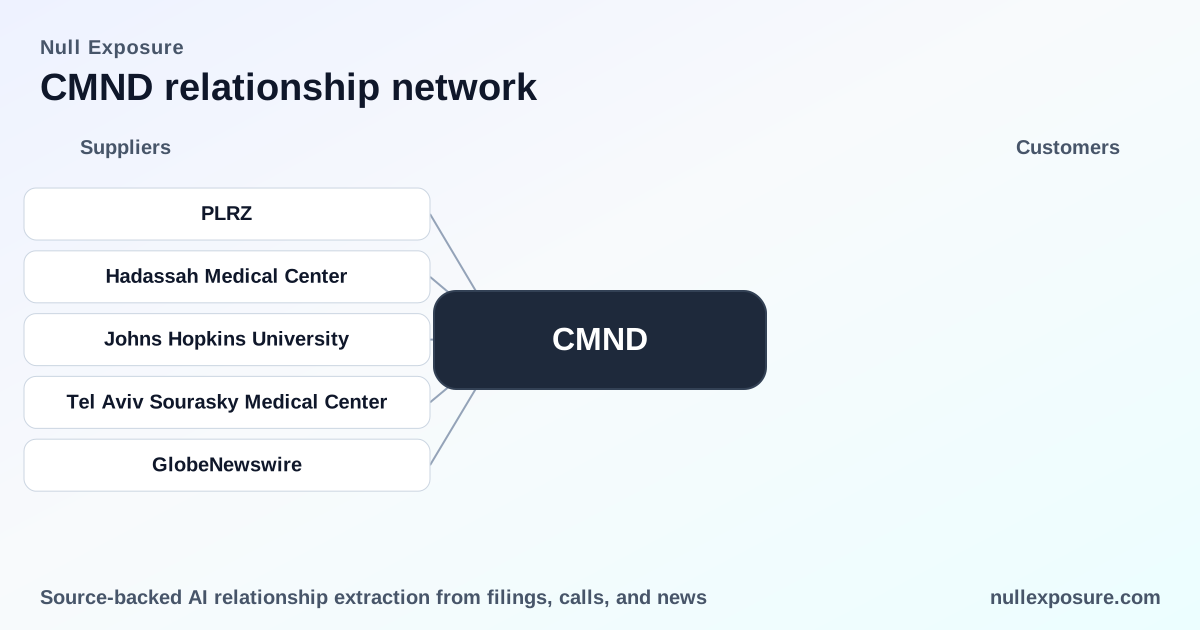
Below are every relationship found in the most recent supplier-scope results, each summarized in one to two sentences with source context.
-
Polyrizon Ltd. — Clearmind engaged Polyrizon to apply its proprietary intranasal hydrogel technology to optimize a formulation of MEAI, Clearmind’s lead compound intended for addiction and CNS indications; this is a development agreement announced in FY2026. According to a Yahoo Finance report dated March 9, 2026, the agreement specifically targets an intranasal delivery approach for MEAI to improve administration and bioavailability (Yahoo Finance, March 9, 2026: https://finance.yahoo.com/news/clearmind-medicine-enters-development-agreement-125500892.html).
-
Hadassah Medical Center — Hadassah was listed among the premier clinical sites that recruited patients for the CMND-100 Phase I/IIa trial; the second cohort of six patients completed treatment per protocol across multiple sites in FY2026. QuiverQuant’s coverage of the company’s trial update cites Hadassah as a participating center in the completed cohort (QuiverQuant, FY2026: https://www.quiverquant.com/news/Clearmind+Medicine+Inc.+Completes+Treatment+for+Second+Cohort+in+Phase+I%2FIIa+Trial+of+CMND-100+for+Alcohol+Use+Disorder).
-
Johns Hopkins University — Johns Hopkins is named as one of the leading investigational sites for CMND-100; the institution participated in recruitment and treatment of the trial’s second cohort, reinforcing trial design credibility. The same FY2026 trial update identifies Johns Hopkins as a participating site where treatment was completed per protocol (QuiverQuant, FY2026: https://www.quiverquant.com/news/Clearmind+Medicine+Inc.+Completes+Treatment+for+Second+Cohort+in+Phase+I%2FIIa+Trial+of+CMND-100+for+Alcohol+Use+Disorder).
-
Tel Aviv Sourasky Medical Center — Tel Aviv Sourasky is another principal clinical site for CMND-100; it contributed patients to the second cohort and completed treatment per protocol in FY2026. The trial update explicitly lists Tel Aviv Sourasky Medical Center among the premier sites involved in cohort completion (QuiverQuant, FY2026: https://www.quiverquant.com/news/Clearmind+Medicine+Inc.+Completes+Treatment+for+Second+Cohort+in+Phase+I%2FIIa+Trial+of+CMND-100+for+Alcohol+Use+Disorder).
-
GlobeNewswire (press distribution) — A company press release summarizing Phase I/IIa safety results was distributed via GlobeNewswire in FY2026, and an aggregator noted the release; the press channel is the firm’s primary public communications route for clinical updates. A QuiverQuant entry references that the safety-results release was distributed by GlobeNewswire and includes a disclaimer about automated summarization (QuiverQuant referencing GlobeNewswire, FY2026: https://www.quiverquant.com/news/Clearmind+Medicine+Inc.+Reports+Positive+Safety+Results+from+Phase+I%2FIIa+Trial+of+CMND-100+for+Alcohol+Use+Disorder).
What the partnership map implies about operational risk and optionality
- Clinical credibility is high: Recruiting premier sites such as Johns Hopkins, Tel Aviv Sourasky, and Hadassah gives Clearmind trial credibility and access to experienced investigators—this directly increases the value of successful safety and early efficacy readouts.
- Concentration is material: A small number of suppliers and sites are critical to near-term milestones; delays or site-specific complications will have outsized effects on timelines.
- Contracting posture is project-based and milestone-linked: Clearmind uses external specialists for formulation (Polyrizon) and academic clinical sites for human testing, which conserves capital but transfers execution risk to partners.
- Maturity is early-stage: The company is in preclinical-to-Phase I/IIa transition. Positive Phase I/IIa safety data creates optionality for licensing or larger partnerships; negative outcomes would materially devalue the asset.
For investors tracking partner-driven execution, these are the primary indicators to monitor: milestone completions with Polyrizon around formulation stability and delivery, patient-level completeness and safety signals from the listed clinical sites, and subsequent regulatory briefing materials or licensing discussions that follow successful cohorts.
If you want a consolidated tracker of supplier milestones and clinical partner status, review our detailed coverage: NullExposure homepage.
Financial context that shapes partner risk
Clearmind reports no revenue and a negative EBITDA, indicating reliance on external funding and partner-enabled value inflection points rather than operating cash flow. Balance-sheet and ownership signals—insider ownership around 20.85% and institutional ownership below 1%—point to a capitalization structure sensitive to dilution and public-market liquidity. Trial progress and formulation milestones are therefore the primary value-creation levers available to management and counterparties.
Tactical signals for investors and operators
- Watch for formal milestone announcements from the Polyrizon development agreement—commercially useful formulation results will raise the asset’s attractiveness to CMO partners or licensees.
- Monitor full safety and exploratory efficacy readouts from the CMND-100 cohorts and investigator comments from the named academic centers; these will determine the next capital and licensing strategy.
- Track PR cadence through GlobeNewswire and investor materials for explicit partner milestones and regulatory plans; distribution timing often correlates with financing or partnering activity.
For ongoing monitoring of how supplier engagements translate into clinical and commercial value, visit our ongoing analysis at NullExposure homepage.
Bottom line
Clearmind’s supplier map shows a concentrated but strategically chosen set of partners: a specialized formulation company and top-tier academic clinical sites that collectively deliver technical validation and credibility. Value will be created or destroyed by execution on these relationships, not by topline revenues in the near term. Investors should prioritize milestone timelines and partner deliverables when sizing exposure, while operators should treat these counterparties as mission-critical vendors for near-term derisking and future commercialization.