CMS Energy suppliers: what investors should know about counterparty risk and contract posture
CMS Energy (NYSE: CMS) operates as a regulated Michigan utility that monetizes through electricity and gas delivery under rate-regulated frameworks, long‑term power purchase agreements (PPAs), and related asset and service contracts; its economics combine predictable regulated revenue with capital‑intensive project spending and long‑dated purchase obligations. Investors should evaluate CMS through the lens of contracting concentration, multi‑year PPA commitments, and dependence on external contractors for generation and renewable buildouts. For a consolidated view of supplier relationships and how they affect enterprise risk, visit https://nullexposure.com/.
A concise investor snapshot — the baseline for supplier analysis
CMS Energy is a mid‑cap regulated utility with $8.54 billion in trailing revenue, $3.02 billion EBITDA, and a market capitalization near $24.0 billion (latest company data). The business delivers steady cashflow characteristics—illustrated by a 2.79% dividend yield and a forward P/E around 20.2—but its valuation and credit profile are sensitive to capital spending cycles and the structure of long‑term purchase obligations. Key operational driver: long‑term PPAs and firm transportation commitments anchor supply cost and counterparty exposure.
How CMS contracts for fuel and capacity — long horizons and material spend
CMS’s supplier strategy is weighted to long‑term contracting. The company reports that it acquires a material portion of its electric supply through long‑term PPAs and structured transportation contracts, and it carries multi‑year purchase obligations for commodities and construction services. CMS’s internal disclosures present contractual PPA obligations explicitly in its purchase‑obligation tables (noted as “Total PPAs $16,983” in the FY2025 presentation). Purchases from affiliated developers can also be material—NorthStar Clean Energy affiliate purchases totaled $94 million in 2025—illustrating mid‑double‑digit supplier spend on an annual basis. These figures translate to high counterparty criticality and meaningful spend concentration for vendor managers and credit officers.
- Contracting posture: Predominantly long‑term PPAs and multi‑year transportation deals, supplemented by short‑term and spot market activity for peaking fuel needs.
- Spend scale: Company disclosures and line‑item highlights indicate both $100M+ total PPA exposure and $10M–$100M annual affiliate spend buckets.
- Service model: CMS uses third‑party service providers for construction, maintenance, and transportation rights, which shifts execution risk to contractors while preserving balance‑sheet-backed PPA obligations.
For more detailed supplier risk scoring and supplier relationship mapping, see https://nullexposure.com/.
What the filings and press reports disclose — the supplier list
Below are the supplier relationships surfaced in recent CMS source material, with plain‑English summaries and source notes.
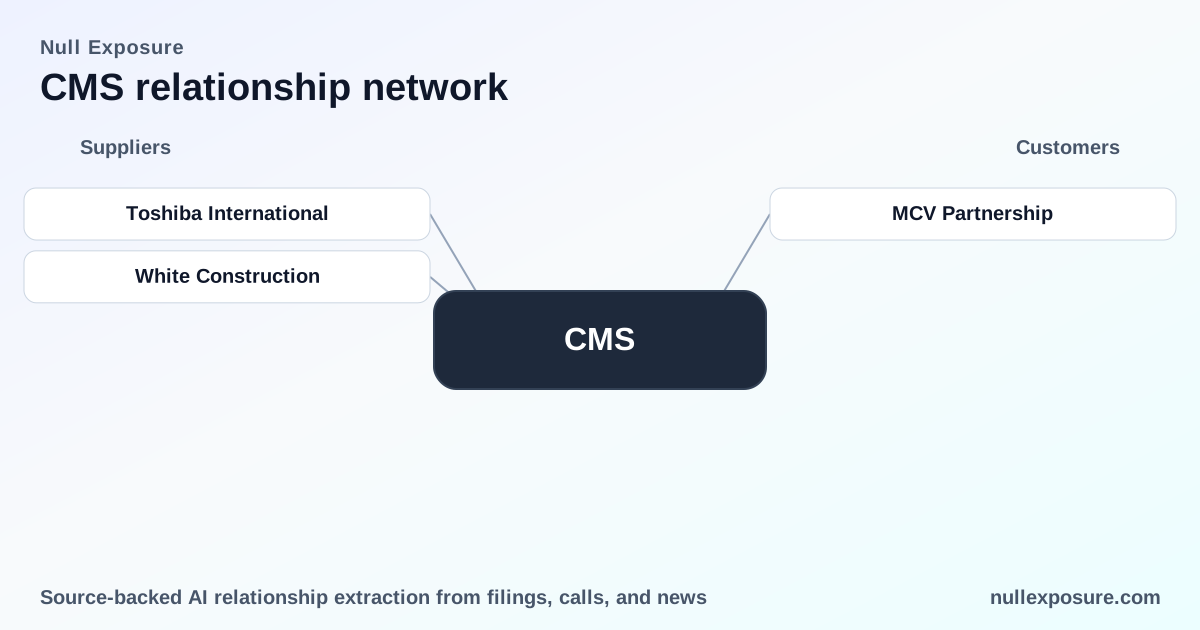
Toshiba International
Consumers and DTE Electric, co‑owners of the Ludington facility, executed an engineering, procurement and construction agreement with Toshiba International under earlier project arrangements that remain referenced in CMS’s filing narrative. This indicates Toshiba’s historical role as an EPC counterparty on major generation infrastructure. According to CMS Energy’s 2025 Form 10‑K, the company documents that EPC relationship in its discussion of Ludington project arrangements (FY2025 10‑K).
White Construction
White Construction served as lead contractor on Phase II of the Cross Winds Energy Park, building 19 turbines that are 499 feet tall, demonstrating CMS/affiliates’ reliance on specialized construction firms for onshore wind buildouts. A CSRwire press release describing Consumers Energy’s operational start of Cross Winds Energy Park II identifies White Construction as the lead contractor (CSRwire, March 2026).
What these counterparties imply for operators and investors
The two disclosed relationships underscore two separate but complementary risk vectors:
- Legacy EPC and heavy equipment vendors (Toshiba International): These relationships reflect long‑dated capital projects where contracting terms, warranty liabilities and completion risk historically drive contingent obligations and potential schedule‑related costs. EPC counterparties introduce program execution risk but do not change the long‑term PPA economics embedded in regulated returns.
- Renewables constructors (White Construction): Outsourced construction for utility‑scale wind points to execution and workforce risk in the near term and to capital intensity in the renewables transition. Successful handover accelerates contracted PPA or offtake economics; delays increase short‑term construction spend and execution oversight needs.
Both relationship types are operationally critical; their failure to perform affects capex timing, regulatory filings, and near‑term cash flow.
Company‑level constraints that shape supplier exposure
CMS’s disclosures and constraint signals create a clear operating profile for supplier counterparties:
- Long‑term commitments are central. CMS reports that a significant share of supply is covered by long‑term PPAs and transportation contracts, and the company entered a new 10‑year PPA in September 2025 for up to 1,240 MW from an MCV facility effective in 2030. This produces multi‑year counterparty credit exposure and limited short‑term repricing flexibility.
- Short‑term and spot activities complement long‑term contracts. The utility uses short‑term capacity purchases and spot gas purchases to balance load near time of consumption, so vendors operating in the spot market interact with CMS at different contractual tenors.
- Service provider reliance. CMS leases and contracts for railcars, vehicles, and pipeline capacity, and uses agents to secure firm transportation, indicating operational dependency on third‑party logistics and service firms.
- Material spend concentration. CMS’s public figures and internal tables categorize procurement into meaningful spend bands, including $100M+ PPA exposures and recurring mid‑tens of millions per year with affiliates—information that guides counterparty credit limits and strategic sourcing.
These are company‑level signals that shape due diligence, supplier credit policy, and procurement strategy.
Investment implications and a practical checklist for diligence
For investors and operator teams, the supplier profile converts into actionable points:
- Assess counterparty credit and contract tenor. Prioritize counterparties to which CMS has multi‑year PPA exposure or significant construction obligations.
- Monitor project execution metrics. For major buildouts (e.g., Cross Winds), track schedule adherence and contractor substitutions—execution slippage translates directly to deferred cashflows and potential regulatory adjustments.
- Quantify affiliate flow‑through. Annual affiliate purchases (e.g., NorthStar Clean Energy purchases of $94M in 2025) should be analyzed for earnings transparency and potential related‑party governance risk.
- Stress test the PPA book. Model scenarios where spot prices, capex overruns, or counterparty defaults alter regulated rate cases or financing needs.
Key takeaway: CMS’s supplier risk is concentrated, long‑dated, and execution‑sensitive; investors must blend credit analysis with project oversight.
For a deeper supplier risk profile and to map counterparties across the capital plan, visit https://nullexposure.com/.
Final thought for portfolio managers and operators
CMS’s supplier relationships—spanning legacy EPC firms like Toshiba International and renewable constructors such as White Construction—are integral to the company’s regulated revenue model and transition strategy. The combination of material, long‑dated PPAs and outsourced construction work creates both predictability in cashflow and concentrated operational risk; disciplined counterparty credit limits and active project governance are required to protect value. If you want a consolidated supplier risk scorecard and prioritized due‑diligence checklist, go to https://nullexposure.com/ and compare supplier exposures across peers.