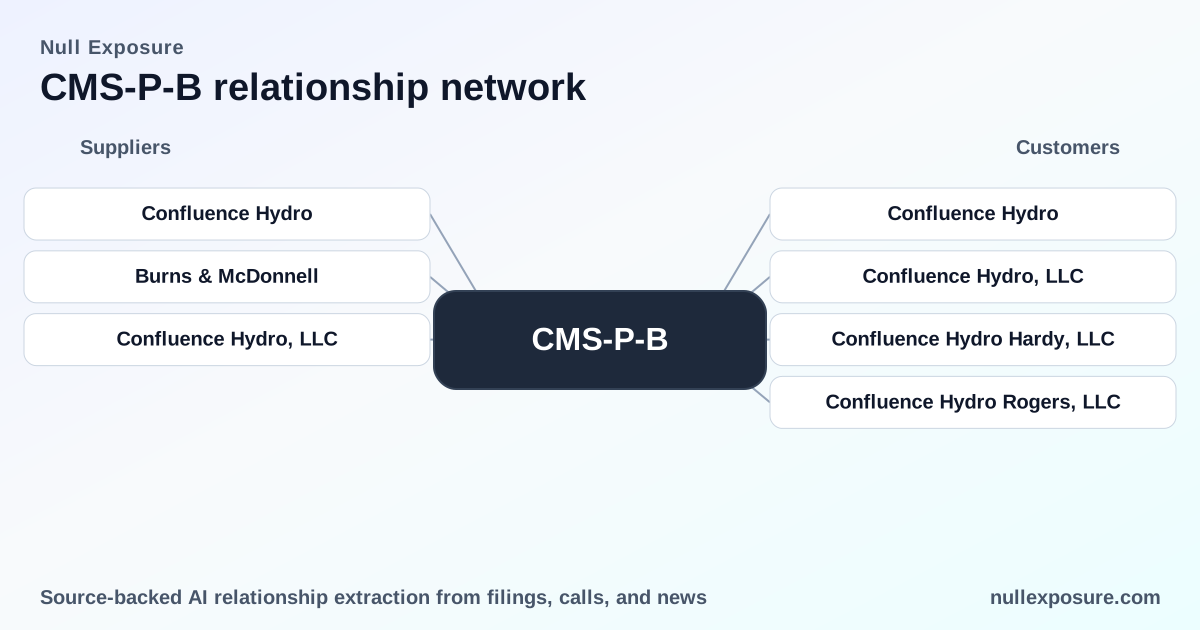
CMS Energy Preferred (CMS-P-B): Supplier relationships that shift operational leverage
CMS Energy is the holding company for regulated utility operations in Michigan (principally Consumers Energy) and monetizes through a rate-regulated electric and gas utility model: revenues flow from a regulated customer base, long-lived asset recovery in rate cases, and periodic capital programs. For holders of the CMS-P-B preferred issue, the critical lens is not short-term commodity exposure but the company’s contracting posture and counterparty arrangements that affect cash flow stability and regulatory outcomes for the underlying utility. Learn more at https://nullexposure.com/.
What happened and why it matters to investors
In late‑2025 and early‑2026 Consumers Energy executed two supplier arrangements that shift generation exposure off the utility balance sheet and replace operational control with long-term contracts. The common thread is duration and price fixation: the company is locking in long-term supply relationships that transfer asset ownership while preserving long-term power supplies to the utility. Those arrangements change the risk profile for rate recovery, regulatory scrutiny, and operating leverage — factors that matter directly to preferred holders because they affect the stability of the utility’s earnings and regulatory capital treatment.
- Key takeaway: Consumers Energy is reducing capital intensity by divesting generation assets while entering long-term purchase arrangements that create predictable, but potentially higher, contracted costs.
The relationships you need to know
Below I cover every supplier relationship surfaced in public reporting, with concise takeaways and source references.
Confluence Hydro / Confluence Hydro, LLC
Consumers Energy agreed to sell 13 hydroelectric dams in Michigan to Confluence Hydro, a Hull Street Energy subsidiary, for nominal consideration while entering a 30‑year contract to buy the power generated by those dams. This structure transfers asset ownership and operational responsibility to the buyer while preserving long-term energy supply to Consumers through a fixed-duration purchase agreement. According to Michigan Public Radio reporting (Sept 9, 2025) and concurrent coverage in Power Magazine (Sept 2025), the transaction pairs divestiture with a long-term supply contract; Detroit News reporting (Nov 7, 2025) noted the company will pay about $160 per MWh under the buyback, a level the utility’s spokesperson described as roughly twice typical hydropower costs. (Sources: Michigan Public Radio, Power Magazine, Detroit News — Sept–Nov 2025.)
Burns & McDonnell
Consumers Energy named Burns & McDonnell as a construction partner on its largest solar project, with company representatives publicly framing the work as a local, large-scale build and construction partnership in Muskegon. Burns & McDonnell’s involvement indicates reliance on experienced EPC contractors for utility-scale project delivery and local workforce coordination. The project was reported to be operational in January 2026 and Burns & McDonnell executives commented on the partnership and local labor contributions. (Source: 9&10 News, Jan 5, 2026.)
What these relationships reveal about CMS Energy’s operating model
Investors should read these supplier moves as deliberate adjustments to utility capital and contracting strategy:
- Contracting posture: The Confluence Hydro deal demonstrates a preference for asset sale plus long-term power purchase structure rather than continued ownership and O&M. That reduces rate‑base capital requirements but introduces long-term off‑balance-sheet expense obligations priced at a fixed level ($160/MWh reported for the hydro arrangement).
- Concentration and criticality: The 13 dams are discrete generation units concentrated in Michigan; handing them to a single private buyer and signing a 30‑year supply agreement centralizes operational reliance on a single counterparty for that resource block. For a regulated utility, that raises counterparty concentration risk even while physical supply remains local.
- Maturity and predictability: These supplier contracts are long-dated, which increases near‑term predictability of supply and costs for planning but can crystallize above-market cost structures over the long run if commodity prices decline relative to fixed contract prices.
- Contractual leverage in regulation: Long-term contracts change the regulatory calculus in rate cases because regulators evaluate whether contract costs are prudent and in customers’ interests; public reporting already shows regulatory attention (MPSC discussions reported in late 2025), which can affect cost recovery and the utility’s allowed returns.
These are company-level signals derived from observed supplier arrangements and public reporting rather than isolated vendor metrics.
Risks and upside for preferred investors
Preferred holders prize stability and predictable cash flows. These supplier transactions have mixed implications:
- Upside: Reduced capital intensity and outsourcing of operations can support stable credit metrics if rate recovery of contracted costs is allowed, because the utility avoids maintenance capex and can lock in supply continuity.
- Risk: Committed above-market pricing (reportedly $160/MWh for the hydro buyback) and increased counterparty concentration create potential for regulatory pushback and earnings pressure if regulators disallow full cost pass‑through or if market power prices soften over time.
- Execution risk: Large-scale solar construction reliant on EPC partners like Burns & McDonnell introduces construction and commissioning risk; however, using established contractors reduces delivery uncertainty relative to smaller firms.
Middle-of-report action point
If you are evaluating CMS‑P‑B exposure for portfolio allocation, monitor regulatory filings and MPSC proceedings closely; these will determine whether contracted costs are recoverable in rates. For a concise feed of supplier changes and regulatory outcomes, see https://nullexposure.com/.
Practical implications for portfolio managers
- Watch MPSC testimony and rate case dockets for any disallowances or cost adjustments tied to the Confluence Hydro PPA pricing.
- Track counterparty credit and operational performance at Confluence Hydro given the concentration of the hydro block under a long single counterparty.
- Monitor construction milestones and contract finalization for solar projects and the performance of Burns & McDonnell as the EPC, because delayed generation commissions affect system supply and short-term costs.
No explicit constraints captured — what that signals
The supplier-relationship scan returned no explicit contractual constraint entries. As a company-level signal, that absence indicates either limited public disclosure of granular contract terms beyond the broad headlines, or that structured constraints (e.g., covenants tied to supplier performance captured in third‑party feeds) are not publicly reported. Investors should therefore assume the main levers of risk are commercial terms and regulatory review, not obvious contractual covenants visible in public summaries.
Closing perspective and next steps
These supplier moves reconfigure CMS Energy’s operational profile: lower capital ownership, higher contracted supply commitments, and concentrated counterparty exposure. For preferred-stock investors, the immediate concern is whether regulators will permit pass‑through of the new contracted costs and how those costs influence utility cash flow stability.
If you want continued tracking of supplier arrangements, regulatory outcomes, and the implications for CMS preferred securities, visit https://nullexposure.com/ for ongoing coverage and alerts.