CMS Energy (CMSD) — supplier relationships that shape capital and operational risk
CMS Energy operates as a vertically integrated, rate‑regulated utility through Consumers Energy and CMS Gas Transmission, monetizing via regulated retail and wholesale electricity and natural gas sales, long‑term power purchase agreements (PPAs), and fee‑based gas transportation. The company’s cash flows are anchored in regulated returns and multi‑decade purchase commitments, with material capital and purchase obligations that drive counterparty exposure and liquidity planning. For investors and operators evaluating supplier risk, the 2025 Form 10‑K highlights a mix of owned generation acquisitions and long‑dated transportation and PPA arrangements that determine near‑term spend and longer‑term supply flexibility. Visit the NullExposure homepage for deeper supplier analytics: https://nullexposure.com/.
Business model and operating constraints — what to watch
- Long‑term contracting posture: CMS Energy relies heavily on long‑dated PPAs and transportation agreements that lock in supply and price exposures for decades. The company discloses PPA commitments extending through 2060 and total estimated future payments of roughly $17.0 billion, with annual cash outflows in the $0.9–$1.0 billion range over the next five years. These are explicit obligations that define both earnings stability and capital commitment. (Source: 2025 Form 10‑K.)
- Buyer and buyer‑dominant orientation: The corporate disclosures frame Consumers as a buyer of both energy and transportation services — purchasing gas near time of consumption for generation and contracting capacity through PPAs and short‑term market purchases to meet MISO reserve requirements. This buyer posture concentrates commercial and operational counterparty risk on suppliers of fuel and capacity. (Source: 2025 Form 10‑K.)
- Mixed tenor strategy: While the dominant posture is long‑term, the company supplements supply with short‑term capacity purchases and market transactions to satisfy reserve margins and seasonal demand, reflecting an operational need for flexibility within a largely long‑dated portfolio. (Source: 2025 Form 10‑K.)
- Spend concentration and scale: CMS reports both very large, multi‑billion dollar PPA commitments and mid‑sized affiliate purchases (for example, purchases from NorthStar Clean Energy affiliates in the $71–$94 million range across recent years), indicating a two‑tiered spend profile that combines strategic, high‑value commitments with recurring, moderate spending. (Source: 2025 Form 10‑K.)
- Contract maturity and criticality: Contract expirations run into 2060 for some PPAs; transportation contracts extend multi‑year and are operationally critical for fuel delivery to generation assets. These maturities and the essential nature of certain contracts increase the strategic importance of counterparty credit and operational reliability. (Source: 2025 Form 10‑K.)
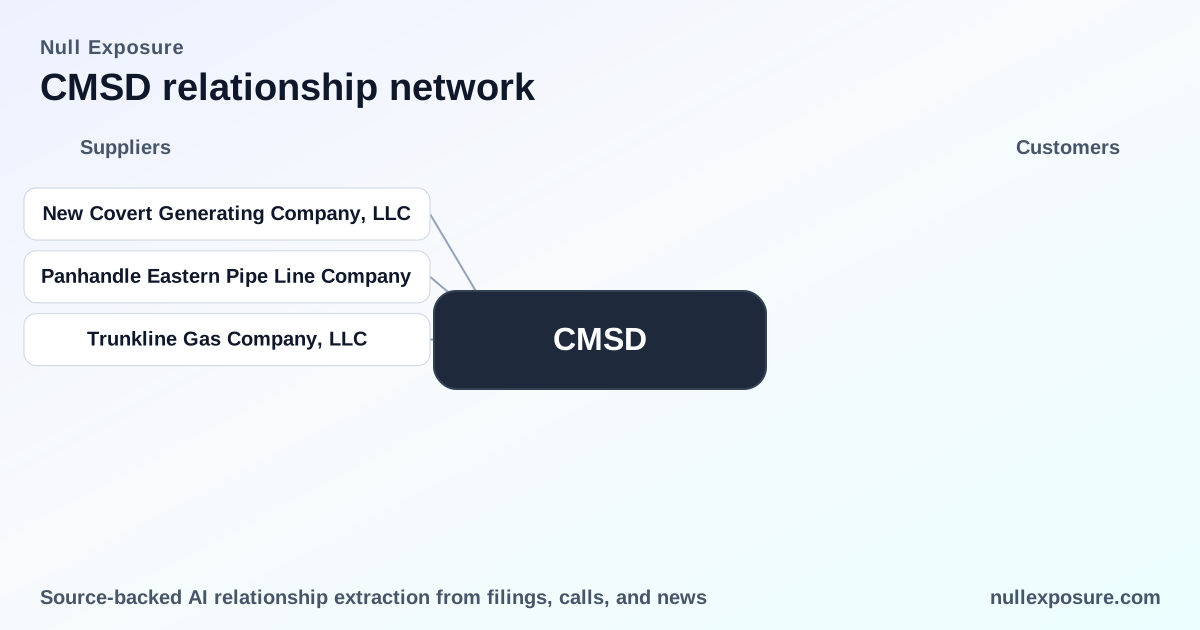
Supplier relationships called out in CMS Energy’s 2025 filing Below I list every counterparty mentioned in the supplier scope of the 2025 10‑K results and provide the plain‑English takeaways investors need.
New Covert Generating Company, LLC
Consumers acquired the Covert Generating Station A, a 1,200‑MW natural gas‑fueled plant, from New Covert Generating Company, LLC in 2023; the seller is identified as a non‑affiliated company, indicating a discrete M&A‑style supplier/transaction relationship rather than an ongoing PPA with the same counterparty. (Source: CMS Energy 2025 Form 10‑K, fiscal year 2025.)
Panhandle Eastern Pipe Line Company
Consumers has firm gas transportation contracts with Panhandle Eastern Pipe Line Company as a non‑affiliated counterparty, making Panhandle a critical transporter for natural gas supplies that support electric generation and utility gas operations. (Source: CMS Energy 2025 Form 10‑K, fiscal year 2025.)
Trunkline Gas Company, LLC
Trunkline Gas Company, LLC is listed alongside Panhandle as a firm gas transportation counterparty, responsible for committed pipeline capacity that underpins Consumers’ fuel logistics for generation and gas distribution. (Source: CMS Energy 2025 Form 10‑K, fiscal year 2025.)
Operational and investment implications for buyers and operators
- Balance between ownership and contracts: The acquisition of a 1,200‑MW plant signals a shift toward greater owned capacity, which reduces counterparty exposure to some PPAs but increases capital deployment and operating responsibilities for the company. Ownership transfers a different risk profile — operational and debt financing risk in exchange for reduced merchant exposure. (Source: 2025 Form 10‑K.)
- Pipeline dependency is strategic and concentrated: Firm transportation contracts with Panhandle and Trunkline make pipeline counterparties operationally critical; any service disruption or contract dispute would directly affect fuel availability for generation. Investors should treat these contracts as essential infrastructure relationships when modeling outage or commodity‑delivery scenarios. (Source: 2025 Form 10‑K.)
- Large, predictable cash commitments: The PPA portfolio represents a material long‑term cash liability — estimated future PPA payments about $17.0 billion with roughly $0.9–$1.0 billion annually in the near term — which constrains free cash flow and informs refinancing and dividend capacity analysis. These are not contingent exposures; they are contractual payment streams that underpin both earnings stability and cash pressure. (Source: 2025 Form 10‑K.)
- Counterparty credit and concentration screening is necessary: Given the mix of non‑affiliated suppliers and affiliate purchases in the $10–100 million band, investors should layer credit assessment and concentration limits into any supplier‑risk model. Mid‑sized affiliate purchases and large external PPAs create multiple risk vectors that require distinct monitoring processes. (Source: 2025 Form 10‑K.)
If you want an operational view tied to counterparty scores and contract maturities, NullExposure maintains supplier profiles and contract analytics on the homepage: https://nullexposure.com/.
What to monitor next quarter
- Watch for amendments to material PPAs or early buyouts that would change the $17 billion commitment profile.
- Track any changes to firm pipeline capacity agreements and notices from Panhandle or Trunkline that could signal renegotiation risk or capacity reassignments.
- Monitor capital markets activity since CMS’s large purchase obligations and owned generation additions have direct implications for leverage and refinancing needs.
Bottom line: where this matters for portfolio managers CMS Energy’s supplier footprint combines very large, long‑dated PPAs with essential firm pipeline contracts and selective acquisitions of generation capacity. That mix produces predictable regulated cash flows but also significant long‑term payment obligations and operational dependency on pipeline counterparties. For investors, the critical questions are counterparty credit quality, contract maturity alignment with rate base recovery, and the balance between owned generation versus purchased power. For a deeper supplier risk breakdown and model inputs, visit the NullExposure homepage: https://nullexposure.com/.
Key takeaways in brief
- Large, long‑dated PPA commitments (~$17.0B) anchor cash outflows. (2025 Form 10‑K)
- Pipeline counterparties (Panhandle, Trunkline) are operationally critical for fuel delivery. (2025 Form 10‑K)
- Acquisition of Covert Generating Station A increases owned capacity and shifts contract risk into operational and financing risk. (2025 Form 10‑K)
For bespoke supplier diligence and counterparty scoring to inform investment decisions, visit https://nullexposure.com/.