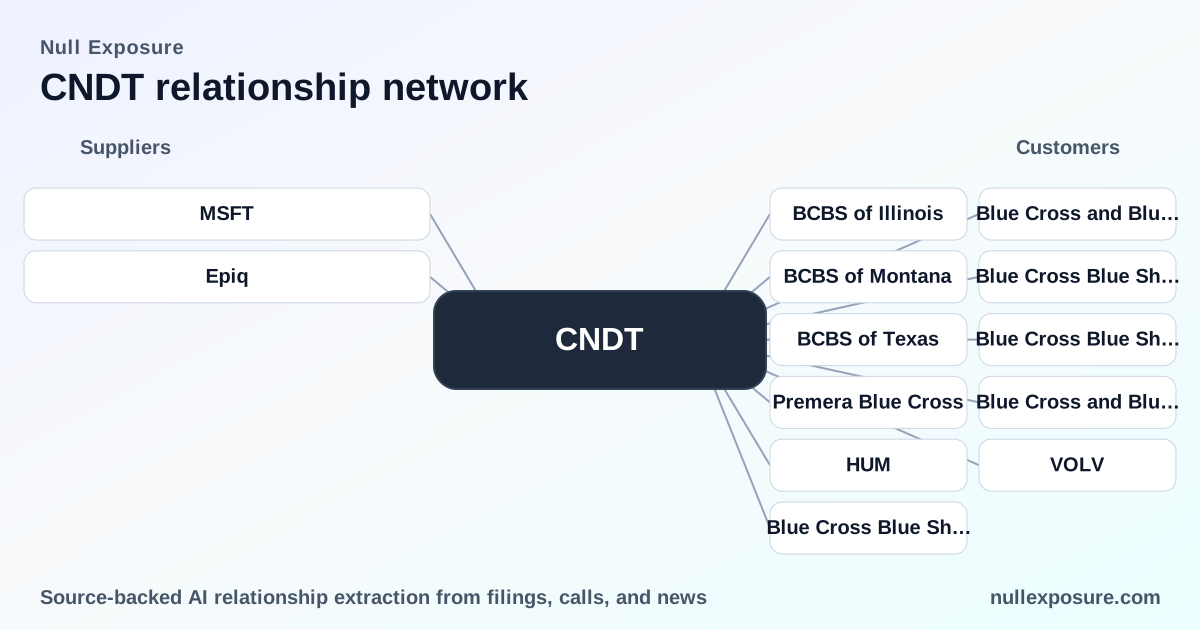
Conduent (CNDT): supplier relationships that shape execution risk and modernization upside
Conduent is a transaction‑intensive business process outsourcer that monetizes through contracted services—workflow processing, analytics and automation—sold to governments and large enterprises. The company generates approximately $3.04 billion in trailing revenue but trades at a small market capitalization near $192 million, reflecting persistent margin pressure and negative EPS; supplier relationships therefore have outsized influence on both operational delivery and remediation costs. For investors evaluating CNDT as a counterparty or vendor, the lens should be on technology suppliers that enable automation and security/remediation partners that limit reputational downside. Learn more on the Null Exposure homepage: https://nullexposure.com/
How Conduent operates and why supplier posture matters
Conduent’s business model is execution‑centric: the firm sells outsourced transaction processing and relies on third parties to provide cloud, AI, and customer‑facing remediation services. That structure creates two clear supplier archetypes: strategic technology partners that scale capabilities (longer maturity, higher criticality) and response vendors used for incident management and regulatory compliance (shorter engagement, reputational focus).
Company‑level procurement signals confirm this posture. Conduent discloses contract commitments of $348 million as of December 31, 2024, with $147 million due within 12 months, which establishes a high near‑term supplier spend profile and a procurement‑led operating rhythm. These facts imply:
- Contracting posture: Buyer with multi‑year commitments; procurement will exert leverage on price and SLAs.
- Spend concentration: Company‑level spend bands exceed $100 million in committed purchases, suggesting material vendor exposure.
- Criticality and maturity: Technology suppliers for processing and AI are operationally critical and likely contracted on multi‑year terms; remediation vendors are critical for short windows after incidents.
These procurement dynamics matter because Conduent’s revenue is tied to uninterrupted processing performance and to regulatory and reputational containment when incidents occur. If you need a deeper supplier map, start at Null Exposure: https://nullexposure.com/
Supplier map: Microsoft and Epiq — what investors need to know
Microsoft — cloud and generative AI partner
Conduent is deploying generative AI solutions built on Microsoft Azure OpenAI to guide agents through complex workflows in real time, positioning Microsoft as a strategic technology supplier that underpins Conduent’s service modernization and potential productivity gains. According to a CRN feature in March 2026, one Conduent solution uses Azure OpenAI to assist agents in real‑time workflow execution, which increases the business’ reliance on Microsoft’s cloud and AI stack for differentiating service delivery and scalability. (CRN, March 9, 2026)
Epiq — identity restoration and breach remediation vendor
Following a major incident, Conduent is offering affected individuals free credit monitoring and identity restoration services through Epiq, with enrollment deadlines communicated in March 2026; Epiq acts as a remediation vendor focused on reputational and regulatory containment. A Gizmodo report in March 2026 described Conduent’s communication to victims, confirming the engagement with Epiq and the time‑bound nature of the remediation offer. (Gizmodo, March 2026)
What these relationships signal for execution, risk, and valuation
The Microsoft and Epiq relationships present complementary strategic signals rather than redundancy.
- Microsoft is a forward‑looking supplier tied to growth and margin improvement. Adoption of Azure OpenAI is a technology modernization lever that can increase throughput and lower per‑transaction cost if implemented at scale; this is operationally critical and likely governed by evergreen cloud contracts and data processing agreements. That dependency increases vendor concentration risk but also raises the potential upside from productivity gains and new service offerings.
- Epiq is a contingency supplier tied to reputational management. The Epiq engagement is reactive and cost‑centered; it reduces legal and reputational exposure but is not a revenue driver. Use of a recognized remediation provider is the correct play from a governance perspective and reduces tail risk from consumer data incidents.
Financial and governance implications include:
- Margin sensitivity to external tech costs. With operating margins near zero and negative net income, any shift in cloud or AI vendor pricing, or additional remediation expenses, will flow directly to the bottom line.
- Procurement leverage and concentration risk. The disclosed $348 million in commitments signals material near‑term vendor spend; investors should treat large cloud or service contracts as value drivers and potential single‑point failures for contract renegotiation risk.
- Regulatory and reputational exposure. Engagements like the Epiq remediation program indicate exposure to consumer privacy incidents; the cost of remediation and attendant legal actions is a measurable downside that investors must price into scenario analysis.
A practical diligence checklist for suppliers and counterparties
For investors or operators underwriting exposure to Conduent, focus due diligence on these operational controls and contractual artifacts:
- Confirm the scope and term of Microsoft Azure/OpenAI agreements, SLAs for uptime, data residency, and indemnities.
- Review financial commitments and payment schedules related to vendor contracts to assess liquidity strain from near‑term obligations.
- Verify the post‑incident playbook: who manages notifications, scope of covered services (Epiq‑style offerings), and budget lines for remediation and legal reserves.
- Assess concentration: what portion of processing workloads runs on a single cloud provider versus multi‑cloud or hybrid setups.
These checks map directly to Conduent’s risk profile: technology dependency, procurement concentration, and remediation exposure.
Call out: if you want a structured supplier risk report on Conduent, visit https://nullexposure.com/ for vendor intelligence and supplier‑relationship analytics.
Bottom line: calibrated opportunity with asymmetric operational risk
Conduent is a classic execution‑dependent services business: technology partnerships like Microsoft offer modernization upside, but remediation relationships like Epiq highlight material downside from operational incidents. The company’s disclosed purchase commitments above $300 million create a procurement‑intensive posture that amplifies both negotiation leverage and vendor concentration risk.
For investors and operators, the decision framework is simple: underwrite expected productivity gains from AI/cloud contracts against the probability and cost of further operational incidents and remediation obligations. Prioritize visibility into contract terms, SLA enforcement, and the composition of near‑term spend.
For ongoing monitoring and a deeper supplier‑level view of Conduent, see the full profile at Null Exposure: https://nullexposure.com/ and request a tailored supplier diligence brief.