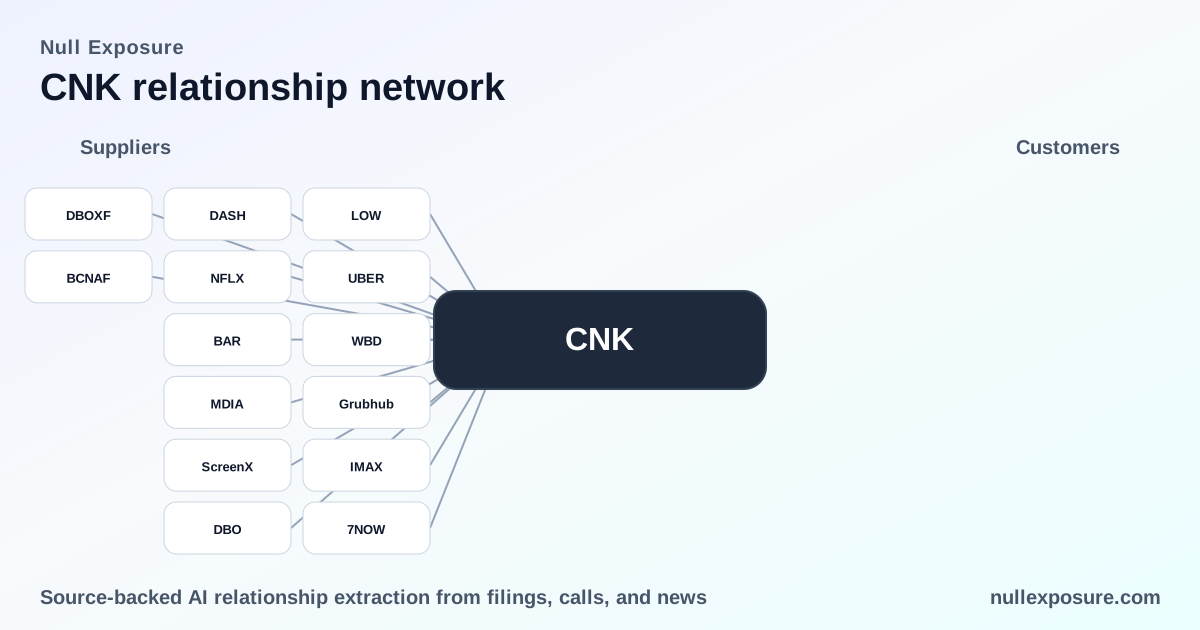
Cinemark (CNK) — supplier relationships that drive premium exhibition economics
Cinemark runs and monetizes a national and international movie theater chain by selling tickets, concessions and premium-format experiences while contracting film licensing and technology services; the company earns box office shares under negotiated film rental terms and boosts per-guest revenue through concession partnerships and premium-seat / premium-screen agreements. Investor focus: content licensing, projection and seating partners, and delivery/retail alliances are the direct levers on margins and guest frequency.
Explore supplier profiles and relationship risk for deal teams at https://nullexposure.com/.
How Cinemark’s commercial engine works, in plain English
Cinemark’s economics are straightforward: box office revenue is shared with studios under pre-negotiated licensing formulas and concession sales deliver higher-margin cash flow. The company invests in premium formats (XD, IMAX, ScreenX) and premium seating (Luxury Lounger, D-BOX) to extract higher average revenue per patron, while third-party distributors and delivery platforms extend concessions beyond theater walls. Technology uptime and consistent film supply are operationally critical to sustaining the chain’s throughput and profitability.
Company-level contracting posture and constraints you should bake into models
- Contracting posture: Cinemark operates as both a licensee of film content and a licensor/service purchaser for pre-show advertising and exhibition services; formal Exhibitor Services Agreements and studio licensing formulas shape cash flow timing and film rental accruals (evidence in company filings).
- Concentration and spend profile: The company discloses theater lease payments in the tens of millions to certain landlords (roughly $22m per year to a named lessor), film rental line items in the low millions for specific titles, and de minimis amounts for occasional corporate aircraft usage — this combination shows material but diversified counterparties across leases, studios and tech vendors.
- Criticality and maturity: Relationships with projection and premium-format vendors (Barco, IMAX, ScreenX) and seating/motion suppliers (D-BOX) are operationally critical because they directly affect guest experience and ticket premium; many of these supplier contracts are long-term or renewed regularly, indicating a mature contracting posture.
- Role mix: Public filings identify roles across licensor, licensee, distributor and service-provider relationships, demonstrating Cinemark’s multi-sided supplier exposure rather than a single-source dependency.
Direct supplier and partner roll-call (FY2026 mentions)
Below is a concise plain-English statement for every supplier or partner referenced in the results.
- Lowe’s — Cinemark ran a joint promotional program tied to National Popcorn Day and the Bring Your Own Bucket event, leveraging Lowe’s retail footprint for experiential marketing and cross-promotion (Cinemark press release, Mar 9, 2026).
- UberEats — Cinemark has a national partnership to deliver theater concessions to customers through Uber Eats, extending concession revenue outside auditoriums (Cinemark press release, Mar 9, 2026).
- Warner Brothers — Management referenced Warner Brothers as a significant studio partner that delivered record box office performance in 2025, underscoring the studio’s importance to theatrical content flow and revenue (Q4 2025 earnings call transcript, InsiderMonkey).
- Grubhub — Cinemark named Grubhub among national delivery partners to fulfill at-home concessions demand, broadening concession distribution channels (Cinemark press release, Mar 9, 2026).
- IMAX — Cinemark deploys IMAX in many locations as part of its premium-screen mix alongside XD and ScreenX, and cited all-time high results across enhanced formats in FY2025/2026 reporting (earnings highlights, Intellectia.ai and StockTitan, FY2026).
- 7NOW — Included in Cinemark’s list of national delivery partners, 7NOW is used to deliver concessions and expand guest reach beyond theater visits (Cinemark press release, Mar 9, 2026).
- DoorDash — Cinemark formalized a national partnership with DoorDash to support concession delivery and off-premise sales growth (Cinemark press release, Mar 9, 2026).
- Netflix — Management discussed Netflix as a content-platform peer that could recognize theatrical opportunity; the comment signals evolving studio/platform dynamics relevant to content licensing strategy (Q4 2025 earnings call transcript, InsiderMonkey).
- Barco — Cinemark cites Barco laser projection as part of its superior sight-and-sound technology stack and reports industry-leading uptime, making Barco a critical projection supplier across the estate (press releases and FY2025 highlights, FinancialContent / Cinemark investor releases, FY2026).
- MDI (MDIA) — Cinemark renewed an exclusive global supply agreement with MDI for cinema screens, indicating a sustained strategic supplier relationship for auditorium infrastructure (newswire coverage, CelluloidJunkie, FY2026).
- ScreenX — Cinemark lists ScreenX among its enhanced formats and credited ScreenX with contributing to all-time high box office results in FY2025, reflecting adoption of multi-format exhibition (earnings highlights and press coverage, FY2026).
- D-BOX — Cinemark reported a large footprint of D-BOX motion seats (nearly 500 auditoriums) and lists D-BOX as part of its premium seating portfolio, connecting supplier deployment to revenue-enhancing amenities (press materials and earnings disclosures, FY2026).
Mid‑analysis call-to-action
For underwriting teams that need the full supplier surface and implications for contract continuity, visit https://nullexposure.com/ to see how these relationships map to vendor risk and spend exposure.
What these relationships mean for investors and operators
- Content dependence drives top-line volatility. Studio partners like Warner Brothers and platform comments about Netflix directly influence Cinemark’s box office trajectory; film rental formulas determine margin flow-through and timing.
- Technology and seating partners are primary margin multipliers. Agreements with Barco, IMAX, ScreenX and D-BOX enable Cinemark to charge a premium and generate higher concession attach rates; operational uptime (Cinemark cited ~99.98% uptime) preserves show counts and revenue.
- Distribution partnerships expand margins while diversifying channels. Delivery platforms (Uber Eats, DoorDash, Grubhub, 7NOW) convert concessions into an omnichannel revenue stream that reduces dependence on in-theater attendance alone.
- Spend concentration is mixed, not single-source. Disclosed lease payments to specific lessors are material but not singular; film rental items can be title-specific and smaller in aggregate for certain independent films. This indicates balanced counterparty exposure if studio slate and tech contracts remain intact.
Risks to model and monitor
- Studio timing and licensing mechanics — negotiated sliding-scale and firm-term film rental formulas directly affect gross margins and cash settlement timing.
- Premium format supply chain — delays or contract disputes with Barco, IMAX, MDI or D-BOX would constrain expansion plans and potential per-seat economics.
- Service continuity with delivery partners — changes in delivery economics or platform promo strategies can reduce off-premise concession profitability.
- Lease obligations — theater lease cash flows are meaningful and recurring; landlord concentration for specific clusters creates location-level risk.
Final assessment and investor takeaway
Cinemark’s supplier universe is deliberately diversified across studios, projection and seat vendors, delivery platforms and promotional retail partners. For investors, the key operating lever is the company’s ability to convert premium-screen and seating investments into durable pricing power while managing film licensing economics. Monitor studio slate health, premium-format uptime, and delivery-partner margins; these three variables will materially move profitability and valuation multiples.
Discover deeper counterparty mapping and supplier risk scores at https://nullexposure.com/ — essential for underwriting theater-sector exposure and operational continuity.