Cannae Holdings (CNNE): Supplier relationships and what they reveal for investors
Cannae Holdings operates as an investment firm that monetizes capital through a mix of operating subsidiaries and externally managed businesses, collecting fees and dividends while reinvesting across consumer-facing holdings. Its model blends asset management, concentrated operating exposures (notably a Restaurant Group), and balance-sheet leasing/purchase commitments; revenue flows from subsidiary cash generation and realized investment returns, while corporate expenses include management fees, professional services, and investor/transfer agent functions. For investors focused on counterparty risk and supplier concentration, Cannae’s public filings show a compact set of recurring third‑party relationships that support governance, investor relations, transfer agency and auditing, and a legacy external manager arrangement with measurable contract terms. Read on for an actionable map of those relationships and the company‑level constraints that matter for underwriting CNNE exposure. For partner and counterparty intelligence, visit https://nullexposure.com/.
Quick take: why supplier mapping matters for CNNE investors
Cannae’s operating profile is not a broad consumer supply chain — it is an investment holding company with a handful of critical vendor relationships. That makes each supplier more operationally and reputationally material than an individual vendor in a diversified manufacturer. Key implications: governance and proxy services, investor communications, transfer agency and audit quality are direct drivers of corporate reporting and market access; the legacy external manager relationship imposes contractual termination economics and potential corporate governance contention. Investors should treat vendor contracts as strategic levers rather than line-item costs.
The counterparty roster — who Cannae does business with
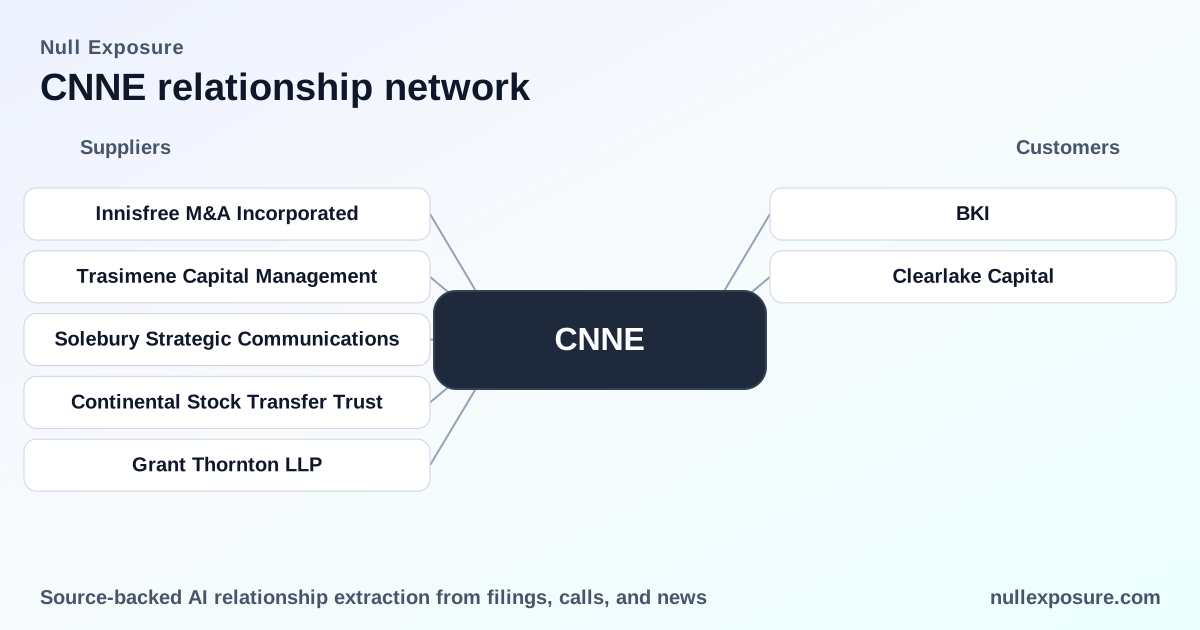
Below I list every supplier relationship surfaced in the available results, with a concise plain‑English summary and source for each.
Innisfree M&A Incorporated
Innisfree serves as Cannae’s proxy solicitor and shareholder‑voting contact, handling voting assistance and shareholder communication for annual meetings; contact details and call numbers appear in the company’s proxy and investor materials filed in late 2025. According to Cannae’s definitive proxy materials filed in November 2025 (Business Wire / FinancialContent distribution), Innisfree is named as the company’s proxy solicitor and primary voting contact.
Trasimene Capital Management
Trasimene was Cannae’s external manager under a multi‑year Management Services Agreement and is explicitly named in filings describing a Third Amended and Restated Management Services Agreement with termination provisions; activist letters and proxy contest materials reference converting termination fees into performance‑based equity as a governance remedy. A GlobeNewswire/Globe and related activist correspondence in 2025 note Trasimene’s recent role as external manager and debate over the manager termination economics (proxy filings and activist letters, 2025–2026).
Solebury Strategic Communications
Solebury provides investor relations support for Cannae, with a named managing director contact (Jamie Lillis) cited in investor presentations and SEC filings; investor communications in late 2025 list Solebury as the IR point of contact. Market releases and investor presentation distributions in 2025 identify Solebury Strategic Communications as the company’s IR advisor and contact.
Continental Stock Transfer Trust
Continental Stock Transfer is listed as transfer agent for Cannae, handling share transfer and proxy distribution logistics; this designation appears in a March 2026 SEC 8‑K reporting a material event. The company’s 8‑K filed in March 2026 names Continental Stock Transfer Trust as transfer agent and provides its New York contact information.
Grant Thornton LLP
Grant Thornton is identified as Cannae’s independent auditor in the March 2026 8‑K, indicating the external audit relationship that underpins financial reporting assurance. The March 2026 SEC 8‑K lists Grant Thornton LLP (Newport Beach office) as the company’s independent auditors.
What these relationships tell investors about Cannae’s operating model
Cannae’s supplier map communicates five practical characteristics that affect credit and operational risk.
- Contracting posture — concentrated and contract‑driven. The vendor list is small and functionally central: proxy solicitation, transfer agency, audit and investor relations are single‑point services rather than a diffuse network. Concentration increases the operational and reputational impact of any counterparty disruption.
- Maturity of relationships — multi‑year and documented. The management services agreement that tied Trasimene to Cannae is long‑dated, with an explicit termination date (June 30, 2027) noted in corporate filings; leases and purchase commitments reported elsewhere indicate extended contractual commitments across the group.
- Role and criticality — strategic rather than commodity. These suppliers are not commodity vendors; they are governance, communication and reporting partners whose performance directly affects liquidity, shareholder engagement and compliance.
- Spend and scale signals — material commitments exist at the company level. Company filings disclose large lease obligations (undiscounted lease payments
$218.1M) and purchase commitments ($60.2M), indicating meaningful ongoing spend that underwrites operating subsidiaries even if individual suppliers for those categories are not enumerated in the public record. - Buyer posture — active counterparty management. Filings describe unconditional purchase obligations in the Restaurant Group and an active buyer relationship with fixed commitments and annual price adjustments, signaling a procurement function that must manage commodity and vendor risk.
Note: the long‑term nature of the Management Services Agreement explicitly names Trasimene; other contract and spend signals are company‑level indicators rather than tied to a single supplier unless the filing explicitly does so.
Governance friction and investor activism — practical risk considerations
Activist correspondence and proxy materials from 2025–2026 highlight governance tension around management fees and termination economics, with at least one investor group advocating conversion of termination fees into performance‑based equity. This dynamic raises the probability of governance‑driven cost reallocation or management turnover, which are directly relevant for forecasting corporate SG&A and incentive expenses. The proxy contest cycle also emphasizes the operational importance of proxy solicitors and IR advisors in shaping shareholder outcomes.
(If you track supplier risk for portfolio companies, you can explore structured counterparty intelligence at https://nullexposure.com/.)
Actionable takeaways for investors and operators
- Treat each listed supplier as strategically material. Proxy solicitors, transfer agents and auditors are single points of failure for corporate communications and reporting. Confirm continuity plans and contract terms when underwriting equity or conducting diligence.
- Model for governance risk in near‑term expense forecasts. Management fees tied to an external manager and activist pressures can shift reported SG&A and create non‑recurring termination items; reflect this in scenario work.
- Incorporate lease and purchase commitments into liquidity assessments. Unconditional commitments (leases ~$218M; purchase commitments ~$60.2M) are real cash drains that affect free cash flow and must be stressed in downside cases.
For deeper counterparty profiles and to monitor changes to these relationships in real time, visit https://nullexposure.com/.
Closing: what to watch next
Near‑term catalysts that will alter the supplier landscape for Cannae include proxy vote outcomes, any renegotiation or termination of the Trasimene management agreement, and the annual audit/8‑K filings that confirm auditor and transfer agent status. Investors should prioritize monitoring proxy filings and SEC material events for first‑order changes to these vendor relationships. For a streamlined view of supplier exposure and governance signals across your portfolio, see https://nullexposure.com/.