ConnectOne Bancorp (CNOBP): supplier relationships that matter for investors
ConnectOne Bancorp operates as a regional bank through ConnectOne Bank, monetizing primarily through net interest income on tailored commercial and consumer lending, plus fee-based treasury management and deposit services. Its operational footprint is supported by a mix of transaction-era advisors, legal counsel, third‑party IT and security vendors, and hedging counterparties that together shape execution risk and capital volatility. For investors, the relevant lens is not the number of suppliers but the role they play in deal execution, balance-sheet protection, and continuity of operations.
Explore supplier maps and counterparty intelligence at NullExposure.
Why the advisors and counsel here are more than PR
ConnectOne’s most visible supplier engagements in the public record relate to advisory and legal support around transaction activity. Advisor and counsel relationships are typically high-impact, short-duration, and low-recurring-cost, which concentrates operational risk into specific events (M&A, capital raises, regulatory interactions) rather than day-to-day revenue generation. That dynamic makes these suppliers important for execution risk but not for ongoing margin stability.
Who ConnectOne hired for its recent transaction—and why it matters
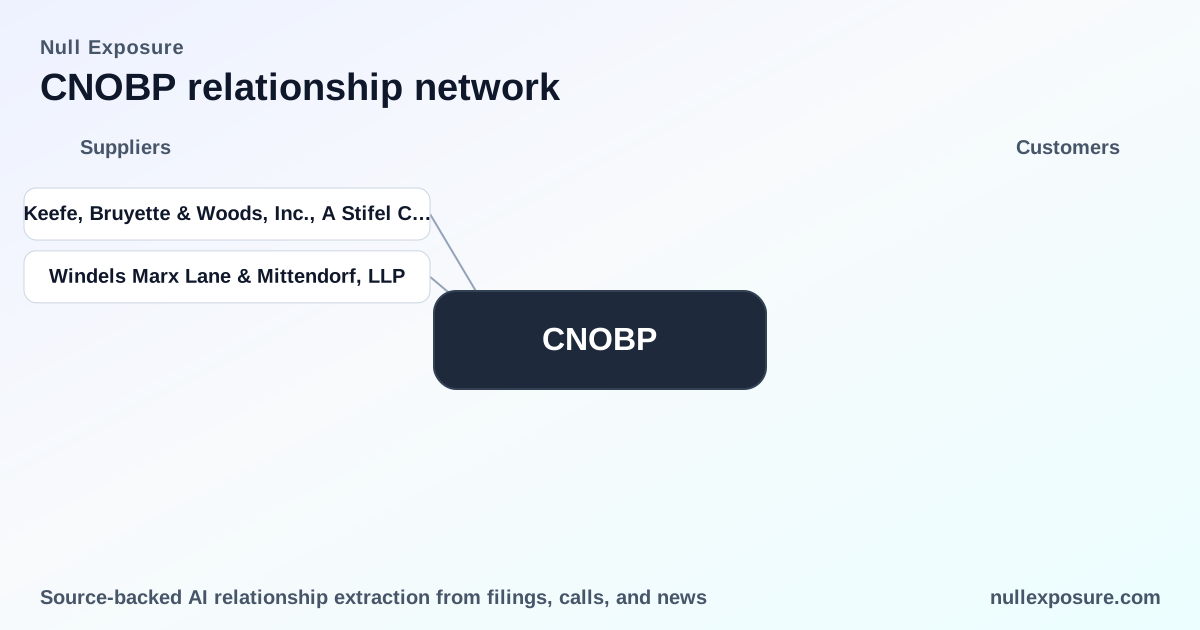
Keefe, Bruyette & Woods, Inc., A Stifel Company
Keefe, Bruyette & Woods acted as financial advisor to ConnectOne on the recently announced merger, providing deal valuation, structuring and negotiation support. According to the transaction announcement reported by Yahoo Finance on March 9, 2026, the firm served as the bank’s financial advisor during the deal process (https://finance.yahoo.com/news/connectone-bancorp-inc-completes-merger-110000212.html).
Windels Marx Lane & Mittendorf, LLP
Windels Marx Lane & Mittendorf served as legal counsel to ConnectOne for the same transaction, handling regulatory filings and transaction documentation. The same March 9, 2026 Yahoo Finance report identifies Windels Marx as the company’s legal counsel during the merger announcement (https://finance.yahoo.com/news/connectone-bancorp-inc-completes-merger-110000212.html).
Company-level constraints that change how suppliers should be evaluated
The public disclosures and filings provide four useful signals about ConnectOne’s supplier posture:
-
Long-term hedges in place: The company disclosed swaps with expirations stretching from December 2025 to March 2028, indicating multi-year hedging relationships with counterparties and an active interest-rate risk management program. This is a company-level signal about exposure to derivative counterparties and the time horizon of those contractual commitments.
-
Immaterial vendor spend in some categories: The firm notes that fees to at least one advertising and public relations agency—where a director also serves as President and CEO—are insignificant to operations, signaling low spend concentration in marketing vendors and limited economic dependence on that relationship.
-
Service-provider posture is dominant: Filings describe third‑party engagement for annual penetration and vulnerability testing and the leasing of banking offices (including related‑party leases). These excerpts indicate ConnectOne relies on specialized service providers for security, premises, and other operational functions, which creates discrete operational dependency points.
-
Active, effective hedges: Management reports the swaps are fully effective for hedge accounting purposes and expects that effectiveness to persist through the swaps’ remaining terms—evidence that counterparty performance and internal controls around hedging are functioning in the near term.
Each of these constraints is a company-level characteristic rather than a supplier-specific claim; they shape how investors should assess counterparties across the board.
What this pattern implies for counterparty risk and concentration
The supplier pattern at ConnectOne is characteristic of a regional bank that uses transactional advisory relationships for discrete events and specialized service providers for ongoing controls. That mix produces three investor-relevant implications:
-
Low recurring vendor spend reduces ongoing counterparty concentration: Because advisor and counsel roles are transaction-driven, they do not typically contribute to sustained dependence on a single firm’s services. This reduces operational concentration risk relative to a company that outsources core processing or treasury functions to a single third party.
-
Hedging counterparties are the material continuity exposure: The existence of multi-year swaps makes counterparties to those derivatives higher‑impact suppliers for balance-sheet stability; the disclosed effectiveness of the hedges is a positive sign, but duration and counterparty creditworthiness deserve monitoring.
-
Service providers for cybersecurity and premises are critical for operational resilience: Annual penetration testing and leased offices (including related-party leases) create single points of failure for security and branch access; these are not big-dollar marketing relationships but are critical to operations and regulatory compliance.
These takeaways should guide due diligence priorities: hedge counterparty credit, vendor security performance, and the tenure/continuity of legal and advisory relationships for future transactions.
Explore transaction and counterparty analytics for CNOBP at NullExposure.
Monitoring checklist for investment and operational oversight
Investors and operators evaluating ConnectOne supplier risk should prioritize a compact set of indicators:
- Counterparty credit metrics and collateral arrangements for the swaps that run through March 2028.
- Continuity plans and vendor validation for the penetration‑testing provider and other IT security suppliers.
- Terms and governance around related‑party leases to assess lock-in and potential governance conflicts.
- Track the selection and remuneration of advisors and counsel for future M&A or capital activities, since execution quality drives deal outcomes.
Active monitoring of these items will materially reduce surprise risk tied to both transactional outcomes and balance-sheet volatility.
Bottom line — how suppliers affect the investment case
ConnectOne’s supplier footprint is concentrated in transactional advisory services and discrete operational service providers, with multi-year hedges layering incremental counterparty exposure. Advisors and counsel are execution levers rather than ongoing revenue drivers; hedging counterparties and critical service providers (security, premises) are where investors should focus scrutiny.
For an investor or operator wanting a clear, consolidated view of ConnectOne’s counterparties and supplier dynamics, start with a targeted supplier map and counterparty risk review. Get that visibility at NullExposure.