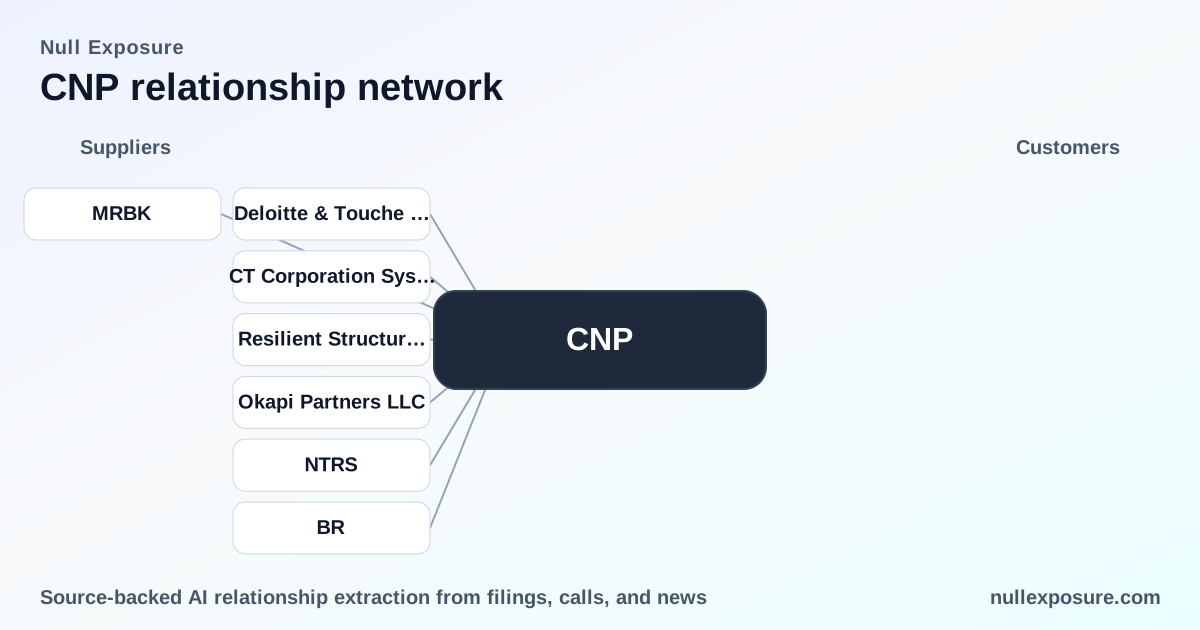
CenterPoint Energy (CNP): supplier relationships that move the valuation needle
CenterPoint Energy is a regulated electric and natural‑gas utility that monetizes through rate‑regulated distribution, long‑term energy procurement contracts and infrastructure investments that support predictable cash flow and regulated returns. For investors, supplier relationships are not peripheral overhead — they drive reliability, capital expenditure timing and regulatory outcomes that directly affect earnings stability and the company’s allowed return. Explore supplier signals and governance linkages below and assess how vendor concentration, contract tenor and third‑party services influence CenterPoint’s operational risk profile.
https://nullexposure.com/
A compact financial frame for context
CenterPoint operates with a roughly $29 billion market capitalization and about $9.36 billion in trailing revenue, delivering stable EBITDA and modest margins consistent with regulated utilities. According to company reporting through the latest quarter (2025‑12‑31), CenterPoint’s trailing EBITDA was about $3.59 billion with an 11.2% profit margin and a dividend yield near 2%; these metrics underscore the business’ cash generation capacity to fund long‑term procurement and capital programs. Analyst consensus places a target near $44.50, reflecting the market’s view on regulated growth and rate case execution.
How CenterPoint contracts and where supplier risk concentrates
CenterPoint’s supplier posture is multi‑modal: the company uses a mix of long‑term contracts, shorter‑term arrangements and spot market purchases to balance supply security with cost flexibility. Company disclosures show long‑term commitments (including PPAs and multi‑year commodity contracts), shorter contracts for certain natural‑gas purchases, and active participation in energy markets for spot procurement. These contracting choices produce four investment‑relevant signals:
- Contracting posture: A deliberate blend of long‑dated contracts to lock supply and mitigate volatility alongside short/spot purchases to manage costs.
- Concentration: Material obligations and single‑source dependencies are present for specific fuel and supply lines, creating potential operational concentration risk.
- Criticality: Third‑party service providers are functionally critical to gas supply, storage and pipeline capacity — outages or supplier issues translate quickly to reliability and regulatory scrutiny.
- Maturity and spend: The company discloses multi‑year purchase obligations in the billions, indicating capital‑intensive, mature supplier relationships with high spending bands that influence liquidity and capital plans.
These are company‑level signals drawn from contract and obligation disclosures, not from any single vendor file.
Material supplier and governance relationships investors should track
Deloitte & Touche LLP
CenterPoint’s Audit Committee engaged with Deloitte throughout 2025 and shareholders are set to ratify Deloitte as the independent registered public accounting firm for 2026; Deloitte is therefore the company’s primary external auditor and a governance control on financial accuracy. This relationship is described in the company’s FY2026 proxy materials filed in March 2026 on StockTitan.
CT Corporation System
CT Corporation System serves as CenterPoint’s registered agent (registered office address in Dallas), a standard legal services relationship that supports corporate filings and service of process. This is disclosed in the FY2026 preliminary proxy statement (March 2026) hosted on StockTitan.
Resilient Structures
CenterPoint executed a long‑term supply agreement for composite poles with Resilient Structures as part of its Greater Houston Resiliency Initiative, reflecting capital procurement tied to grid hardening and resilience objectives. This strategic supply pact was highlighted in a February 2026 industry note and investor commentary by Sahm Capital.
Okapi Partners LLC
CenterPoint engaged Okapi Partners LLC to assist with proxy solicitation and will pay solicitation fees (noted as $17,500 plus expenses), indicating active investor relations and governance outreach ahead of shareholder votes. This fee disclosure appears in the FY2026 preliminary proxy filing on StockTitan.
The Northern Trust Company
Northern Trust is the trustee for the CenterPoint Energy Savings Plan and holds voting rights for plan shares covered by the proxy, positioning Northern Trust as an institutional steward of employee plan voting. This trustee arrangement is detailed in the FY2026 proxy materials on StockTitan.
Broadridge Financial Services, Inc.
Broadridge handles householding and distribution of shareholder materials (including toll‑free support and mailing services), a standard investor‑communications vendor that affects shareholder engagement and meeting logistics. This relationship is disclosed in the FY2026 preliminary proxy statement on StockTitan.
Meridian
Meridian provided limited services related to director compensation to the Corporate Governance and Nominating Committee and was otherwise not a material service provider to CenterPoint, reflecting targeted consultant usage rather than broad outsourcing. The FY2026 proxy statement on StockTitan documents Meridian’s limited scope of services.
What these relationships mean for operational risk and valuation
Collectively, the relationships above show a dual profile: governance and investor‑relations suppliers (audit, proxy solicitation, trustee, communications) that affect transparency and shareholder outcomes, and operational suppliers (Resilient Structures plus the broader pool of fuel and pipeline providers implied in contract disclosures) that drive reliability and capital spend. The company’s disclosures of long‑term purchase obligations in the billions and explicit references to multi‑year PPAs create a capital and counterparty dimension to risk that translates into regulatory exposure and earnings persistence.
- Governance suppliers such as Deloitte, Broadridge and Okapi change investor confidence and proxy outcomes; continuity here is supportive of predictable reporting and shareholder engagement.
- Operational suppliers tied to infrastructure and fuel are high‑criticality and high‑spend: long tenors and concentrated counterparties amplify the impact of supplier interruption on service and cash flow.
If you need a quick way to monitor how these vendor ties evolve alongside regulatory filings and proxy materials, see more analysis and tracking tools at https://nullexposure.com/.
Practical signals to watch next quarter
Investors should track three near‑term indicators: (1) the ratification and any auditor commentary from Deloitte in the upcoming annual meeting materials; (2) contract renewals or procurement awards tied to the Greater Houston Resiliency Initiative (which will affect capex timing); and (3) disclosure changes in minimum purchase obligations that would shift liquidity or leverage metrics. Each will move the risk premium for a regulated utility whose earnings depend on both regulatory outcomes and supplier performance.
For a consolidated view of supplier links, governance disclosures and how they feed into valuation models, visit https://nullexposure.com/.
Bottom line for investors
CenterPoint’s supplier relationships are structurally important: governance vendors support transparency, while operational suppliers and multi‑year contracts shape reliability and capital intensity. The company’s mix of long‑term commitments, shorter contracts and active spot market participation produces a balanced but concentrated supplier risk profile that deserves ongoing monitoring alongside rate cases and resilience capital programs. For deeper tracking and comparative supplier exposure across utilities, explore our resource hub at https://nullexposure.com/.