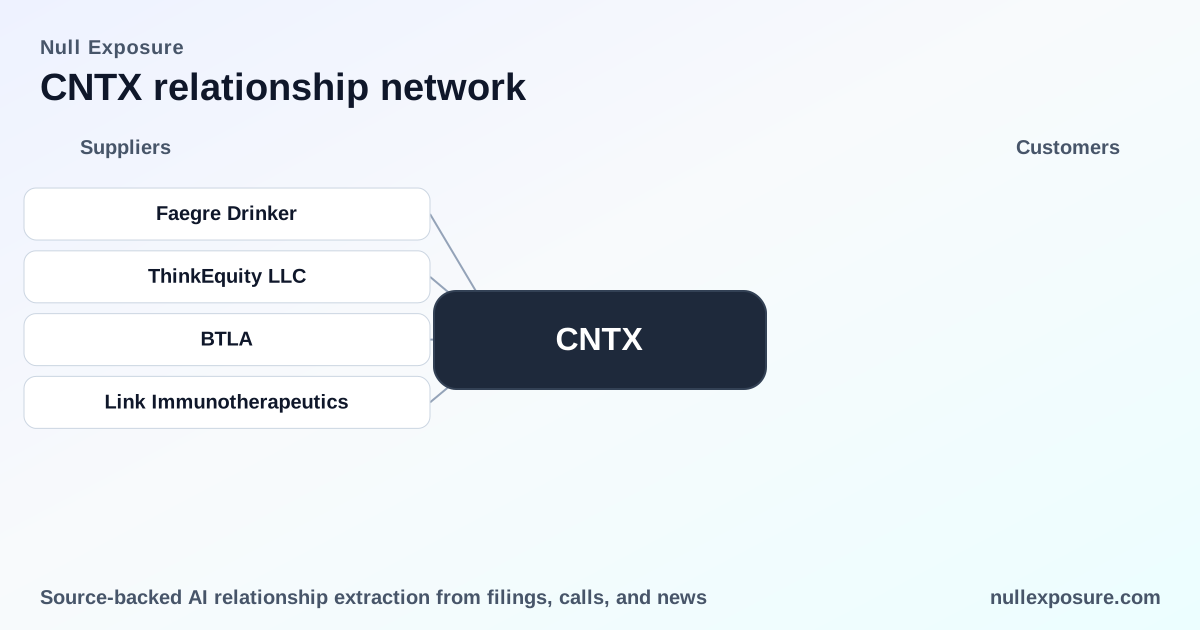
Context Therapeutics (CNTX) — supplier relationships, strategic posture, and what investors should know
Context Therapeutics (CNTX) is a late-stage biopharmaceutical company that builds value by in‑licensing and acquiring targeted oncology assets, advancing them through clinical development, and ultimately monetizing through out‑licensing, partnerships, or commercialization. The firm does not operate manufacturing facilities; revenue upside accrues from successful clinical development and strategic deals on assets such as CT‑95 and CT‑202. Investors evaluating supplier and partner exposure should treat CNTX as an asset‑driven developer that outsources critical functions and uses one‑time asset transactions to reshuffle its pipeline. For programmatic supplier screening and relationship intelligence, visit the Null Exposure homepage: https://nullexposure.com/.
How CNTX runs the business and where cash needs lie
CNTX’s operating model is rooted in asset transactions and third‑party execution. The company acquires proprietary molecules (one‑time payments) and licenses programs from other biotech owners, then relies on contract manufacturing and development partners to advance trials. That posture creates two durable investor takeaways: concentration of counterparty risk on a small set of law/underwriting/CMO partners, and lumpy, milestone-driven cash outflows tied to acquisitions and outsourced development spend. For enterprise teams tracking counterparties and payment exposure, see Null Exposure: https://nullexposure.com/.
- CNTX consistently outsources manufacturing and development (company filings document a Development and Manufacturing Services Agreement signed in November 2022 with Lonza and explicit reliance on contract manufacturing organizations).
- The company uses discrete asset purchases (one‑time payments) to expand the pipeline, creating identifiable single-event cash commitments rather than steady, ongoing supplier spend.
Supplier and partner map — each relationship in the record
Faegre Drinker
Faegre Drinker served as legal counsel representing Context Therapeutics in the company’s $25 million IPO transaction, establishing a formal advisor relationship for capital markets work (Faegre Drinker service announcement, 2021). This places Faegre Drinker in a capital‑markets advisory role for CNTX’s formative financing (https://www.faegredrinker.com/en/services/experience/2021/10/context-therapeutics-completes-$25m-ipo).
ThinkEquity LLC
ThinkEquity LLC acted as the underwriter for Context Therapeutics’ offering, executing the primary capital raise that funded early development and acquisition activity (Faegre Drinker transaction note, 2021). The relationship is a transactional investment‑bank relationship that underpinned CNTX’s IPO financing round (https://www.faegredrinker.com/en/services/experience/2021/10/context-therapeutics-completes-$25m-ipo).
BioAtla (BTLA)
CNTX holds CT‑202, a Nectin‑4 x CD3 T‑cell engager (TCE) that was licensed from BioAtla, giving CNTX rights to develop a promising oncology asset as part of its pipeline (news coverage of CNTX earnings commentary, FY2025). This is a licensing relationship that supplies a development asset rather than an operating service, and it is a strategic input to CNTX’s clinical-stage portfolio (https://qz.com/context-therapeutics-inc-cntx-reports-earnings-1851771414).
Link Immunotherapeutics
On July 9, 2024, CNTX acquired CT‑95 (formerly LNK‑101) from Link Immunotherapeutics in an asset purchase that involved a one‑time payment of $3.75 million; CNTX is both the buyer and the acquirer in that transaction (company asset purchase disclosure and corroborating news coverage, FY2025). This is a one‑time asset purchase (spot payment) in the $1M–$10M band, and it materially expanded CNTX’s TCE pipeline while generating a discrete cash outflow tied to pipeline growth (see company filing excerpts and reporting in 2024/2025; also referenced in market coverage) (https://qz.com/context-therapeutics-inc-cntx-reports-earnings-1851771414).
What the constraints tell investors about CNTX’s operating risks
The public constraint signals and filing excerpts paint a clear operating profile for investors:
- Contracting posture — spot, asset‑driven payments: CNTX executes discrete asset purchases (for example, $3.75M to acquire CT‑95), signaling that material cash commitments are episodic and tied to portfolio expansion rather than regular supplier invoices. That structure concentrates timing risk around acquisitions and raises the importance of liquidity management.
- Relationship roles and directionality: CNTX acts as the buyer in acquisitions (explicit for Link/CT‑95) and as a licensee for in‑licensed assets (e.g., CT‑202 from BioAtla). Company filings also indicate no in‑house manufacturing, making CNTX dependent on third‑party manufacturers for clinical and potential commercial supply.
- Critical suppliers and maturity: The firm’s reliance on contract manufacturing organizations and a documented agreement with Lonza (Development and Manufacturing Services Agreement, Nov 7, 2022) makes a small set of CMOs critical to operational continuity. This reliance increases counterparty concentration risk but is a standard model for small biotech developers.
- Spend concentration and materiality: The Link acquisition demonstrates mid‑single‑digit million transactional spend is meaningful; these purchases sit in the $1M–$10M range, which is remotely material relative to CNTX’s cash runway and capital structure, and will influence near‑term financing needs.
Investment implications: upside drivers and supplier risks
CNTX’s upside is straightforward: successful clinical advancement of in‑licensed or acquired oncology assets and execution of licensing or commercialization deals. Key value drivers are asset selection and clinical outcomes; operational execution depends on a handful of third‑party providers (legal, investment banking, CMOs). That concentration creates discrete supplier risk that is monitorable and actionable:
- Legal and capital markets partners (Faegre Drinker, ThinkEquity) reduce transaction execution risk but do not affect clinical outcomes.
- Licensing and acquisition counterparties (BioAtla, Link) supply the assets that drive valuation; the economics of those deals are concentrated and often one‑time.
- Manufacturing partners (Lonza and other CMOs) are operationally critical and require diligence on capacity and quality agreements prior to commercialization.
For investors performing counterparty risk reviews, focus on contract terms with CMOs, milestone obligations from licensors, and the cadence of one‑time acquisition payments. For enterprise teams mapping supplier exposure, Null Exposure offers integrated relationship intelligence to track these exact counterparties: https://nullexposure.com/.
Final takeaways and action items
- CNTX is an asset‑centric developer that monetizes through clinical progress and strategic deals; it outsources manufacturing and uses discrete acquisitions to build the pipeline.
- Supplier concentration is real and measurable: one‑time asset payments in the $1M–$10M band and reliance on Lonza‑type CMOs are principal operational risks.
- Transaction partners (law firms and underwriters) support capital formation, while licensors and sellers supply the assets that determine upside.
Investors and operators should prioritize continuous monitoring of CNTX’s CMO agreements and any future asset purchases or licensing economics. For tailored supplier intelligence and to map CNTX counterparty exposure across portfolios, visit Null Exposure: https://nullexposure.com/.