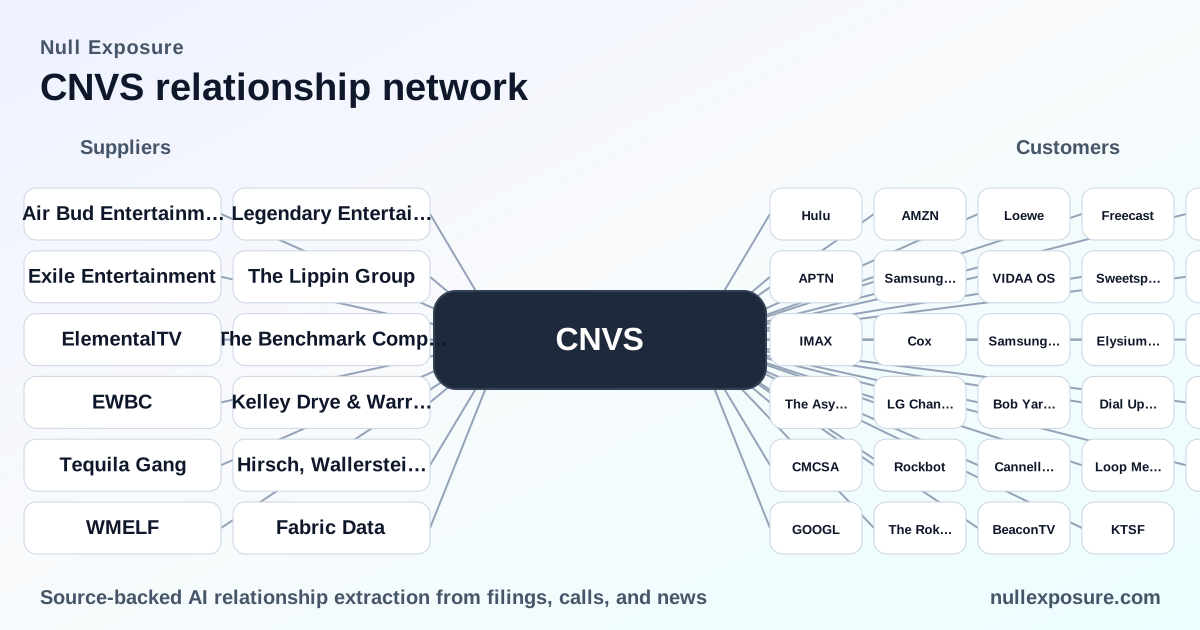
Cineverse (CNVS) — supplier relationships and what they mean for investors
Cineverse Corp. operates as a next‑generation entertainment studio and streaming/distribution platform that monetizes through content licensing, theatrical and streaming distribution, and platform-level services (including audience intelligence and content discovery). The company acquires or licenses film rights, places titles in theaters and on streaming platforms, and supplements cash flow with capital markets activity when needed — creating revenue through licensing fees, distribution deals and incremental platform services. For investors, the supplier map exposes the mix of content counterparties, professional services, and capital markets partners that underpin execution and liquidity.
Explore supplier relationship intelligence and filings on the Cineverse supplier page at https://nullexposure.com/.
Quick read: what the supplier roster reveals about Cineverse’s operating posture
- Content-first business model — Cineverse’s core dependency is on content licensors and producers; recent high-profile acquisitions and distribution deals show the company positions itself as both licensee and distributor.
- Active capital market counterparties — The Benchmark Company is serving as underwriter/placement agent for recent financings, and legal counsel is engaged for offerings, signaling regular capital‑markets activity.
- Professional services at material spend levels — Audit and other service fees sit in the $100k–$1M band, indicating repeat external service engagement and an “outsourced” control posture for key finance and compliance functions.
- Hybrid technology partnerships — Data and AI partners are integrated into product offerings (cineSearch, Matchpoint Creative Labs), supporting productization beyond pure content ownership.
If you evaluate counterparty risk or vendor concentration for CNVS, start with the supplier map on the Cineverse page: https://nullexposure.com/.
Supplier-by-supplier rundown (concise, sourced)
- Legendary Entertainment — Legendary produced the horror/comedy The Toxic Avenger, which Cineverse distributed and which secured streaming placement on Hulu for a January 2026 debut; this underscores Cineverse’s role as distributor for third‑party studio content. Source: Sahm Capital and Barchart reporting (March 2026).
- The Lippin Group — The Lippin Group is Cineverse’s designated media/PR contact on SEC filings and news releases, indicating an outsourced PR relationship for corporate communications. Source: SEC 8‑K summarized on StockTitan (March 2026).
- The Benchmark Company, LLC — Benchmark is acting as sole underwriter for a public offering and served as placement agent for a notes sale, showing it is Cineverse’s principal capital markets intermediary in FY2026. Source: PR Newswire and SEC 8‑K coverage (March 2026).
- Kelley Drye & Warren LLP — Kelley Drye provided a legal opinion on the validity of offered shares for a recent offering (Exhibit 5.1), identifying the firm as the securities counsel tied to equity issuances. Source: SEC 8‑K (March 2026).
- Hirsch, Wallerstein, Hayum, Matlof & Fishman — Counsel George Hayum represented Guillermo del Toro in the negotiation that resulted in Cineverse acquiring exclusive rights for a major title, illustrating Cineverse’s acquisitions of legacy, high‑value IP. Source: Finance Yahoo coverage (FY2025/FY2026 reporting).
- Fabric Data — Cineverse expanded its cineSearch capability via Fabric Data’s Origin to index 500+ streaming services, positioning Fabric Data as a data partner in content discovery efforts. Source: company press release syndicated on StockTitan (FY2026).
- East West Bank (EWBC) — East West Bank is the secured lender under Cineverse’s loan facility; newly issued notes are junior to East West’s secured debt, making EWBC a first‑priority creditor in the capital stack. Source: SEC 8‑K (March 2026).
- Air Bud Entertainment — Cineverse partnered with Air Bud Entertainment to return the Air Bud franchise to theaters (release slated August 21, 2026), highlighting direct theatrical distribution relationships for family IP. Source: StockTitan news (FY2026).
- Tequila Gang — Cineverse acquired rights to Guillermo del Toro’s Pan’s Labyrinth from Tequila Gang, demonstrating Cineverse’s strategy of securing premium auteur content for re‑release and platform exploitation. Source: Sahm Capital press release (November 2025).
- Exile Entertainment — Exile participated in negotiations representing Guillermo del Toro in Cineverse’s exclusivity deal, indicating the presence of boutique independent producers/packagers in Cineverse’s supply chain. Source: Finance Yahoo (FY2025/FY2026 reporting).
- WME (William Morris Endeavor) — WME’s Robert Newman was involved in negotiating the del Toro rights deal, showing talent/agency channels are an active procurement route for Cineverse. Source: Finance Yahoo (FY2025/FY2026 reporting).
- ElementalTV — ElementalTV is a partner for Cineverse’s Matchpoint Creative Labs, supplying AI‑driven audience intelligence for targeted marketing and product development. Source: StockTitan press coverage of Matchpoint launch (FY2026).
Key constraints and what they signal for investors and operators
- Licensor dynamics: Cineverse records payables and accruals to studios and content producers for royalties under licensing arrangements, confirming the company operates as both licensee and distributor with recurring royalty obligations. This is a company‑level signal of ongoing cash‑flow commitments to content suppliers.
- Service provider posture: External professional services (audit, legal, PR) are actively used — the company’s audit committee pre‑approves engagements and audit fees in the mid‑hundreds of thousands, which aligns with a model that outsources compliance, audit and specialist functions rather than building them entirely in‑house.
- Active relationship stage and spend band: Audit fee line items (~$558k–$576k) place professional services in the $100k–$1M spend band and mark those relationships as active, which is consistent with repeated, material engagements rather than one‑off buys.
- Capital stack sensitivity: Notes issued rank junior to secured bank debt (East West Bank), elevating the importance of cash generation and covenant compliance for holders of unsecured claims or new noteholders.
Investment implications and recommended monitoring
Cineverse’s supplier profile shows a content acquisition and distribution company that relies on a mix of high‑profile studio partnerships, boutique producers and third‑party tech/data suppliers. For investors and operators, prioritize monitoring the following:
- The cadence of licensed content receipts and the associated royalty accruals that create near‑term cash obligations.
- The company’s capital markets activity (underwriters/placement agents) and how new issuances interact with existing secured debt (East West Bank).
- Execution of AI and data partnerships (Fabric Data, ElementalTV) to determine whether platform services produce scalable, recurring revenue beyond one‑time distribution fees.
- Release schedule and box office/streaming monetization for newly acquired titles (e.g., Pan’s Labyrinth re‑release, Air Bud Returns, Toxic Avenger distribution).
If you want a consolidated view of Cineverse’s counterparties and filing references, see the supplier dossier at https://nullexposure.com/.
Bottom line
Cineverse operates as a content acquirer/distributor with an ecosystem of studio producers, talent agencies, data/AI partners and capital markets intermediaries. Content ownership and licensing drive commercial value, while professional services and financial counterparties determine execution risk and liquidity structure. For investors evaluating CNVS, the immediate questions are whether content monetization scales to cover royalty and debt obligations, and whether strategic tech partnerships convert into durable subscription or licensing revenue.
Get a hands‑on look at the full supplier map and primary sources on the Cineverse supplier page: https://nullexposure.com/.