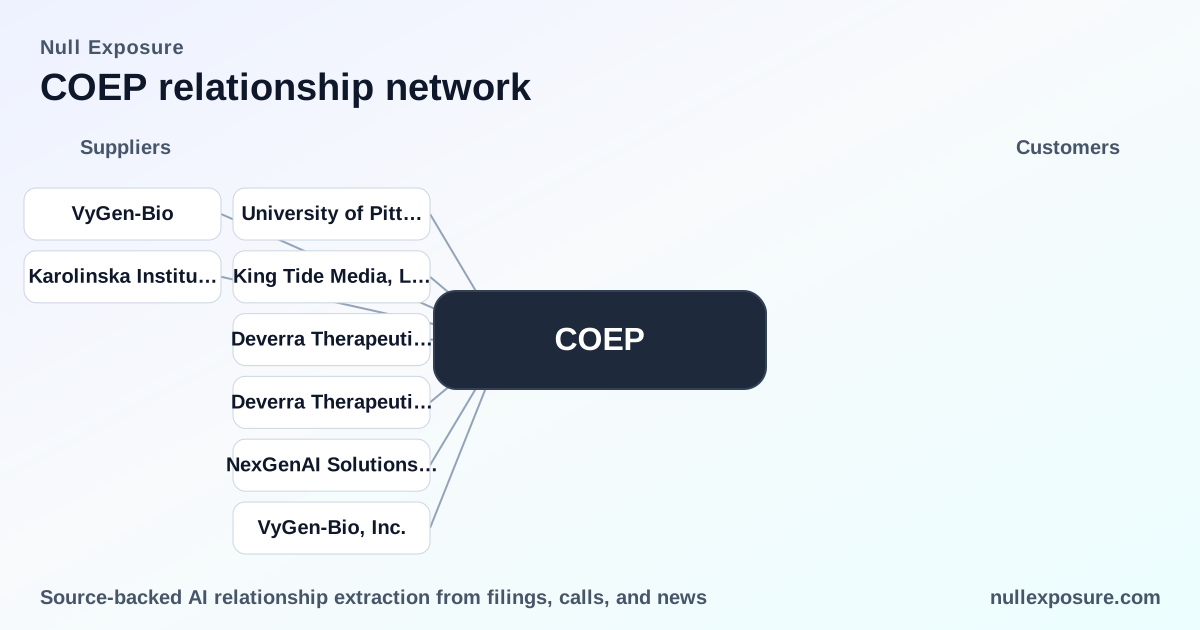
Coeptis Therapeutics (COEP): A supplier-map for investors assessing strategic licensing and technology aggregation
Coeptis Therapeutics operates as a biopharma IP acquirer and platform integrator: the company licenses clinical-stage cell therapies and CAR/GEAR platforms from academic and private originators, spins intellectual property into majority-owned subsidiaries, and augments operations with a nascent technology division. Monetization is concentrated on advancing licensed assets (clinical development value creation, future commercialization rights and potential milestone/royalty streams) and on strategic transactional value such as the pending Z‑Squared merger. For investors, the thesis is straightforward: Coeptis’ value derives from the quality and exclusivity of its licensed platforms and the company’s ability to de‑risk assets toward value‑creating clinical inflection points. Learn more on the company portfolio and supplier relationships at https://nullexposure.com/.
How Coeptis assembles a therapeutic portfolio — the operating model in practice
Coeptis pursues a deliberate aggregator posture: exclusive licenses and asset acquisitions are the primary method to build a product pipeline, rather than in‑house discovery at scale. According to Coeptis’ 2024 Form 10‑K, the company paid a non‑refundable fee to secure exclusive patent rights for the SNAP‑CAR technology from the University of Pittsburgh, and it completed an exclusive license of key patent families from Deverra Therapeutics in 2023. These agreements create a concentrated dependency on a small number of IP originators for the company’s core therapeutic capabilities — critical assets that underpin future clinical and commercial progress.
The firm is also positioning a Technology Division that bundles AI marketing and robotic process automation tools acquired from third parties, and it has formed at least one majority‑owned subsidiary to advance a licensed GEAR platform. These moves signal a mixed commercial model: core scientific risk is front‑loaded into licensed assets, while operational efficiency and go‑to‑market activities are being supplemented through technology acquisitions.
For focused due diligence on these supplier relationships, see our detailed relationship map at https://nullexposure.com/.
Relationship-by-relationship: the raw facts investors need
University of Pittsburgh
Coeptis holds an exclusive license to SNAP‑CAR and related SynNotch and CAR technologies, acquired in August 2022 with a disclosed non‑refundable patent fee; SNAP‑CAR is described as a universal, multi‑antigen CAR platform used across NK and T cell programs. According to Coeptis’ 2024 Form 10‑K and multiple press releases, SNAP‑CAR is a core proprietary input for Coeptis’ universal CAR ambitions (10‑K coep‑2024‑12‑31; PRNewswire/BioSpace coverage, FY2022–FY2025).
Deverra Therapeutics, Inc.
Coeptis completed an exclusive license of Deverra’s allogeneic stem cell expansion/differentiation platform and DVX201, an unmodified NK cell therapy, in 2023; these assets form a significant portion of Coeptis’ clinical‑stage pipeline. The company’s press releases and subsequent merger filings cite Deverra licenses as foundational to Coeptis’ therapeutic portfolio (PRNewswire, GlobeNewswire, FY2023–FY2025).
VyGen‑Bio, Inc.
Coeptis secured development and commercialization rights to GEAR cell therapy in collaboration with VyGen‑Bio, and created a majority‑owned subsidiary (GEAR Therapeutics, Inc.) to advance GEAR‑modified NK cells toward proof‑of‑concept studies. GlobeNewswire coverage and Coeptis’ 2025 announcements summarize this partnership as strategic for the GEAR platform (GlobeNewswire, FY2025).
Karolinska Institute
Coeptis lists collaboration with distinguished researchers at the Karolinska Institute to support GEAR and companion diagnostic development, providing academic clinical expertise and translational research support rather than a commercial license relationship. Media and company statements present Karolinska as a scientific collaborator on GEAR programs (InvestorNews and company disclosures, FY2023–FY2025).
NexGenAI Solutions Group
Coeptis has integrated AI‑powered marketing software and robotic process automation tools acquired from NexGenAI into a Technology Division, intended to optimize marketing, digital infrastructure, and operational workflows tied to the pending Z‑Squared transaction. Multiple press releases and market filings reference these technology assets as part of Coeptis’ expanding non‑therapeutic division (CityBiz, GlobeNewswire, QuiverQuant, FY2025–FY2026).
King Tide Media, LLC / Small Cap Exclusive
Coep tis compensated King Tide Media / Small Cap Exclusive for promotional coverage (a disclosed $15,000 payment for profiling COEP), indicating paid marketing activity that supports investor relations and awareness rather than scientific contribution. This disclosure is contained in news coverage and third‑party profile statements (SmallCapExclusive article disclosure, FY2023).
(Each relationship summary above is drawn from Coeptis’ filings and contemporaneous press reporting; see company 10‑K and press releases across 2022–2026 for primary source detail.)
What the documented constraints tell investors about risk and posture
-
Exclusive license posture is explicit and material. Coeptis’ 10‑K documents show it is a licensee for University of Pittsburgh SNAP‑CAR technology and for Deverra’s allogeneic platform — both exclusive arrangements with upfront consideration (the 10‑K notes a $75,000 non‑refundable payment to Pittsburgh and a separate Deverra license signed August 16, 2023). This creates concentrated counterparty risk: loss or dispute over an exclusive license could be existential for a platform company.
-
Service provider signal at the corporate level. The company disclosed a Master Services Agreement tied to an acquisition in which payment was made in stock and for which Coeptis contracted website development and technology enhancement services. The evidence is corporate‑level and does not name the vendor in the constraint excerpt, but it points to outsourced operational functions and possible vendor dependence for digital capabilities.
-
Maturity and financing reality. Coeptis is pre‑commercial with limited trailing revenue (Revenue TTM
$263k) and negative EBITDA (‑$11.8M), and a small market cap (~$68.2M) and low institutional ownership (~3.9%). This is a development‑stage, capital‑intensive profile where licensing choices drive future value realization.
Financial and strategic implications for investors
-
Concentration of core IP in a few exclusive licenses is both a leverage and a single‑point risk. Positive: exclusivity creates control of potentially high‑value platforms. Negative: the business is dependent on successful clinical progression and maintained license relationships.
-
Operational diversification into a Technology Division signals management’s intent to broaden value levers beyond pure biopharma development, but the economic impact of these assets is early and secondary to clinical milestones.
-
Market structure favors event‑driven investment. With thin institutional ownership, sizable insider stakes (~13.4%), negative earnings and limited revenue, value realization will be driven by licensing milestones, clinical readouts, or strategic transactions (for example, the Z‑Squared merger filings).
If you want a consolidated dossier and supplier‑risk scorecard for Coeptis, visit https://nullexposure.com/ for a downloadable brief and relationship heatmap.
Investor conclusion and recommended next steps
Coeptis is a classic platform aggregator: exclusive academic and private licenses forge the product stack, while corporate acquisitions and subsidiary formation aim to convert that IP into investable clinical assets. The upside is binary and concentrated around successful clinical and transactional milestones; downside is tied to IP contract continuity and execution risk.
For portfolio managers and operators conducting supplier diligence, prioritize direct review of the University of Pittsburgh and Deverra license agreements, confirm milestones and termination covenants, and validate the operational scope of the Technology Division’s vendor contracts. For a deeper supplier and contract risk analysis, see our full supplier intelligence offering at https://nullexposure.com/.
Make these relationships part of your core checklist before committing capital — the next clinical signal or contractual disclosure will be the most informative driver of valuation.