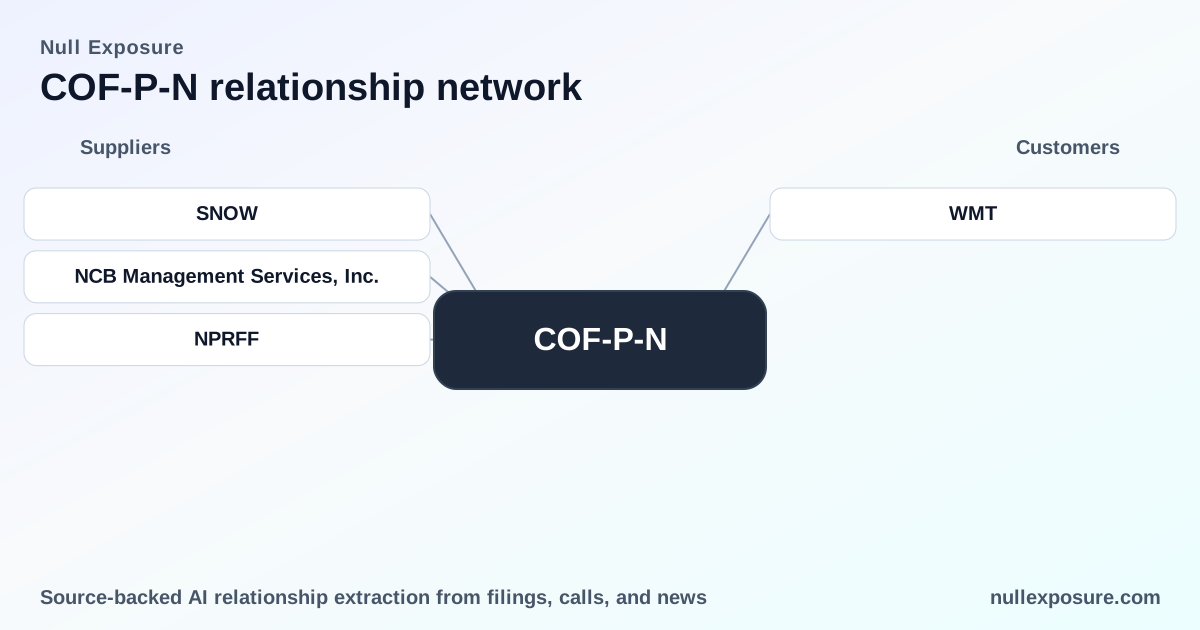
Capital One (COF-P-N) — supplier relationships that shape operating risk and optionality
Capital One Financial operates as a diversified U.S. bank holding company that monetizes through credit-card lending, auto loans, deposit products and cross-sell of fee and interest income across a mass consumer base. For investors and operators, supplier relationships are a direct window into operational resilience: data platforms that enable customer analytics, third-party servicers that touch sensitive customer records, and media partners that influence reputation and distribution. Review these supplier linkages to assess concentration, criticality, and regulatory exposure before making a capital allocation decision.
Learn more about vendor intelligence at https://nullexposure.com/.
Why supplier relationships matter to a preferred-stock holder
Capital One’s business model depends on stable, scalable technology and tightly controlled third‑party processing because lending margins, customer acquisition and compliance hinge on data and servicing continuity. Suppliers are not interchangeable: a handful of strategic software and services providers are likely to be mission‑critical, while many smaller vendors create operational complexity and regulatory touchpoints. This creates two investment levers—efficiency gains from scale and risk from counterparty concentration.
- Contracting posture: Capital One’s scope and sophistication imply enterprise-grade, long-term contracts with cloud and data vendors and detailed vendor risk management clauses that enforce security and continuity.
- Concentration: The supplier list shows a mix of large platform providers alongside specialty vendors, which concentrates risk where a single platform is essential to analytics or servicing.
- Criticality and maturity: Relationships with major cloud and data platforms are high criticality; Capital One’s vendor program is mature, emphasizing controls but exposing the bank to external outages, legal obligations, and reputational spillover.
The supplier-focused records collected for this profile include no extracted contractual constraints in the reviewed material; as a company‑level signal, the absence of explicit constraint language in this package indicates no documented constraint excerpts were found in the supplier-scoped sources provided.
Supplier roll call: what each relationship means for operations and risk
Snowflake Inc.
Capital One is identified as one of Snowflake’s larger customers and has used Snowflake’s platform to pilot internal products and ideas that address common enterprise pain points, illustrating a deep technology partnership. This positions Snowflake as a strategic, high‑value supplier for data warehousing and analytics capability. (Source: SiliconANGLE coverage of Snowflake Summit, FY2022 — https://siliconangle.com/2022/06/21/new-capital-one-software-biz-launches-slingshot-platform-snowflakesummit/)
NCB Management Services, Inc.
NCB Management Services is referenced as a vendor that, in its role servicing Capital One, owes identical duties to protect sensitive customer information, highlighting legal and regulatory exposure when third parties handle consumer data. This underscores operational and compliance risk from outsourced collections or servicing partners. (Source: JD Supra legal note on vendor responsibilities, FY2023 — https://www.jdsupra.com/legalnews/capital-one-confirms-sensitive-customer-4713230/)
NPR (media sponsorship relationship)
Capital One is listed as a sponsor of NPR programming, indicating a media and brand-partnership relationship that supports marketing reach and brand positioning while exposing the franchise to reputational dynamics tied to media coverage and editorial independence. Public reporting emphasizes that sponsorships do not alter independent coverage. (Source: KUOW/NPR reporting on overdraft-fee coverage and sponsorship, FY2022 — https://www.kuow.org/stories/people-hate-overdraft-fees-capital-one-is-ditching-them-and-other-banks-may-follow)
Explore deeper supplier signals and relationship impact at https://nullexposure.com/.
What these relationships tell investors about Capital One’s operating model
These three relationships, while limited in scope, reveal a consistent theme: Capital One leverages major technology platforms for analytics and customer operations, contracts with third‑party servicers that handle regulated customer data, and invests in branded media partnerships to shape market reach.
- Strategic technology suppliers (Snowflake): indicate a platform-driven operating model where analytics and product innovation depend on scalable cloud-native data infrastructure. For investors, the upside is agility and lower marginal cost of analytics; the downside is vendor concentration risk and commercial dependency.
- Regulated service vendors (NCB Management Services): create compliance and counterparty risk because regulatory obligations follow customer data and consumer protections regardless of outsourcing.
- Media sponsorships (NPR): are brand and distribution plays that can boost acquisition economics but also create reputational linkages that are visible in public reporting.
Operationally, this pattern suggests long-term contracting with strategic providers, significant vendor governance, and a maturity of vendor management that is consistent with a large U.S. bank. The absence of explicit contract constraints in the reviewed supplier-scoped sources does not change the underlying reality that regulated banks maintain strict vendor oversight — it simply means no constraint language was surfaced in the specific materials collected.
Investment implications and risk checklist
For investors evaluating COF-P-N exposure, synthesize the supplier signal set into these actionable points:
- Concentration risk: prioritize diligence on the commercial terms, exit rights, and continuity guarantees with major platform suppliers such as Snowflake.
- Compliance exposure: ensure third‑party servicer arrangements include indemnities, audit rights, and data‑protection covenants—NCB‑style vendor incidents translate to regulatory scrutiny and operational loss.
- Reputational linkage: quantify marketing ROI from sponsorships against the potential reputational cost of negative editorial coverage; sponsorships are benefits but not risk‑free.
If you need a faster way to map these supplier dependencies to credit and operational scenarios, review our supplier intelligence tools at https://nullexposure.com/.
How to use this intelligence in diligence
When conducting counterparty or credit diligence on Capital One preferred instruments:
- Request copies of master services agreements and SLAs with major cloud/data suppliers and confirm continuity provisions and termination economics.
- Validate third‑party audit reports and incident history for servicers that handle consumer data.
- Quantify the financial scale of branded partnerships relative to marketing spend and customer-acquisition metrics.
For tailored supplier research and relationship mapping to support investor decisions, visit https://nullexposure.com/ and request a focused supplier brief.
Bold takeaway: Capital One’s supplier footprint shows deliberate reliance on major data platforms and regulated servicers—this drives operating leverage but concentrates operational and regulatory risk in a small set of critical providers.